
Can a breakfast that is roughly 90% water, naturally sweet, and ready in about 10 minutes still feel rich enough to eat with a spoon? A well-made watermelon smoothie bowl absolutely can, especially when frozen fruit, a little fat, and the right blending method work together. If you have only tasted thin watermelon drinks before, this recipe will likely change your mind.
Watermelon Smoothie Bowl Introduction
A great watermelon smoothie bowl sits in a sweet spot between light and satisfying. Watermelon brings refreshment, color, and hydration, while frozen banana and berries create the creamy, spoonable texture that makes a bowl feel more like breakfast than a beverage. Add lime, coconut milk, and a few smart toppings, and the result feels bright, cool, and complete.
This style of bowl works well because watermelon is low in calories for its volume, with about 30 calories per 100 grams, yet still offers vitamin C, potassium, and lycopene. Since watermelon is so water-rich, the trick is not more liquid. The trick is structure: frozen fruit, careful blending, and toppings that add crunch, fiber, and staying power.
It is also one of the easiest summer breakfast recipes to personalize.
Watermelon Smoothie Bowl Ingredients
The base below makes 2 medium bowls or 1 large, generous serving. It is designed for a thick texture, not a drinkable smoothie, so keep the liquid modest at first.
| Ingredient | Amount | What it adds | Easy swap |
|---|---|---|---|
| Frozen seedless watermelon cubes | 3 cups | Juicy, hydrating base and color | Fresh watermelon plus extra ice, though frozen is better |
| Frozen banana | 1 medium | Creaminess and body | Frozen mango or 1/2 avocado |
| Frozen strawberries or mixed berries | 1 cup | Tang, sweetness, deeper berry flavor | Frozen raspberries or cherries |
| Coconut milk | 1/3 to 1/2 cup | Creamy texture and tropical note | Almond milk, oat milk, coconut water |
| Lime juice | 1 to 2 teaspoons | Brightness and balance | Lemon juice |
| Chia seeds | 1 tablespoon | Fiber and mild thickening | Ground flaxseed or oats |
| Pinch of sea salt | Small pinch | Rounds out flavor | Skip if preferred |
| Optional vanilla or mint | 1/4 teaspoon or a few leaves | Extra aroma | Basil works nicely too |
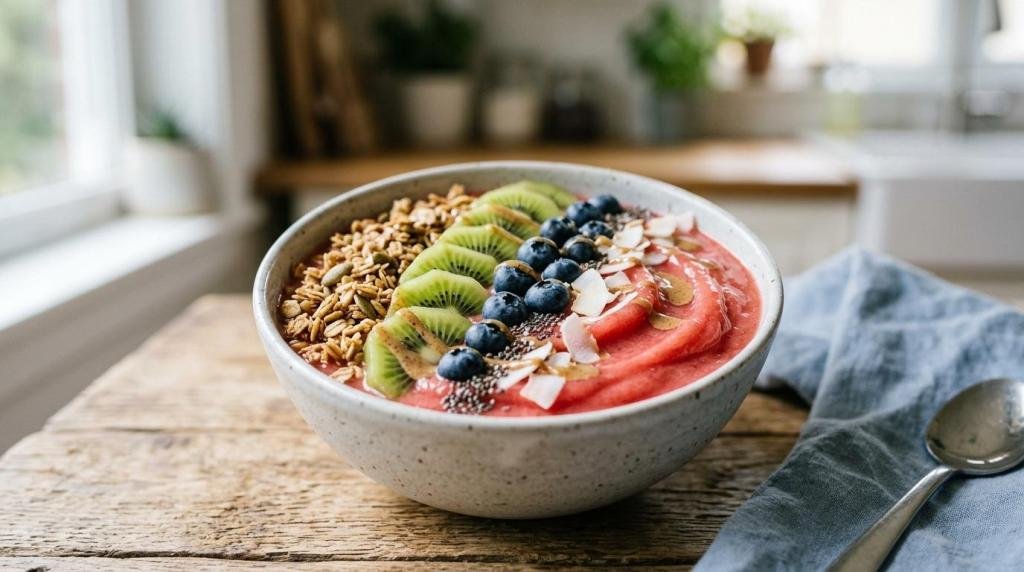
After the base is blended, top it with texture and contrast. Think sliced kiwi, fresh berries, granola, hemp seeds, coconut flakes, pumpkin seeds, or a drizzle of almond butter. The best smoothie bowl toppings mix soft, crisp, and crunchy elements.
A few tools make the process faster and easier:
- High-speed blender or food processor
- Cutting board and sharp knife
- Measuring cups and spoons
- Spatula
- Chilled serving bowls
If your blender has a tamper, this recipe becomes even easier because thick frozen fruit blends more evenly with less added liquid.
Watermelon Smoothie Bowl Timing
This is a fast recipe once your fruit is frozen.
| Task | Time |
|---|---|
| Prep ingredients | 5 minutes |
| Blend the smoothie bowl base | 2 to 3 minutes |
| Add toppings and serve | 2 minutes |
| Total time | 9 to 10 minutes |
That timing is on par with most fruit smoothie bowls and noticeably quicker than many cooked breakfasts. If you freeze watermelon in batches ahead of time, the actual hands-on work feels even shorter.
Watermelon Smoothie Bowl Step-by-Step Instructions
Start with very cold ingredients and a clear plan for your toppings before you blend. A thick smoothie bowl melts quickly.
Step 1: Freeze the fruit for a thick smoothie bowl base
Cube the watermelon and freeze it until solid. Freeze the banana and berries too if they are not already frozen. This matters more than most people expect. A watermelon smoothie bowl made with room-temperature fruit often turns thin before it even reaches the table.
If you meal prep, freeze fruit in pre-portioned bags so breakfast takes almost no thought.
Step 2: Add liquid first, then frozen fruit
Pour 1/3 cup coconut milk into your blender. Add the lime juice, chia seeds, salt, frozen banana, frozen berries, and frozen watermelon on top. This order helps the blades catch the liquid first while still keeping the mixture thick.
Hold back the extra liquid until you know you need it.
Step 3: Blend slowly and use the tamper if needed
Start on low speed, then increase gradually. If the blender stalls, stop and scrape down the sides or use the tamper. Thick smoothie bowls are not supposed to whirl around like a drinkable smoothie. They should move slowly and look dense.
A little patience here gives you a creamier texture than flooding the blender with more milk.
Step 4: Adjust the consistency with small changes
If the mixture looks too thick to blend, add 1 tablespoon of liquid at a time. If it looks loose, add a handful of frozen watermelon or a few slices of frozen banana. This small-step method is the easiest way to protect that spoonable texture.
You are aiming for soft-serve consistency.
Step 5: Taste and balance the flavor
Taste the base before serving. If it needs more brightness, add a little extra lime. If the flavor feels flat, another tiny pinch of salt can make the fruit taste sweeter without extra sugar. If you want a dessert-like bowl, blend in a splash of vanilla.
This is where the bowl shifts from good to memorable.
Step 6: Serve fast and add toppings with contrast
Spoon the blended mixture into chilled bowls. Add granola, fruit, seeds, coconut, or nut butter in neat rows, a half-moon pattern, or a casual scattered finish. Put crunchy toppings on just before serving so they stay crisp.
The contrast between cold, creamy base and crisp toppings is what makes a watermelon breakfast bowl feel complete.
Watermelon Smoothie Bowl Nutritional Information
The numbers below are approximate for one of two servings, before heavy toppings. Exact values depend on your milk choice and topping selection.
| Nutrition per serving | Approximate amount |
|---|---|
| Calories | 220 to 270 |
| Carbohydrates | 42 to 50 g |
| Fiber | 5 to 8 g |
| Protein | 3 to 5 g |
| Fat | 4 to 8 g |
| Vitamin C | Moderate to high |
| Potassium | Moderate |
| Hydration value | High |
Watermelon brings a hydration advantage that many thicker smoothie bowls do not have, yet it needs help from banana, chia, or other frozen fruit to feel substantial. If you add Greek yogurt, protein powder, hemp seeds, or nut butter, the protein and satiety climb quickly.
Healthier Watermelon Smoothie Bowl Alternatives
This recipe is already light and fruit-forward, though there is plenty of room to tune it for your goals. If you want a higher-protein watermelon smoothie bowl, stir in Greek yogurt or blend in vanilla protein powder. If you want a lower-sugar bowl, reduce the banana and use more berries, which usually bring more tartness and fiber with less sweetness.
A few smart swaps can change the nutrition profile without taking away the bright summer flavor.
- Higher protein: Add 1/2 cup Greek yogurt, 3 tablespoons hemp seeds, or 1 scoop plain protein powder
- Dairy-free: Use coconut milk, almond milk, oat milk, or plant-based yogurt
- Lower sugar: Replace part of the banana with avocado and use unsweetened toppings
- More fiber: Blend in oats, chia, or ground flax
- Nut-free: Use sunflower seed butter or skip the butter and add pumpkin seeds
- Extra creaminess: Blend in 1/4 avocado or a spoonful of coconut cream
If you enjoy recipes that balance comfort and nutrition, this is a good base to keep in regular rotation. A bowl can be light enough for a hot morning, yet filling enough for an afternoon snack with the right toppings.
Watermelon Smoothie Bowl Serving Suggestions
This bowl shines at breakfast, but it also fits brunch tables, post-workout snacks, and hot-weather desserts. If you want it to feel more like a full meal, add protein and crunch. If you want it to feel more refreshing, keep the toppings light and fruit-focused.
Try pairing the bowl with simple sides or themed topping combinations:
- Tropical version with mango, toasted coconut, and lime zest
- Berry version with raspberries, blueberries, and hemp seeds
- Green-accent version with kiwi, mint, and pumpkin seeds
- Dessert-style version with cacao nibs and almond butter
For family-style brunch, set out small topping bowls so everyone can build their own. That works especially well with kids and with mixed dietary needs.
Common Watermelon Smoothie Bowl Mistakes to Avoid
Even easy recipes have a few common traps. Watermelon contains so much water that minor blending choices make a big difference in the final texture.
- Too much liquid: Start with less than you think you need, then add by tablespoons
- Using fresh fruit only: Frozen fruit is what gives the bowl body
- Over-blending: Too much blending warms the mixture and makes it airy instead of dense
- Skipping acid and salt: Lime and a pinch of salt help the fruit taste brighter
- Adding toppings too early: Granola and coconut lose crunch fast on a wet base
One helpful rule: if it pours, it probably belongs in a glass, not a bowl.
Watermelon Smoothie Bowl Storing Tips
Smoothie bowls are at their best right after blending, though you can still prep smartly. Freeze the fruit in ready-to-blend packs and store toppings separately in jars or containers. That gives you speed without sacrificing texture.
If you have leftover base, place it in an airtight container and refrigerate it for up to 24 hours. It may separate a bit, so stir or re-blend before serving. For longer storage, freeze the base without toppings in single portions. Let it soften for a few minutes, then blend or stir until creamy again.
Fresh toppings should always be added at the last minute.
Quick Recipe Recap for Your Watermelon Smoothie Bowl
This watermelon smoothie bowl is cold, creamy, hydrating, and easy to customize with fruit, protein, or crunchy toppings. Freeze the fruit, use minimal liquid, and blend just until thick. Try it this week, leave a comment with your favorite topping, rate the recipe, and subscribe for more ideas from us.
If you are building out a warm-weather menu, this bowl also pairs nicely with other simple breakfast and snack recipes that use fresh fruit, yogurt, and pantry staples.
Watermelon Smoothie Bowl FAQs
Can I make a watermelon smoothie bowl without banana?
Yes. Use frozen mango for sweetness and body, or avocado for creaminess with less sugar. If you remove banana, you may want a little more lime juice to keep the flavor lively.
Why is my watermelon smoothie bowl watery?
The usual cause is too much liquid or not enough frozen fruit. Watermelon releases a lot of moisture, so start with minimal milk and use fully frozen cubes. Chia seeds, oats, yogurt, or avocado can also help thicken the base.
Is a watermelon smoothie bowl healthy?
It can be, especially when built with whole fruit, modest liquid, and nutrient-dense toppings. Watermelon offers hydration and vitamin C, while seeds, yogurt, and nuts add protein, fiber, and healthy fats.
Can I make this watermelon smoothie bowl vegan?
Absolutely. Use plant milk and skip dairy yogurt, or use a coconut or almond-based yogurt. Maple syrup can replace honey if you want a little extra sweetness.
What blender works best for a thick smoothie bowl?
A high-speed blender is ideal, though a food processor can work well too. If your blender is less powerful, let the fruit sit out for 2 to 3 minutes before blending and add liquid very gradually.
Can I prep this recipe ahead of time?
Yes, the best make-ahead strategy is freezing the fruit in portions. You can also mix dry toppings ahead. The blended base keeps best for short-term storage only, since texture and color are strongest when fresh.
What toppings go best with a watermelon smoothie bowl?
Kiwi, strawberries, blueberries, granola, coconut flakes, chia seeds, hemp seeds, and mint all work well. Aim for contrast in texture and color so the bowl feels exciting from the first bite to the last.
