
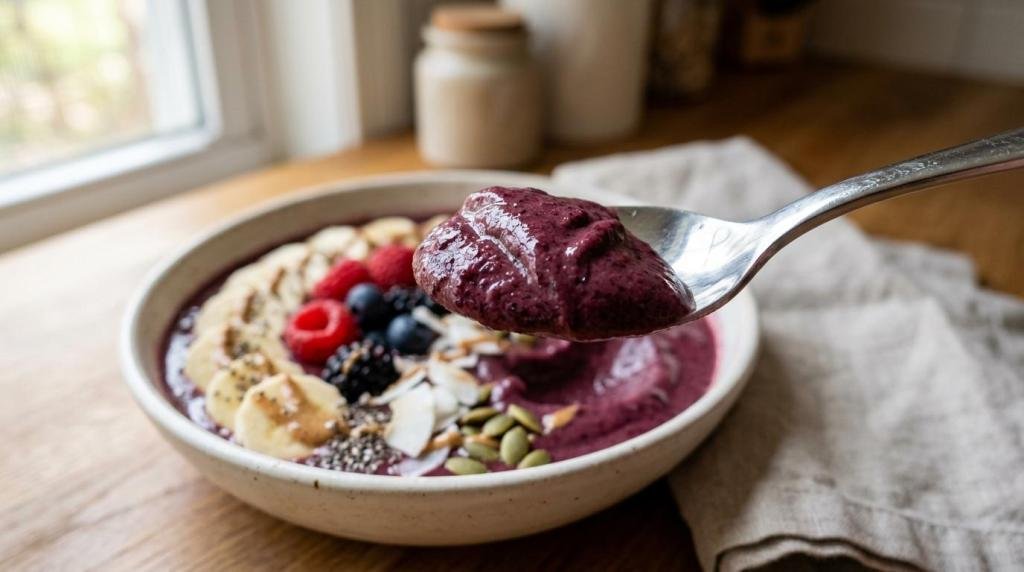
Few breakfasts check as many boxes as a well-built smoothie bowl: quick, colorful, satisfying, and easy to adapt. These healthy smoothie bowl recipes bring together frozen fruit, protein, fiber, and smart toppings in a way that feels fresh enough for a weekday and fun enough for a weekend brunch.
Healthy Smoothie Bowl Recipes Introduction
What if a breakfast that takes about 10 minutes could deliver the fiber of fruit and seeds, the staying power of protein, and the visual appeal people usually expect from a café order? Balanced smoothie bowls often land in the 280 to 400 calorie range, with roughly 7 to 18 grams of fiber depending on the base and toppings, which is a strong start to the day for many home cooks.
That is why healthy smoothie bowl recipes keep showing up in meal plans, post-workout routines, and family breakfast rotations. A good bowl is not just blended fruit. It is a nutrient-dense breakfast built on frozen produce, a creamy liquid, a protein source, and toppings that add crunch, healthy fats, and contrast. Think açai bowl, green smoothie bowl, mango protein bowl, or a cocoa-peanut version that tastes like dessert while still working hard nutritionally.
Healthy Smoothie Bowl Recipes Ingredients List
The easiest way to make smoothie bowls more useful is to think in formulas instead of rigid rules. Start with a thick frozen base, add enough liquid to blend, include a protein element, then finish with toppings that add texture and color.
| Recipe style | Base ingredients | Toppings | Easy substitutions |
|---|---|---|---|
| Berry açai bowl | Frozen açai purée, mixed berries, 1/2 banana, unsweetened almond milk, chia seeds | Fresh berries, coconut flakes, sliced banana, nut butter | Swap banana for avocado for lower sugar; use oat milk or coconut milk |
| Green spirulina bowl | Spinach or kale, cucumber, 1/2 avocado, 1/2 banana, spirulina, coconut water | Kiwi, hemp seeds, pumpkin seeds, shredded coconut | Use zucchini instead of cucumber; skip spirulina and use matcha or extra greens |
| Chocolate peanut power bowl | Banana, Greek yogurt, cocoa powder, protein powder, oats, almond milk, peanut butter | Cacao nibs, chopped peanuts, banana slices | Use soy or coconut yogurt for dairy-free; swap peanut butter for almond or sunflower butter |
| Tropical mango protein bowl | Frozen mango, pineapple, 1/2 banana, flaxseed, pea or hemp protein, unsweetened coconut milk | Kiwi, passion fruit, pumpkin seeds, coconut | Use papaya instead of pineapple; use chia instead of flax |
If you want one bowl that works for almost everyone, begin with frozen berries, banana, Greek yogurt or plant yogurt, unsweetened milk, and chia seeds. That combination delivers creaminess, natural sweetness, protein, and fiber without pushing added sugar too high.
Equipment for Easy Smoothie Bowl Preparation
A high-speed blender makes the biggest difference because smoothie bowls need to be thicker than standard smoothies. A personal blender can still do the job if you use smaller frozen pieces and add liquid slowly. A tamper, silicone spatula, measuring cup, and chilled serving bowl also make the process easier and faster.
Healthy Smoothie Bowl Recipes Timing
Smoothie bowls are fast, which is part of their appeal. Most versions come together in less time than oatmeal on the stove or a full egg breakfast.
| Task | Time |
|---|---|
| Ingredient prep | 6 minutes |
| Blending | 2 minutes |
| Topping and serving | 2 minutes |
| Total time | 10 minutes |
At about 10 minutes total, this is often half the time of many cooked breakfasts that run closer to 20 to 30 minutes. If you freeze fruit in portions ahead of time, the total can drop even more.
Step-by-Step Instructions for Healthy Smoothie Bowl Recipes
Step 1: Freeze and portion the base ingredients
Use frozen fruit as the backbone of the bowl. Frozen berries, mango, pineapple, banana, or açai create body without needing lots of ice, which can water down flavor. If you meal prep, portion fruit into freezer bags with seeds or greens so the bowl is nearly ready before you even open the blender.
Step 2: Add liquid first for smoother blending
Pour a small amount of liquid into the blender before the solid ingredients. This helps the blades catch quickly and reduces the urge to add too much liquid later. Unsweetened almond milk, oat milk, coconut milk, kefir, and coconut water all work, depending on whether you want creaminess, tang, or a lighter finish.
Step 3: Blend for thickness, not for a drinkable texture
Add soft ingredients next, then frozen fruit last. Blend in short bursts, scrape down the sides if needed, and stop as soon as the mixture turns smooth and spoonable. If it looks like a regular smoothie, it is too thin for a true bowl. Add more frozen fruit, oats, avocado, or chia to bring it back.
Step 4: Taste and adjust with smart add-ins
Before reaching for honey or maple syrup, taste the bowl. Ripe fruit often gives enough sweetness on its own. If it needs a lift, try cinnamon, vanilla, cocoa, a date, or a few drops of stevia. If it feels flat, a squeeze of lemon or lime can brighten the entire bowl.
Step 5: Build toppings for texture and balance
This is where a smoothie bowl becomes a meal instead of a snack. Aim for contrast: creamy base, juicy fruit, crunchy seeds, and maybe a chewy or crisp accent. Toppings also help balance the nutrition by adding healthy fats, minerals, and more fiber.
Pairing matters here. Berry bowls love chia, coconut, and almond butter. Tropical bowls work beautifully with kiwi, pumpkin seeds, and toasted coconut. Chocolate bowls welcome sliced banana, cacao nibs, and a spoonful of peanut or sunflower butter.
Nutritional Information for Healthy Smoothie Bowls
Nutrition changes based on the bowl, yet a balanced serving usually includes a mix of carbohydrates for energy, protein for fullness, and healthy fats to slow digestion and support satiety. Many well-built bowls fall around 300 to 400 calories and can provide enough volume to serve as breakfast, especially when protein and fiber are present.
A practical target for one meal-sized bowl is shown below.
| Nutrition target per bowl | Typical range |
|---|---|
| Calories | 280 to 400 |
| Protein | 10 to 20 g |
| Carbohydrates | 35 to 55 g |
| Fiber | 7 to 18 g |
| Fat | 8 to 18 g |
Berries, kiwi, mango, and greens contribute vitamin C, carotenoids, folate, and potassium. Chia, flax, hemp, pumpkin seeds, and nut butters bring magnesium, healthy fats, and extra staying power. If you want a more filling breakfast, increase protein first. Greek yogurt, kefir, silken tofu, or unflavored protein powder are all effective choices.
Healthier Alternatives for Smoothie Bowl Ingredients
The best healthy smoothie bowl recipes are flexible enough to fit different goals. If you want lower sugar, replace some banana with avocado or zucchini. If you want more protein, trade part of the liquid for Greek yogurt or soy yogurt. If you want more fiber, add chia seeds, flaxseed, oats, or extra berries rather than more sweetener.
A few swaps make a real difference. Unsweetened almond milk can lower calories compared with dairy milk. Chia seeds can thicken a bowl while raising fiber. Greek yogurt can add a meaningful protein boost compared with creamier but lower-protein ingredients. For dairy-free bowls, pea protein, coconut yogurt, and hemp seeds keep the texture rich without losing structure.
Serving Suggestions for Healthy Smoothie Bowls
Smoothie bowls shine when they feel personal. Serve a berry bowl in a chilled shallow bowl for a classic breakfast. Build a tropical version in a coconut shell for weekend brunch. Make a chocolate protein bowl after a workout when you want something cool, filling, and a little indulgent.
They also fit nicely into a broader breakfast routine. Pair one with homemade granola, overnight oats, or a batch of boiled eggs if you need extra fuel. For kids, keep toppings simple and familiar. For adults, add a few higher-impact ingredients like cacao nibs, pumpkin seeds, hemp hearts, or sliced kiwi for more texture and nutrition.
Common Mistakes to Avoid in Healthy Smoothie Bowl Recipes
A smoothie bowl can look healthy while still missing the mark nutritionally or texturally. Most problems come down to balance, portioning, or blending technique.
- Too much liquid
- Too many sweet toppings
- Not enough protein
- Relying only on banana
- Blending too long
- Skipping texture contrast
- Using sweetened yogurt without checking the label
- Forgetting that granola and nut butter add calories quickly
Storing Tips for Healthy Smoothie Bowl Recipes
Smoothie bowls are best right after blending, when the texture is thick and the color is vivid. Still, there are good ways to prep ahead without losing much quality.
- Freezer packs: Portion fruit, greens, and seeds into bags or containers so breakfast is ready to blend.
- Refrigerator storage: Keep the blended base in an airtight jar for up to 24 hours, then stir before serving.
- Toppings: Store granola, nuts, and coconut separately so they stay crisp.
- Texture refresh: Add a spoonful of yogurt or a splash of milk before serving if the bowl thickens too much in the fridge.
- Freezing leftovers: Freeze the base without toppings, thaw slightly, then re-blend for a smoother finish.
Healthy Smoothie Bowl Recipe Recap
These bowls are quick, flexible, and genuinely satisfying when built with frozen fruit, protein, fiber, and thoughtful toppings. Try one this week, then share your results in the review section or comments. If you want more easy breakfast ideas and healthy recipes, subscribe for fresh updates and kitchen inspiration.
Healthy Smoothie Bowl Recipes FAQs
Can I make a smoothie bowl without banana?
Yes. Avocado, frozen mango, frozen cauliflower, zucchini, and thick yogurt all help create a creamy texture without banana. If sweetness is the main concern, use berries, pineapple, or a date in small amounts.
Are smoothie bowls actually healthy?
They can be very healthy when the bowl includes protein, fiber, and moderate portions of toppings. Problems usually show up when bowls turn into dessert with lots of sweetened granola, syrups, and oversized nut butter servings.
How do I make a smoothie bowl thicker?
Use more frozen fruit, less liquid, and a thick ingredient like yogurt, avocado, oats, or chia seeds. Blend slowly and only add liquid one tablespoon at a time. A thick bowl should be spoonable, not drinkable.
Can I prep smoothie bowls ahead of time?
Yes, though the best method is prepping freezer packs rather than storing fully blended bowls. If you do blend ahead, keep the base chilled in an airtight container for up to one day and add fresh toppings right before eating.
What is the best protein option for smoothie bowls?
Greek yogurt is a strong all-around choice for texture and protein. For dairy-free bowls, soy yogurt, silken tofu, pea protein, or hemp protein work well. Pick unsweetened options when possible so you stay in control of the overall sweetness.
