
A tropical smoothie bowl can feel like a mini vacation at breakfast, yet it is practical enough for a weekday morning. With frozen fruit, a creamy base, and a few bright toppings, this easy bowl delivers color, texture, and a refreshing flavor that fits busy schedules and relaxed weekends alike.
Tropical Smoothie Bowl Introduction and Why It Works
If protein and fiber at breakfast are often linked with better satiety, why do so many fast morning meals still leave people hungry before noon? A tropical smoothie bowl answers that question with a spoonable blend of fruit, yogurt, and smart toppings that can be ready in about 10 minutes.
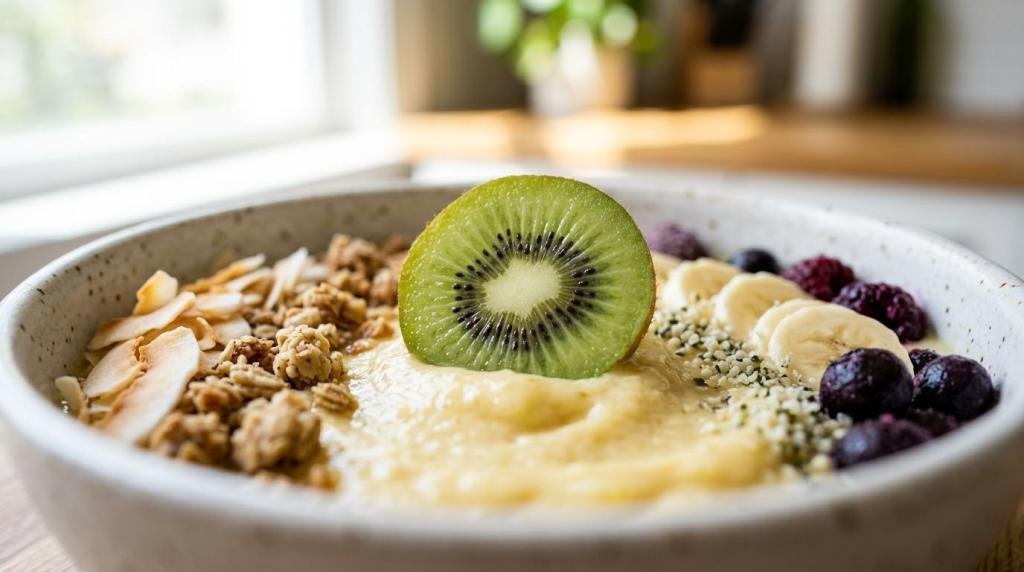
What makes this breakfast bowl stand out is texture. A good tropical smoothie bowl is thicker than a drinkable smoothie, cold enough to feel refreshing, and rich enough to hold crunchy toppings on top. Frozen mango, pineapple, banana, and a creamy liquid create that signature consistency, while add-ins like Greek yogurt, chia seeds, coconut flakes, or granola make it more filling and balanced.
This recipe also works well because it is flexible. You can keep it dairy-free, raise the protein, reduce the sugar, or make it more dessert-like with a few quick changes.
Tropical Smoothie Bowl Ingredients List and Smart Substitutions
The best ingredient list for a tropical smoothie bowl keeps the flavors bright and the method easy. Frozen fruit is the key to a thick result, while a modest amount of liquid helps the blender move without turning the bowl into a drink.
- Frozen mango chunks
- Frozen pineapple: about 1 cup for tangy sweetness and that classic tropical flavor
- Banana: 1 medium, preferably frozen, for body and natural sweetness
- Coconut milk
- Greek yogurt: about 1/2 cup for creaminess and extra protein, or use a plant-based yogurt
- Lime juice
- Chia seeds: 1 to 2 teaspoons, optional, for fiber and a slightly thicker texture
- Toppings: kiwi slices, toasted coconut, granola, berries, hemp seeds, passion fruit, or sliced banana
A few simple swaps can tailor the bowl to what you have on hand. Papaya or peaches can stand in for mango. Oat milk or almond milk can replace coconut milk if you want a lighter base. If you prefer a vegan smoothie bowl, use dairy-free yogurt and skip honey-based toppings. If your fruit is extra sweet, a squeeze of lime keeps everything lively and balanced.
Tropical Smoothie Bowl Timing and Helpful Equipment
This tropical smoothie bowl is built for speed. Prep time is about 10 minutes, cook time is 0 minutes, and total time stays close to 10 minutes. That makes it much quicker than many cooked breakfasts, which often take 20 to 30 minutes from start to finish.
A high-speed blender simplifies the process more than any other tool. A tamper helps push frozen fruit toward the blades without adding extra liquid, and a sturdy spatula makes it easier to scrape out every bit of the thick mixture. If you chill the serving bowl in the freezer for a few minutes first, the texture stays cold and firm a little longer.
How to Make a Tropical Smoothie Bowl Step by Step
A thick smoothie bowl is less about complicated technique and more about ingredient order, liquid control, and patience.
Step 1: Freeze and measure the fruit
Use frozen mango, frozen pineapple, and a frozen banana if possible. Frozen fruit creates the cold, creamy structure that defines a smoothie bowl. If you only have fresh banana, the bowl will still work, though it may be slightly softer.
Measure everything before blending. That small habit keeps the process fast and prevents over-pouring liquid, which is one of the easiest ways to lose the thick texture.
Step 2: Add the base ingredients to the blender
Start with the yogurt and a small amount of milk at the bottom of the blender. Then add the banana, mango, pineapple, lime juice, and chia seeds. Keeping the liquid at the bottom gives the blades a better chance to catch the fruit.
Start with less liquid than you think you need. About 1/4 to 1/3 cup is usually enough for a thick tropical smoothie bowl. You can always add a splash more, but you cannot easily take it back once the mixture thins out.
Step 3: Blend slowly, then increase speed
Pulse a few times first to break up the larger frozen pieces. Once the fruit starts moving, blend on medium to high speed until the mixture turns smooth and creamy. Stop and scrape the sides as needed.
The texture should be spoonable, not pourable. If the blender stalls, add milk one tablespoon at a time. Small additions make a big difference.
Step 4: Taste and adjust the flavor
Give the smoothie base a quick taste before transferring it to the bowl. If it needs brightness, add a little more lime juice. If the fruit is not very ripe, a few pineapple chunks or half a date can sweeten it naturally.
This is also the moment to adjust richness. More yogurt makes the bowl creamier and slightly tangier, while a splash of coconut milk gives it a fuller tropical note.
Step 5: Build the bowl and add texture
Spoon the smoothie into a chilled bowl and smooth the top with the back of a spoon. Add toppings in rows, clusters, or a casual sprinkle, depending on the look you want.
Try to include at least one crunchy topping and one fresh topping. Granola with kiwi, coconut flakes with berries, or hemp seeds with sliced banana all create contrast that keeps every bite interesting.
Tropical Smoothie Bowl Nutritional Information
Nutrition will shift based on your milk, yogurt, and toppings, though the estimate below works well for one medium bowl made with Greek yogurt, coconut milk, frozen mango, pineapple, banana, and a light topping of granola and coconut.
| Nutrient | Estimated amount per serving |
|---|---|
| Calories | 320 to 380 |
| Protein | 10 to 15 g |
| Carbohydrates | 50 to 58 g |
| Fiber | 6 to 9 g |
| Total Fat | 8 to 12 g |
| Natural Sugars | 30 to 38 g |
| Potassium | 550 to 750 mg |
| Vitamin C | High, mainly from pineapple and mango |
This balance makes the bowl a strong option for breakfast or a post-workout snack. If you want it to hold you longer, increasing protein and fiber usually has the biggest effect. Greek yogurt, chia seeds, hemp seeds, and nut butter can all help without changing the tropical profile too much.
Healthier Tropical Smoothie Bowl Alternatives for Different Diets
A healthier version does not need to taste restrained. It simply means building the bowl around your goals.
If you want a lower-sugar tropical smoothie bowl, reduce the banana and use more frozen cauliflower or avocado for body. Both create creaminess with a milder sweetness. Mango and pineapple still carry enough tropical flavor that the bowl tastes bright and satisfying. A squeeze of lime also sharpens flavor, which helps when you cut back on sweet fruit.
If your focus is protein, add more Greek yogurt, cottage cheese, or a scoop of vanilla protein powder. A protein-rich smoothie bowl can feel much more substantial, especially if you finish it with pumpkin seeds or hemp hearts. For a dairy-free version, soy yogurt tends to offer more protein than coconut or almond yogurt.
For extra fiber, blend in chia seeds, flaxseed, or oats. Oats give the bowl a thicker texture and a little staying power, which many home cooks appreciate on busy mornings. A vegan smoothie bowl can still be rich and filling with plant yogurt, oat milk, and seed toppings.
Tropical Smoothie Bowl Serving Suggestions for Breakfast and Snacks
This recipe shines at breakfast, though it works just as well as a light lunch, an afternoon snack, or a colorful brunch item. Serve it in a wide bowl so the toppings have room to stand out. A smaller, deeper bowl makes the portion look fuller, which can be helpful if you are serving kids or want a snack-size portion.
For a more rounded breakfast, pair the bowl with something warm and simple. Whole grain toast, a boiled egg, or a small muffin balances the cold fruit base nicely. If you are planning a weekend spread, place out little bowls of granola, coconut flakes, sliced fruit, and seeds so everyone can build their own version. That same idea also pairs well with other easy breakfast favorites like overnight oats or chia pudding.
Common Tropical Smoothie Bowl Mistakes to Avoid
Even simple recipes can go sideways when texture is the goal. Most tropical smoothie bowl issues come down to liquid, fruit temperature, or topping balance.
- Too much liquid: start small and add only by the tablespoon
- Using mostly fresh fruit
- Weak blending strategy: pulse first, scrape the sides, and blend again instead of pouring in extra milk right away
- Overloading the toppings
- Skipping acidity: a little lime juice keeps the fruit flavors from tasting flat
A bowl that is too thin can often be rescued with extra frozen mango, banana, or a spoonful of yogurt. If it is too tart, add a few more pineapple chunks or another slice of banana.
Tropical Smoothie Bowl Storing Tips for Fresh Flavor
A tropical smoothie bowl is best eaten right after blending. That is when the texture is thick, cold, and ideal for toppings. Once it sits, the mixture softens and the crunchy toppings lose their contrast.
If you want to prep ahead, freeze smoothie packs instead of the finished bowl. Add measured mango, pineapple, and banana to freezer bags or containers, then label each pack. In the morning, dump the pack into the blender with yogurt and milk, and breakfast is nearly done.
You can also prep toppings ahead. Toast coconut flakes, portion granola, and slice sturdier fruits the night before. Keep wet toppings and crunchy toppings separate until serving. If you do have leftovers, freeze the smoothie base in a covered container and re-blend briefly with a splash of milk before serving.
A Quick Reason to Make This Tropical Smoothie Bowl This Week
This tropical smoothie bowl is fast, colorful, creamy, and easy to adapt with pantry staples or fresh toppings. Try it this week, then share your results in the review section or leave a comment on the blog. If you want more easy breakfast ideas, subscribe for recipes and kitchen tips.
Tropical Smoothie Bowl FAQs
Can I make a tropical smoothie bowl without banana?
Yes. Use avocado, frozen cauliflower, or extra mango for body. Banana adds sweetness and creaminess, though it is not required. If you skip it, taste the bowl before serving and add a little more pineapple or a date if you want more sweetness.
What liquid works best for a tropical smoothie bowl?
Coconut milk gives the bowl a rich tropical note, while almond milk and oat milk create a lighter texture. If you want more protein, dairy milk or soy milk are strong options. The most important rule is to use a small amount first.
How do I make the smoothie bowl thicker?
Use fully frozen fruit, chill the bowl, and start with very little liquid. Blend slowly and scrape often. If the mixture gets too thin, add more frozen mango, banana, or a spoonful of yogurt until it firms up again.
Is a tropical smoothie bowl healthy for breakfast?
It can be. The answer depends on what goes into it. A bowl built with fruit, yogurt, seeds, and moderate toppings offers fiber, vitamins, and protein. A version loaded with sweet granola, honey, and oversized portions can move closer to dessert, so balance matters.
Can I use a regular blender instead of a high-speed blender?
Yes, though it may take a little more patience. Let the frozen fruit sit at room temperature for 2 to 3 minutes, cut larger pieces smaller, and blend in short bursts. A tamper or spatula helps, and keeping the liquid low is still the best way to get that thick smoothie bowl texture.
