
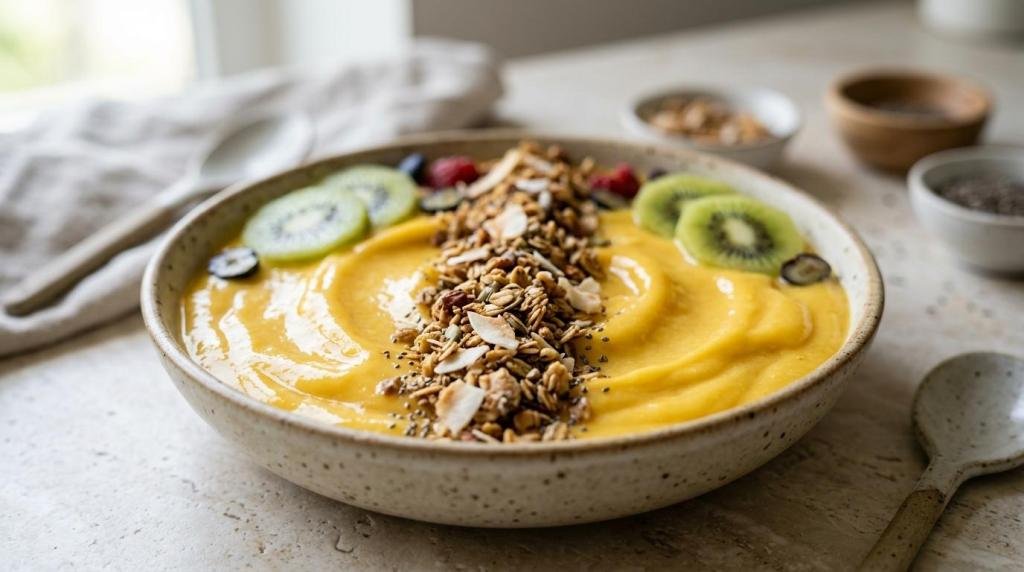
Bright, cold, and naturally sweet, a mango smoothie bowl turns a short ingredient list into a breakfast that feels fresh and special without asking much from the cook. It is one of the easiest ways to turn frozen fruit, yogurt, and crunchy toppings into a meal that fits busy mornings, slow weekends, and warm afternoons equally well.
Mango Smoothie Bowl Introduction
Many store-bought smoothie bowls land between 450 and 600 calories once sweetened granola, nut butter drizzles, and large fruit portions are added. Can a homemade mango smoothie bowl stay thick, satisfying, and bright closer to 350 calories while taking less than 10 minutes? Yes, and the answer is mostly about texture control, smart toppings, and using frozen fruit the right way.
This recipe keeps things simple: frozen mango for deep tropical flavor, banana for body, yogurt for creaminess, and a small amount of milk to help everything blend without turning it into a drink. The result sits somewhere between soft-serve and a spoonable breakfast bowl, with enough flexibility for a high-protein breakfast, a dairy-free version, or a lighter afternoon snack.
If you enjoy quick breakfasts with real staying power, this bowl works because it combines natural sweetness, fiber, and texture. That last part matters more than many people think. A smoothie that you drink fast can leave you hungry sooner. A bowl you top and eat slowly often feels more filling.
Mango Smoothie Bowl Ingredients List
A good mango smoothie bowl starts with a cold, thick base. The ingredients below create that creamy texture while keeping the flavor sunny and clean, not overly sweet or heavy.
| Ingredient | Amount | What it adds | Easy swap |
|---|---|---|---|
| Frozen mango chunks | 2 cups | Sweet, floral mango flavor and thick texture | Frozen pineapple or frozen peaches |
| Frozen banana | 1 medium | Creamy body and natural sweetness | 1/2 avocado plus a little extra honey or date |
| Plain Greek yogurt | 1/2 cup | Tang, protein, and richness | Coconut yogurt or soy yogurt |
| Milk of choice | 1/4 to 1/3 cup | Helps blending without thinning too much | Oat milk, almond milk, coconut milk |
| Lime juice | 1 to 2 teaspoons | Brightness that wakes up the fruit | Lemon juice |
| Chia seeds | 1 teaspoon, optional | Fiber and slight thickening | Ground flaxseed |
| Pinch of salt | Small pinch | Makes the fruit taste fuller | Skip if preferred |
| Granola | 2 to 3 tablespoons | Crunch and contrast | Toasted oats or low-sugar cereal |
| Fresh fruit for topping | A few slices | Color and juicy freshness | Berries, kiwi, banana, pineapple |
| Coconut flakes or hemp hearts | 1 tablespoon | Texture and a tropical finish | Pumpkin seeds or sunflower seeds |
The best substitutions depend on what you want from the bowl. Greek yogurt makes it richer and higher in protein. Coconut yogurt gives a soft tropical note and keeps the bowl dairy-free. If your mango is very ripe and sweet, a squeeze of lime helps balance the flavor beautifully.
A few tools make the process easier and faster, especially if you like your smoothie bowl very thick.
- High-speed blender
- Tamper or sturdy spoon for pushing fruit toward the blades
- Measuring cups
- Wide, shallow bowl
- Small spoon for toppings
Mango Smoothie Bowl Timing
This recipe is quick enough for weekdays and polished enough for brunch. Total active time is about 8 minutes, which is often faster than cooking eggs and toast and usually much quicker than a coffee shop stop.
| Task | Time |
|---|---|
| Gather ingredients and toppings | 3 minutes |
| Blend the smoothie base | 3 minutes |
| Add toppings and serve | 2 minutes |
| Total time | 8 minutes |
If your fruit is already portioned into freezer packs, the total can drop to about 5 or 6 minutes.
Mango Smoothie Bowl Step-by-Step Instructions
The main goal is thickness. Think spoonable, not sippable. If the blender struggles slightly at first, that is usually a good sign.
Step 1 for a Thick Mango Smoothie Bowl: Freeze and Prep the Fruit
Use frozen mango and frozen banana straight from the freezer. If you are freezing your own banana, slice it before freezing so the blender can break it down more easily. Cold fruit is what gives the bowl that creamy, scoopable texture.
If you only have fresh mango, freeze the chunks for at least 3 to 4 hours first. Fresh fruit will taste great, but it makes a thin smoothie unless you add ice, which can water down the flavor.
Step 2 for a Creamy Mango Smoothie Bowl: Add the Blender Ingredients in the Right Order
Pour the milk into the blender first, then add yogurt, lime juice, banana, mango, chia seeds, and the pinch of salt. Starting with the liquid at the bottom helps the blades catch early, so you can use less milk and keep the base thicker.
Begin with the smaller amount of milk. You can always add another splash. It is much harder to fix a runny smoothie bowl than a thick one.
Step 3 for a Spoonable Mango Smoothie Bowl: Blend Slowly and Scrape as Needed
Pulse a few times, then blend on low to medium speed. Stop and scrape the sides if needed. A high-speed blender can finish the job in about 45 to 60 seconds, while a standard blender may need a bit more patience.
You are looking for a texture like soft frozen yogurt. If the blades stop moving, add 1 tablespoon of milk at a time. Tiny additions make a big difference here.
Step 4 for the Best Mango Smoothie Bowl Flavor: Taste and Adjust
Taste the base before serving. If it feels flat, add a few extra drops of lime juice. If your mango is less sweet than expected, a teaspoon of honey or maple syrup can round things out, though many bowls do not need any extra sweetener at all.
This is also the moment to personalize the bowl. Want it more filling? Blend in more yogurt. Want a lighter tropical feel? Use oat milk and a little extra lime.
Step 5 for a Balanced Mango Smoothie Bowl: Build the Toppings
Spoon the mixture into a chilled bowl and add toppings right away. Arrange them in lines, clusters, or a simple scatter. The visual contrast matters because it turns a fast breakfast into something more inviting.
Try to include at least three textures: creamy base, juicy fruit, and crunch. Granola, coconut, seeds, and fresh berries work especially well. If you want a breakfast that keeps you full longer, add hemp hearts or a spoonful of nut butter.
Mango Smoothie Bowl Nutritional Information
The numbers below are estimates based on common package labels and standard food database averages. Values will shift based on the yogurt, milk, and toppings you choose.
| Nutrient | Base only | Base with granola, fruit, and coconut |
|---|---|---|
| Calories | 260 | 360 |
| Protein | 12 g | 15 g |
| Carbohydrates | 45 g | 55 g |
| Fiber | 5 g | 8 g |
| Total fat | 4 g | 9 g |
| Sugars | 28 g | 33 g |
| Potassium | 520 mg | 610 mg |
| Calcium | 160 mg | 210 mg |
Compared with many sweet breakfast pastries, this mango smoothie bowl gives you more fiber, more fruit, and usually better satiety. If you want to push protein higher, Greek yogurt or a scoop of protein powder makes a noticeable difference without changing the flavor too much.
Healthier Alternatives for a Mango Smoothie Bowl
One reason this recipe works well for home cooks is that the base is easy to adapt. You can make it lighter, more filling, lower in sugar, or fully plant-based without losing the tropical character that makes it so appealing.
- Higher protein: Use extra Greek yogurt, skyr, or add 1 scoop of vanilla protein powder with a tablespoon or two of extra milk.
- Lower sugar: Use half a banana, skip sweetened granola, and top with pumpkin seeds or toasted oats instead.
- Dairy-free: Swap in coconut yogurt or soy yogurt and use oat milk or almond milk.
- More fiber: Blend in chia seeds or ground flax, then top with berries and unsweetened coconut.
- Nut-free: Use sunflower seed butter or pumpkin seeds instead of almonds or peanut butter.
A small change can also make the bowl better suited to different moments in the day. A higher-protein version works well after a workout. A lighter version with extra fresh fruit fits a warm afternoon snack.
Mango Smoothie Bowl Serving Suggestions
The base is versatile enough to move beyond a basic breakfast. A few topping changes can shift it from energizing morning meal to colorful snack board centerpiece.
- Breakfast bowl with granola and kiwi
- Post-workout bowl with hemp hearts
- Dessert-style bowl with dark chocolate and toasted coconut
- Kid-friendly bowl with strawberries and crispy cereal
For a fuller spread, serve it alongside overnight oats, boiled eggs, or whole grain toast. If you are hosting brunch, set out small bowls of toppings and let everyone build their own version.
Common Mango Smoothie Bowl Mistakes to Avoid
Most smoothie bowl problems come down to texture. Flavor is easy to fix. Thickness is where technique matters.
- Too much liquid: Start small and add more only a tablespoon at a time.
- Using unfrozen fruit: Fresh mango creates a drinkable smoothie, not a bowl.
- Overblending: Long blending warms the mixture and loosens the texture.
- Skipping contrast: A bowl without crunch can taste one-note after a few bites.
- Adding toppings too early: Crunchy toppings soften quickly on a wet base.
Once you know these patterns, the recipe becomes very reliable. After one or two tries, you will likely stop measuring the liquid and adjust by sight and sound alone.
Mango Smoothie Bowl Storing Tips
A mango smoothie bowl tastes best right after blending. That fresh, thick texture is part of what makes it special. Still, there are smart ways to prep ahead if mornings are tight.
The easiest method is to build freezer packs. Add the mango and banana to individual freezer bags or containers, then keep your yogurt and milk ready in the fridge. When breakfast time comes, you only need to blend and top. This method protects texture much better than storing the finished bowl.
If you do have leftovers, freeze the smoothie base in a sealed container and let it sit at room temperature for 10 to 15 minutes before stirring. It will not be as silky as freshly blended, though it still works well. Keep granola, seeds, and coconut separate until serving so they stay crisp.
Mango Smoothie Bowl Recipe Recap
This mango smoothie bowl is fast, creamy, colorful, and easy to tailor with dairy-free, high-protein, or lower-sugar options. Blend frozen mango, banana, yogurt, and milk, then finish with crunchy toppings. Try it this week, leave a review or comment on the blog, and subscribe for more recipe updates every week.
Mango Smoothie Bowl FAQs
A few details come up again and again with this recipe, especially around texture, prep, and substitutions.
Can I make a mango smoothie bowl without banana?
Yes. Banana adds creaminess and sweetness, but you can replace it with 1/2 avocado, more frozen mango, or a few tablespoons of yogurt plus a small amount of sweetener if needed. The flavor changes slightly, though the bowl can still be thick and satisfying.
How do I thicken a runny mango smoothie bowl?
Add more frozen fruit first. Frozen mango is the cleanest fix because it keeps the tropical flavor strong. You can also add a few ice cubes, but that may mute the fruit. Next time, use less milk at the beginning and blend in short bursts.
Is a mango smoothie bowl healthy for breakfast?
It can be, especially when you keep an eye on toppings. The base offers fruit, calcium, potassium, and often protein. What changes the nutrition most is the topping layer. A heavy hand with sweet granola, syrups, and chocolate can raise calories quickly.
Can I make a mango smoothie bowl ahead of time?
You can prep the ingredients ahead, but the finished bowl is best right away. Frozen fruit packs are the best make-ahead move. If needed, blend the base and freeze it, then thaw slightly and stir before serving.
What toppings stay crunchy the longest?
Granola, toasted coconut, cacao nibs, pumpkin seeds, and hemp hearts all hold up well. Fresh fruit is best added just before serving. If you are packing the bowl for later, keep toppings in a separate container and add them at the last minute.
