
A smoothie bowl recipe easy enough for busy mornings can still feel colorful, creamy, and deeply satisfying. If many café smoothie bowls land somewhere between 500 and 700 calories once sweet granola, nut butter, and dried fruit are piled on, why do so many people assume the homemade version must be complicated or less exciting?
Why this easy smoothie bowl recipe works
The answer is texture control.
When you make a smoothie bowl at home, you decide how thick the base should be, how much natural sweetness you want, and whether the toppings add crunch, protein, fiber, or all three. That control matters. A thick smoothie bowl should be spoonable, not drinkable, and the easiest way to get there is using frozen fruit, a modest amount of liquid, and a blender that can handle a dense blend.
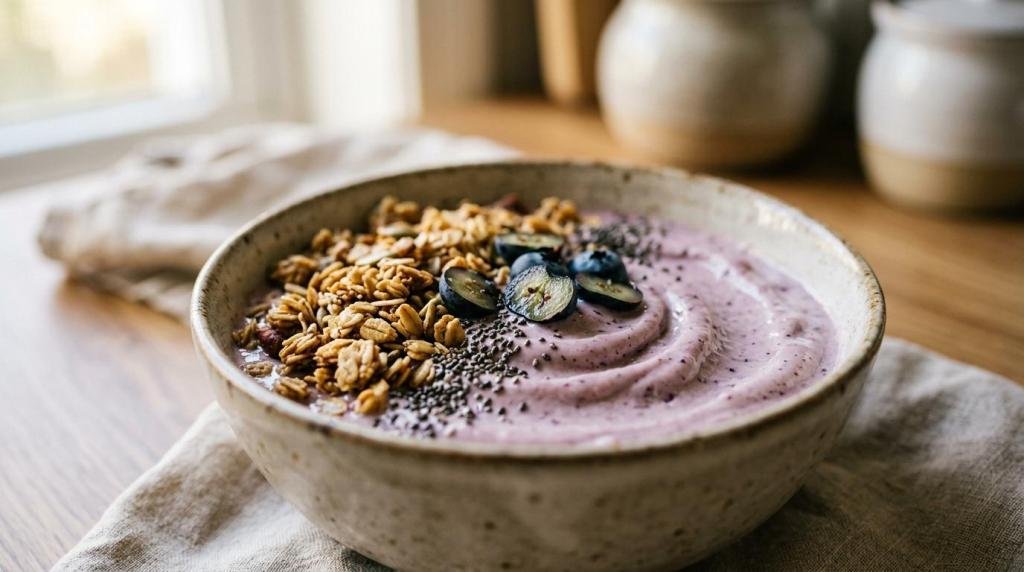
This easy smoothie bowl recipe is built for real mornings. It uses approachable ingredients, comes together fast, and works well as a healthy breakfast, post-workout meal, or light afternoon pick-me-up. You get creamy banana, bright berries, cool yogurt, and a crisp topping finish in every bite.
It also adapts beautifully.
Ingredients for an easy smoothie bowl recipe
A good smoothie bowl starts with a cold, thick base and toppings that bring contrast. The ingredients below create a berry-banana bowl with a creamy texture, balanced sweetness, and enough body to support sliced fruit, granola, and seeds without sinking immediately.
- 2 cups frozen mixed berries
- 1 frozen banana, sliced before freezing
- 1/2 cup plain Greek yogurt
- 1/4 to 1/3 cup unsweetened almond milk
- 1 tablespoon chia seeds
- 1 teaspoon honey or maple syrup, optional
- 1/4 teaspoon vanilla extract, optional
- fresh strawberries, banana slices, or blueberries for topping
- granola for topping
- shredded coconut, hemp seeds, or pumpkin seeds for topping
A few simple swaps keep this recipe flexible. Use coconut yogurt for a dairy-free bowl, oat milk for a creamier dairy-free base, or frozen mango if you want a sweeter tropical profile. If you prefer a higher-protein breakfast bowl, add a scoop of vanilla protein powder and reduce the liquid slightly to keep the texture thick.
Equipment for an easy smoothie bowl recipe
The right tools make this recipe much easier, especially if you want that thick, soft-serve consistency instead of a thin smoothie. A high-speed blender works best, though a strong food processor can also do the job. A tamper is helpful if your blender has one, and a small spatula makes it easier to scrape every bit into the bowl. Chilling the serving bowl for five minutes can also help the smoothie base stay cold and firm a little longer.
Timing for an easy smoothie bowl recipe
This recipe is quick enough for weekdays and polished enough for weekends. Most cooked breakfast recipes need 20 to 30 minutes from start to plate, while this smoothie bowl is usually ready in about 10 minutes.
| Task | Time |
|---|---|
| Prep ingredients | 5 minutes |
| Blend smoothie base | 3 minutes |
| Add toppings and serve | 2 minutes |
| Total time | 10 minutes |
That total is roughly 50 to 65 percent faster than many hot breakfast options, which is one reason smoothie bowls remain popular with home cooks who want speed without giving up freshness.
Step-by-step instructions for an easy smoothie bowl recipe
The method is simple, but a few details make the difference between a perfect thick bowl and a runny one. Start cold, go slow with the liquid, and resist the urge to overblend.
Step 1: Freeze and prep the fruit
If your banana is not already frozen, slice it before freezing so it blends more easily. Frozen berries straight from the freezer are ideal because they create the thick body that gives a smoothie bowl its signature texture.
Very hard fruit can challenge a weaker blender, so letting the berries sit at room temperature for two to three minutes can help without making the mixture watery.
Step 2: Add the base ingredients in the right order
Add the Greek yogurt and the smaller amount of almond milk to the blender first. Then add the chia seeds, frozen banana, frozen berries, and any optional vanilla or sweetener.
This order helps the blades catch the softer ingredients first, which often creates a smoother blend with fewer stops.
Step 3: Blend slowly and keep the texture thick
Pulse a few times, then blend on low to medium speed. Stop and scrape down the sides as needed. If the mixture is too thick to move, add almond milk one tablespoon at a time.
The goal is a spoonable, creamy puree. If it starts looking glossy and loose, you have added too much liquid. In that case, add a few extra frozen berries or a bit more frozen banana to bring it back.
Step 4: Taste and adjust before serving
Taste the smoothie base before transferring it to the bowl. If your berries are very tart, stir in the honey or maple syrup. If you want more tang, add a spoonful of extra yogurt. If you want more berry flavor, blend in a small handful of frozen blueberries.
This is the point where the bowl becomes yours.
Step 5: Build the bowl with texture in mind
Spoon the thick smoothie into a chilled bowl and smooth the top gently with the back of a spoon. Add toppings in rows, clusters, or a simple scattered finish.
Try to combine something crunchy, something fresh, and something rich. Granola plus fresh fruit plus seeds is a reliable formula that looks inviting and eats well.
Nutritional information for an easy smoothie bowl recipe
The exact numbers depend on the yogurt, milk, and toppings you choose, though the base recipe stays in a range that works well for many breakfast routines. The estimate below includes the smoothie base and a modest topping of granola and fruit.
| Nutrient | Approximate amount per serving |
|---|---|
| Calories | 330 to 380 |
| Protein | 13 to 17 g |
| Carbohydrates | 45 to 52 g |
| Fiber | 8 to 11 g |
| Total fat | 7 to 10 g |
| Added sugar | 0 to 6 g |
| Calcium | 15 to 20% DV |
| Vitamin C | 60 to 90% DV |
A bowl in this range gives many people a balanced start: fruit for natural carbohydrates, yogurt for protein, and chia or seeds for fiber and healthy fats. If you need a more filling meal, increasing protein is often more effective than simply adding more granola.
Healthier alternatives for an easy smoothie bowl recipe
One reason this easy smoothie bowl recipe keeps showing up in meal plans is flexibility. You can shift it toward higher protein, lower sugar, dairy-free, or extra fiber without losing that cold, creamy appeal.
- For more protein: add 1 scoop vanilla protein powder or use skyr in place of Greek yogurt
- For less sugar: skip sweetener and use extra ripe frozen banana or frozen mango
- For dairy-free needs: use coconut yogurt or almond yogurt and a plant-based milk
- For more fiber: add flaxseed meal, extra chia seeds, or top with raspberries and pumpkin seeds
- For a lower-calorie bowl: reduce granola and use fresh fruit plus unsweetened coconut for topping
- For nut-free kitchens: choose oat milk or soy milk and seed-based toppings instead of nut butter
These swaps also help families serve different needs from one base recipe. One bowl can become high-protein for an active adult, lighter for a quick breakfast, or sweeter and fruitier for kids.
Serving suggestions for an easy smoothie bowl recipe
A smoothie bowl feels special when the topping mix creates contrast. Creamy base, crisp granola, juicy fruit, and a few chewy or crunchy bits make each spoonful more interesting. If you serve it right away, that contrast is at its best.
For breakfast, pair the bowl with iced coffee, hot tea, or a hard-boiled egg if you want more staying power. For a brunch spread, set out topping bowls and let everyone build their own. Strawberries, blueberries, kiwi, cacao nibs, toasted coconut, and sunflower seeds all work well.
This recipe also slides easily into a broader breakfast rotation. If you enjoy simple morning recipes, pair it with homemade granola, overnight oats, or a fruit salad from your regular breakfast lineup.
Common mistakes in an easy smoothie bowl recipe
Most smoothie bowl problems come down to texture, temperature, or topping balance. Once you know the common trouble spots, the recipe gets much more reliable.
- Too much liquid: start with 1/4 cup and add more only if the blender truly needs help
- Not enough frozen fruit: room-temperature fruit makes a thinner bowl with less body
- Overblending: too much blending warms the mixture and melts the frozen ingredients
- Weak topping contrast: all-soft toppings make the bowl feel flat, so add something crunchy
- Oversweetening early: blend, taste, then sweeten only if needed
- Using watery yogurt: thinner yogurt can loosen the base faster than expected
A thick smoothie bowl should hold a spoon mark for a moment. If it pours, it is a smoothie. Still tasty, just a different breakfast.
Storing tips for an easy smoothie bowl recipe
Smoothie bowls are best eaten right after blending, when the texture is at its peak. If you need to prep ahead, freeze the fruit in portioned bags with the chia seeds already measured. Then all you need to add in the morning is yogurt and milk.
You can refrigerate leftovers for several hours, though the bowl will loosen as it sits. Stir before eating, or freeze the leftovers in a popsicle mold for a smart no-waste option. If you want to prep multiple servings, blend the base thick, freeze it in airtight containers, and let it soften for 10 to 15 minutes before stirring and serving.
Quick recipe recap and next steps
This easy smoothie bowl recipe turns frozen fruit, yogurt, and milk into a thick, spoonable breakfast in about 10 minutes. Use a powerful blender, keep liquid low, and finish with crunchy toppings for contrast. Try it this week, leave a comment or review, and subscribe for more simple recipe updates.
FAQs about an easy smoothie bowl recipe
Can I make a smoothie bowl without banana?
Yes. Banana helps with sweetness and creaminess, but it is not required. Frozen mango, avocado, extra berries, or a few cubes of frozen cauliflower can all help create thickness. If you remove banana, you may want a little honey or maple syrup depending on the fruit you choose.
How do I make my smoothie bowl thicker?
Use more frozen fruit and less liquid. That is the key. Start with the minimum liquid, blend slowly, and add only a tablespoon at a time if needed. Greek yogurt, chia seeds, and frozen banana also help create a thicker texture.
What blender is best for smoothie bowls?
A high-speed blender is the easiest option because it handles frozen fruit with less strain and gives a smoother result. A food processor also works well for very thick bowls. If your blender is less powerful, let the fruit soften for two to three minutes before blending.
Can I prep smoothie bowls the night before?
You can prep the ingredients, though the blended bowl is best fresh. Portion frozen fruit into freezer bags, chill your serving bowl, and pre-measure toppings. That setup makes the morning process very fast while keeping the texture close to ideal.
Are smoothie bowls actually healthy?
They can be, especially when you control the base and toppings. A homemade bowl with fruit, unsweetened yogurt, seeds, and a moderate amount of granola can be a balanced breakfast. The main issue comes when sweetened toppings stack up quickly and push the sugar and calorie count much higher.
What are the best toppings for a smoothie bowl?
The strongest topping mix includes one fresh fruit, one crunchy element, and one nutrient-dense finish. A good example is sliced strawberries, granola, and hemp seeds. If you like dessert-style bowls, try banana, toasted coconut, and a light drizzle of nut butter.
