
Bright color gets attention, but texture is what makes people come back. A dragon fruit smoothie bowl can look like a café breakfast and still be one of the fastest recipes in your kitchen. With frozen pitaya, a creamy fruit base, and crisp toppings, it delivers the cold, thick spoonfuls people want from a healthy breakfast bowl without much effort.
Why does a dragon fruit smoothie bowl take about 5 minutes yet feel more indulgent than many longer breakfasts?
Across many pitaya bowl recipes, the prep window lands around 5 to 7 minutes. That is often quicker than oatmeal with toppings, pancakes from scratch, or egg-based breakfasts, which can easily stretch past 10 minutes before they hit the table. The surprise is that speed does not mean compromise here. A well-made dragon fruit smoothie bowl has vivid color, natural sweetness, fiber, and a layered texture that feels thoughtful.
That contrast is what makes this recipe so useful for home cooks. You get a tropical smoothie bowl that feels fresh and polished, yet it relies on freezer-friendly ingredients and a blender more than active cooking time.
The secret is restraint with liquid and confidence with toppings.
Dragon fruit smoothie bowl ingredients and easy substitutions
The best dragon fruit smoothie bowl starts with a thick frozen base. Red-flesh pitaya gives the bold pink color most people want, while banana or mango adds body and sweetness. A small amount of milk, coconut water, or juice gets everything moving without turning the bowl thin.
Use this as a flexible framework rather than a rigid formula. If your goal is a vegan smoothie bowl, a high-protein breakfast, or a lower-sugar version, the swaps are straightforward.
- Frozen dragon fruit: 1 to 1 1/2 cups, preferably red pitaya for the brightest color
- Frozen banana: 1 medium banana for creaminess and sweetness
- Frozen mango or berries: 1/2 cup for extra fruit flavor and a colder, thicker blend
- Liquid: 1/4 to 1/3 cup almond milk, oat milk, soy milk, coconut water, or dairy milk
- Optional add-ins: chia seeds, hemp hearts, vanilla, lime juice, plain yogurt, or protein powder
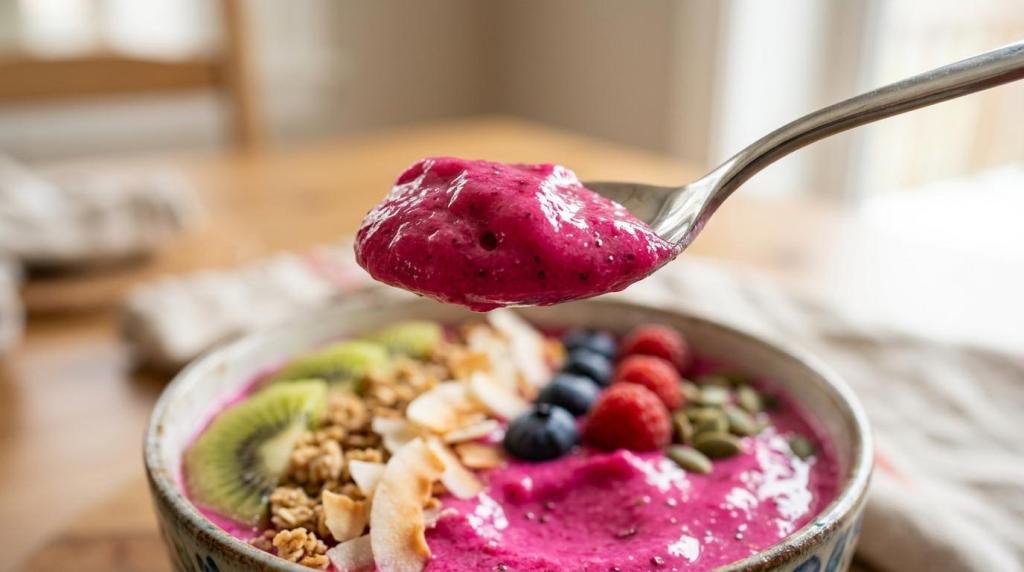
- Sliced kiwi
- Granola
- Toasted coconut flakes
- Fresh berries
- Pumpkin seeds
- Nut butter drizzle
Here is a quick substitution guide that keeps flavor and texture in balance:
| Ingredient | Best Role in the Bowl | Easy Swap |
|---|---|---|
| Frozen dragon fruit | Color, mild sweetness, base fruit | Frozen strawberries or acai for a different flavor profile |
| Frozen banana | Creamy texture, natural sweetness | Avocado, frozen cauliflower, or extra mango |
| Almond or oat milk | Smooth blending, mild flavor | Coconut water for a lighter bowl, soy milk for more protein |
| Mango | Tropical sweetness | Pineapple, peaches, or mixed berries |
| Granola topping | Crunch | Oats, toasted seeds, or chopped nuts |
| Honey or maple syrup | Extra sweetness | Dates, ripe banana, or skip it entirely |
If you like stronger fruit flavor, add a squeeze of lime. It sharpens the sweetness and makes the bowl taste brighter without adding much sugar.
Dragon fruit smoothie bowl timing and prep comparison
This recipe is built for speed. Most of the time goes to gathering ingredients and arranging toppings, not actual blending.
A typical breakdown looks like this:
| Task | Time |
|---|---|
| Gather ingredients | 2 minutes |
| Blend the base | 1 to 2 minutes |
| Taste and adjust | 1 minute |
| Add toppings and serve | 2 minutes |
| Total time | 6 to 7 minutes |
That makes it about 20% to 40% faster than many made-to-order breakfasts that need stovetop or oven time. If your fruit is already portioned in freezer bags, the total can drop closer to 5 minutes.
Equipment that simplifies dragon fruit smoothie bowl prep
A thick smoothie bowl depends as much on the blender as the ingredients. High-powered blenders handle frozen fruit with less liquid, which is exactly what gives you that spoonable, soft-serve texture. A blender with a tamper or pulse feature is especially helpful.
If you do not own a premium blender, you can still make a great bowl. Let the frozen fruit sit at room temperature for 2 to 3 minutes, cut banana pieces smaller before freezing, and add liquid one tablespoon at a time. A silicone spatula also helps you scrape every bit of that bright pink base into the bowl.
How to make a dragon fruit smoothie bowl step by step
Keep the process simple. The goal is thick, cold, and creamy, not pourable like a drink.
Step 1: Freeze and measure the fruit
Use frozen dragon fruit and frozen banana as your core base. If you are freezing fresh fruit at home, cut it into small pieces first. Smaller pieces blend faster and reduce strain on the motor.
A chilled bowl helps too. Pop your serving bowl in the freezer for a few minutes while you prep.
Step 2: Add ingredients to the blender in the right order
Start with the liquid, then yogurt if using, then the softer frozen fruit, then the dragon fruit. This helps the blades catch more easily. Keep the liquid minimal at first. You can always add more, but it is difficult to rescue a runny bowl.
If you are adding protein powder or chia, start small. Too much at once can turn the mixture pasty.
Step 3: Blend until thick and smooth
Pulse several times, then blend on low to medium speed, increasing only as needed. Stop and scrape down the sides if the fruit stalls. A proper dragon fruit smoothie bowl should mound slightly on a spoon and hold toppings on the surface.
If it looks too thick to move, add 1 tablespoon of liquid. If it looks too loose, add more frozen fruit.
Step 4: Taste and adjust the flavor
Dragon fruit is mild, which is part of its appeal, but it often benefits from a supporting flavor. A little lime juice, a few berries, or a touch more banana can make the bowl taste fuller and sweeter.
This is also the moment to decide whether it needs added sweetness. Many bowls do not.
Step 5: Add toppings and serve right away
Spoon the blend into your bowl and top it quickly. Use a contrast of textures: creamy base, juicy fruit, crunchy granola, and crisp seeds. That balance turns a simple smoothie into a breakfast that feels complete.
For a photo-friendly finish, place toppings in rows or arcs instead of scattering them randomly.
Dragon fruit smoothie bowl nutrition facts and what they mean
Nutrition changes based on your fruit mix and toppings, though a standard bowl is usually rich in fiber, naturally sweet, and moderate in calories. A fruit-based version with banana and berries often lands around 300 to 360 calories, with a meaningful amount of vitamin C, antioxidants, and fiber.
Here is an example for one medium bowl before heavy toppings:
| Nutrition Estimate | Approximate Amount |
|---|---|
| Calories | 320 to 360 |
| Carbohydrates | 50 to 60 g |
| Fiber | 9 to 12 g |
| Protein | 5 to 8 g |
| Fat | 6 to 10 g |
| Natural sugars | 25 to 35 g |
The bowl becomes more filling when you add protein and healthy fats. Greek yogurt, soy milk, hemp hearts, chia seeds, or a scoop of protein powder can make it work better as a post-workout breakfast or a longer-lasting lunch.
A lighter version can still feel satisfying if you keep the base thick and use toppings with crunch.
Healthier alternatives for a dragon fruit smoothie bowl
This recipe adapts well to different nutrition goals. You can cut sugar, raise protein, increase fiber, or make it fully dairy-free without losing the bright tropical character.
- For more protein: add Greek yogurt, soy milk, silken tofu, or one scoop of vanilla protein powder
- For less sugar: replace half the banana with avocado or frozen cauliflower
- For more fiber: blend in chia, flax, or oats
- For dairy-free creaminess: use coconut yogurt or oat milk
- Cinnamon and lime zest
- Hemp hearts
- Unsweetened coconut
- Extra berries instead of syrup
If you cook for a family with different preferences, set out toppings buffet-style. One person can build a high-protein bowl while another keeps it fruit-forward and lighter.
Serving suggestions for a dragon fruit smoothie bowl
A dragon fruit smoothie bowl works well as breakfast, a light lunch, an afternoon snack, or a colorful finish to a brunch spread. The easiest way to make it feel fresh each time is to vary the topping profile.
Try a tropical version with pineapple, coconut, and macadamia nuts. Go berry-forward with strawberries, blueberries, and cacao nibs. For a more balanced everyday bowl, use kiwi, granola, pumpkin seeds, and a spoonful of plain yogurt.
This is also a smart recipe for readers who like make-ahead breakfast components. Freeze fruit in single portions, keep topping jars stocked, and rotate your combinations the same way you would rotate salad toppings or overnight oats mix-ins.
If you already enjoy fruit-based breakfasts, save this next to your quick granola, chia pudding, or yogurt bowl ideas. It fits naturally into that routine.
Common mistakes to avoid with a dragon fruit smoothie bowl
Most problems come down to texture. Flavor can be fixed at the end, but thickness has to be managed from the start.
- Too much liquid: the bowl turns into a drink instead of a spoonable base
- Warm fruit: softer fruit melts fast and weakens texture
- Underpowered blending: leaves icy chunks and uneven color
- Adding all toppings too early
- Skipping the taste check
- Overdoing sweetener
A simple rule helps: frozen fruit should dominate, and liquid should stay in a supporting role.
Storing tips for a dragon fruit smoothie bowl
This recipe tastes best right after blending. The color is brightest, the texture is thickest, and the toppings stay crisp. If you need to make it ahead, store only the smoothie base, not the finished bowl.
Refrigerate the base in an airtight jar for up to 24 hours. It may loosen as it sits, so stir well before serving. For longer storage, freeze leftover smoothie in ice cube trays or a flat freezer bag for up to 2 months. Reblend with a splash of milk when you are ready to eat.
Prepping freezer packs is the smartest shortcut. Portion dragon fruit, banana, and mango into bags, then empty one into the blender whenever you want a fast pitaya bowl.
Quick recap of this dragon fruit smoothie bowl
Cold, creamy, vivid, and flexible, this dragon fruit smoothie bowl turns frozen fruit into a fast breakfast with strong texture, bright flavor, and easy nutrition upgrades. Try it this week, leave a review or comment on the blog, and subscribe for more approachable recipes, topping ideas, and kitchen tips.
Dragon fruit smoothie bowl FAQs
Can I make a dragon fruit smoothie bowl without banana?
Yes. Use avocado, frozen mango, extra dragon fruit, or a little plain yogurt instead. Banana adds sweetness and body, though it is not mandatory. If you skip it, taste the bowl before serving and add berries or a small drizzle of maple syrup if needed.
Is frozen dragon fruit better than fresh for a smoothie bowl?
Usually, yes. Frozen dragon fruit creates the thick texture that makes a smoothie bowl feel substantial. Fresh dragon fruit works, though you will need more frozen ingredients to keep the base cold and spoonable.
How do I make my smoothie bowl thicker?
Use less liquid, more frozen fruit, and a stronger blender. Start with only 1/4 cup liquid and add more by the tablespoon. Chia seeds can help slightly, but the main fix is still more frozen fruit.
What toppings work best with dragon fruit?
The best toppings mix crunch, freshness, and visual contrast. Granola, kiwi, berries, coconut flakes, pumpkin seeds, hemp hearts, and nut butter all pair well with the mild tropical flavor of pitaya.
Can I turn this into a high-protein breakfast bowl?
Absolutely. Add Greek yogurt, soy milk, cottage cheese, silken tofu, or protein powder. Keep the base thick, then top with seeds or nuts for even more staying power.
