
Busy mornings do not need a boring breakfast. A breakfast smoothie bowl gives you the chill, creamy feel of a smoothie with the staying power of a spoonable meal, and it is one of the easiest ways to build fruit, protein, fiber, and crunch into the first 10 minutes of your day.
Breakfast Smoothie Bowl Introduction
If higher-protein breakfasts are often linked with better morning fullness, why do so many quick breakfasts still leave people hungry by 10 a.m.? A well-built breakfast smoothie bowl solves that gap by combining frozen fruit, yogurt, milk, and smart toppings into a thick bowl that feels satisfying rather than sip-and-go.
What makes this recipe especially useful is the balance. A café smoothie bowl can easily drift into dessert territory once sweetened granola, nut butter, and extra syrup pile up. A homemade version gives you control over sweetness, texture, and nutrition, while still tasting bright, fresh, and creamy. You get a healthy breakfast that can fit school mornings, office routines, post-workout refueling, or a slower weekend start.
The right tools make the process even easier and help you keep that thick, scoopable texture instead of ending up with a drink.
- High-speed blender
- Tamper or sturdy spatula
- Measuring cups
- Wide serving bowl
- Freezer-safe fruit containers
Breakfast Smoothie Bowl Ingredients and Easy Substitutions
A great smoothie bowl starts with frozen ingredients, not extra ice. Ice waters down flavor, while frozen fruit gives body, color, and natural sweetness. The combination below makes one generous serving or two lighter servings.
| Ingredient | Amount | What it adds | Easy substitution |
|---|---|---|---|
| Frozen banana | 1 medium | Creaminess and sweetness | Frozen avocado chunks or frozen mango |
| Frozen mixed berries | 1 cup | Bright flavor, deep color, fiber | Strawberries, blueberries, cherries |
| Plain Greek yogurt | 1/2 cup | Protein and tang | Skyr, dairy-free yogurt, cottage cheese |
| Milk of choice | 1/4 to 1/3 cup | Helps blending | Almond milk, oat milk, soy milk |
| Chia seeds | 1 tablespoon | Fiber and thickness | Ground flaxseed or hemp hearts |
| Vanilla extract | 1/4 teaspoon | Warm aroma | Cinnamon or almond extract |
| Honey or maple syrup | 1 to 2 teaspoons, optional | Extra sweetness | Dates or skip it entirely |
| Toppings | As desired | Texture and contrast | Granola, sliced fruit, coconut, nuts |
For the best flavor, think in layers. Banana creates that soft-serve feel, berries bring sharp fruit flavor, yogurt adds body, and toppings finish the bowl with crunch. If you want a classic banana smoothie bowl, use more banana and less berry. If you want a fresher, tarter bowl, lean on berries and keep the sweetener minimal.
Breakfast Smoothie Bowl Timing and Prep Time
This recipe is quick enough for weekdays and polished enough for brunch. Total time is about 10 minutes, which is far faster than baked breakfast casseroles, pancakes, or stovetop grains that often need 20 to 40 minutes.
Prep takes about 5 minutes if your fruit is already frozen. Blending usually takes 2 minutes, and topping the bowl takes 2 to 3 more. If you make freezer packs ahead, you can cut the hands-on work even further and turn this into a near grab-and-blend breakfast.
How to Make a Breakfast Smoothie Bowl
A thick smoothie bowl is less about luck and more about ratio. Start with less liquid than you think you need, then adjust slowly.
Step 1: Add the base ingredients in the right order
Place the milk, yogurt, vanilla, chia seeds, frozen banana, and frozen berries into your blender. Putting the liquid in first helps the blades catch more easily, while the frozen fruit on top keeps the blend cold and thick.
If your blender struggles with very dense mixtures, let the fruit sit for 2 minutes before blending. That small pause can help without turning the mixture runny.
Step 2: Blend until thick and creamy
Blend on low at first, then increase speed gradually. Stop to scrape down the sides if needed. You are aiming for a texture closer to soft sorbet than a drink.
If the blender stalls, add milk one tablespoon at a time. That small adjustment matters. A quarter cup too much liquid can turn a beautiful smoothie bowl into a standard smoothie.
Step 3: Taste and adjust the texture
Taste the mixture before you pour it. If it needs more brightness, add a squeeze of lemon. If the berries are extra tart, add a teaspoon of honey or maple syrup. If you want more body, blend in a spoonful of oats or a few extra banana slices.
A good smoothie bowl should hold a spoon upright for a moment. That is an easy visual cue that the texture is right.
Step 4: Pour into a chilled bowl and add toppings
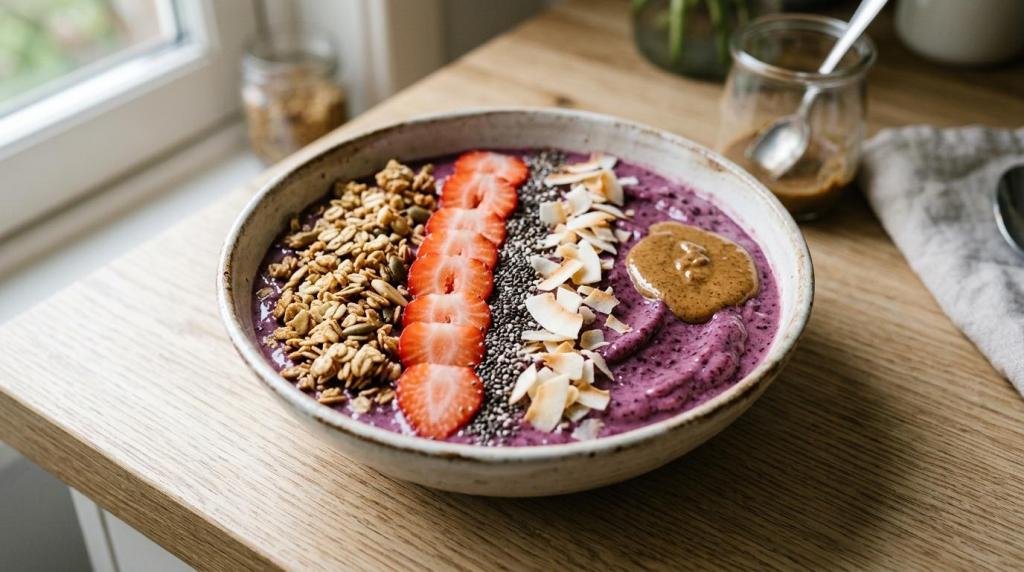
Use a shallow, wide bowl so the toppings spread evenly rather than sinking into the center. Add sliced fruit, granola, coconut flakes, chopped nuts, or seeds in lines, circles, or clusters if you want a polished look.
Toppings are not only decorative. They change the eating experience from smooth and cold to crunchy, juicy, and layered.
Step 5: Serve right away
Serve the bowl as soon as it is topped. Smoothie bowls are at their best in the first few minutes, when the base is cold and thick and the toppings still have texture.
If you are making one for a child or a first-time smoothie bowl fan, keep the top simple with granola, strawberries, and a drizzle of nut butter. Familiar toppings make it instantly more inviting.
Breakfast Smoothie Bowl Nutrition Information
Nutrition will shift depending on your yogurt, milk, sweetener, and toppings. The estimates below reflect one serving made with banana, berries, Greek yogurt, chia seeds, unsweetened milk, and a modest amount of granola and fruit on top.
| Nutrition | Estimated amount per serving | Why it matters |
|---|---|---|
| Calories | 320 to 380 | Balanced for a light breakfast or snack |
| Protein | 15 to 20 g | Helps with morning fullness |
| Carbohydrates | 40 to 50 g | Provides quick and steady energy |
| Fiber | 8 to 10 g | Supports digestion and satiety |
| Fat | 7 to 11 g | Adds staying power, especially with seeds or nuts |
| Added sugar | 0 to 6 g | Easy to keep low at home |
| Calcium | Moderate to high | Varies by yogurt and milk choice |
If you want a higher-protein breakfast smoothie bowl, use skyr, Greek yogurt, or a scoop of plain protein powder. If you want a lighter bowl, reduce granola and use extra berries for volume.
Healthier Breakfast Smoothie Bowl Alternatives
This recipe is already flexible, which makes it a strong fit for different goals and dietary needs. Small changes can shift it toward higher protein, lower sugar, dairy-free, or extra fiber without changing the overall appeal.
- Higher protein: Use skyr, cottage cheese, or a half scoop of vanilla protein powder for a bowl that can reach 25 grams of protein.
- Lower sugar: Skip juice, choose unsweetened milk, and build the flavor with berries, cinnamon, and vanilla.
- Dairy-free: Swap in soy yogurt or coconut yogurt and use almond or oat milk.
- More fiber: Blend in oats, flaxseed, or a few cauliflower florets for body without a strong flavor.
- Kid-friendly: Use a sweeter fruit mix like banana and mango, then add just a small handful of berries for color.
If you are feeding a family, set out toppings buffet-style and let everyone build their own bowl. That keeps the base simple while letting each person shape the final flavor.
Breakfast Smoothie Bowl Serving Suggestions
A breakfast smoothie bowl can stand alone, though it also pairs well with a small savory item if you want a bigger meal. Think hard-boiled eggs, turkey breakfast bites, or a slice of whole grain toast with nut butter.
Seasonal toppings keep the bowl feeling new. In summer, try peaches, strawberries, and toasted coconut. In cooler months, use pears, cinnamon granola, and pumpkin seeds. If you enjoy rotating breakfast ideas, this bowl fits nicely beside overnight oats, baked oatmeal, or make-ahead egg muffins in a weekly meal plan.
For guests, serve mini smoothie bowls in smaller dishes with different topping combinations. It feels polished, colorful, and easy without demanding much extra work.
Breakfast Smoothie Bowl Mistakes to Avoid
Most smoothie bowl problems come down to texture. The good news is that each one has a simple fix.
- Using too much liquid and losing that spoonable consistency.
- Starting with fresh fruit instead of frozen and ending up with a thin base.
- Blending too long, which warms the mixture and softens it.
- Adding too many sweet toppings and turning breakfast into dessert.
- Forgetting texture contrast, which can make every bite feel flat.
- Topping the bowl too early and letting granola go soft.
A helpful rule is this: keep the base thick, the toppings crisp, and the sweetness measured. That balance gives the bowl its best flavor and structure.
Breakfast Smoothie Bowl Storage and Meal Prep Tips
Smoothie bowls are best eaten fresh, though the ingredients are excellent for meal prep. The smartest approach is to prep components rather than store a fully finished bowl.
Build freezer packs with banana, berries, and chia seeds in individual bags or containers. Store them flat so they thaw evenly for a minute or two before blending. Keep yogurt, milk, and toppings separate until serving time. This saves time and protects texture.
If you do have leftovers, freeze the blended base in an airtight container for up to 1 month. Let it soften slightly, then stir or re-blend before serving. Refrigerating the blended bowl for later the same day can work, but it will be looser and less vibrant.
Quick Breakfast Smoothie Bowl Recap and Next Step
This breakfast smoothie bowl brings together frozen fruit, creamy yogurt, balanced nutrition, and crisp toppings in minutes. Try it this week, rate the recipe, share your version in the comments, and subscribe for more easy breakfast ideas, practical kitchen tips, and family-friendly recipes that keep busy mornings simple, fresh, and satisfying.
Breakfast Smoothie Bowl FAQs
Can I make a breakfast smoothie bowl without banana?
Yes. Use frozen mango, frozen avocado, or extra yogurt for creaminess. Banana is popular because it thickens well and adds sweetness, but it is not required for a great result.
How do I make my smoothie bowl thicker?
Use more frozen fruit, less milk, and a thicker yogurt. You can also add chia seeds, oats, or a few extra frozen banana slices. Start with the minimum liquid and add only what the blender needs.
Is a smoothie bowl actually healthy for breakfast?
It can be. The healthiest version includes fruit, protein, fiber, and moderate toppings. A bowl loaded with syrup, sweetened granola, and candy-like add-ons can get heavy fast, while a balanced homemade bowl stays firmly in healthy breakfast territory.
Can I prep a smoothie bowl the night before?
You can prep the ingredients the night before, which is the best method. Freeze fruit packs, measure seeds, and set out toppings. The fully blended bowl is much better fresh than stored overnight.
What blender works best for smoothie bowls?
A high-speed blender makes the process easiest, especially for thick blends. A regular blender can still work if you use smaller frozen fruit pieces, pause to scrape the sides, and add liquid slowly.
What are the best toppings for a breakfast smoothie bowl?
Granola, sliced fruit, chia seeds, hemp hearts, chopped nuts, nut butter, coconut flakes, and cacao nibs all work well. The best topping mix includes at least one crunchy element and one fresh, juicy element for contrast.
