
If you want breakfast to feel fresh, colorful, and genuinely satisfying, learning how to make a smoothie bowl is one of the easiest kitchen skills to pick up. A good smoothie bowl is thicker than a drinkable smoothie, built for a spoon, and topped for contrast: creamy fruit base, crunchy toppings, bright flavor, and real staying power.
Why Knowing How to Make a Smoothie Bowl at Home Changes Breakfast
Can a breakfast that takes about 10 minutes really feel more filling than cereal or toast? In many kitchens, the answer is yes, especially when the bowl includes frozen fruit, protein-rich yogurt, and high-fiber toppings like chia seeds, hemp seeds, oats, or granola.
That is the appeal of a smoothie bowl. It feels like a treat, yet it can be adjusted for energy, fullness, and nutrition with very little effort. Once you know the texture target, the rest becomes easy. You can build a berry smoothie bowl, a tropical smoothie bowl, a green smoothie bowl, or a high-protein smoothie bowl using the same basic method.
A great bowl depends on one rule more than anything else: use less liquid than you would for a regular smoothie. That single change creates the thick, scoopable base that holds toppings instead of swallowing them.
Smoothie Bowl Ingredients and Easy Substitutions
The best smoothie bowl ingredients are cold, thick, and naturally flavorful. Frozen fruit gives body, banana adds creaminess, and a small amount of liquid keeps the blender moving without turning the mixture thin.
Here is a reliable base recipe for one generous serving or two lighter servings:
- Frozen banana: 1 medium, sliced before freezing for easy blending
- Frozen berries: 1 cup, mixed berries or strawberries for a bright, tangy flavor
- Greek yogurt: 1/2 cup for creaminess and protein
- Milk of choice: 2 to 4 tablespoons, starting small is the key
- Nut butter: 1 tablespoon for richness and staying power
- Vanilla extract
- Honey or maple syrup, optional
- Toppings: granola, sliced fresh fruit, coconut flakes, chia seeds, hemp hearts, cacao nibs, or chopped nuts
You can swap ingredients without losing the structure of the recipe. Mango replaces berries for a sweeter bowl. Dairy-free yogurt works well for a vegan version. Oat milk and almond milk are both good liquid choices. If you want a smoothie bowl without banana, use frozen mango, avocado, or extra yogurt for body.
Equipment That Simplifies Smoothie Bowl Prep
You do not need a long equipment list, but the right tools make the process faster and more consistent.
| Equipment | Why it helps |
|---|---|
| High-speed blender | Blends frozen fruit into a thick, smooth base with less stopping |
| Food processor | Useful when the mixture is very thick and the blender struggles |
| Tamper or spatula | Pushes fruit toward the blades safely between pulses |
| Measuring cups and spoons | Keeps the liquid level under control |
| Chilled bowl | Helps the smoothie bowl stay cold longer after serving |
If your blender is not very powerful, let the frozen fruit sit at room temperature for 3 to 5 minutes before blending. That small pause can make a big difference.
Smoothie Bowl Timing: Prep Time, Blend Time, Total Time
One reason smoothie bowls work so well for busy mornings is speed. Compared with many cooked breakfasts, this recipe comes together quickly and leaves very little cleanup.
| Task | Time |
|---|---|
| Prep ingredients | 5 minutes |
| Blend smoothie bowl base | 2 to 3 minutes |
| Add toppings and serve | 2 minutes |
| Total time | About 10 minutes |
If you freeze banana slices and portion fruit in advance, the total active time can drop even lower. That makes this recipe especially practical for weekday breakfasts, post-workout meals, or quick afternoon snacks.
How to Make a Smoothie Bowl Step by Step
Step 1: Freeze the fruit for a thick smoothie bowl base
Use frozen fruit, not fresh, as your main base. Frozen banana and frozen berries create that classic thick texture that makes a smoothie bowl feel substantial. If you only have fresh fruit, freeze it for at least a few hours before blending.
For the best result, slice bananas before freezing and store fruit in flat freezer bags or containers. Smaller pieces blend more evenly and reduce strain on the motor.
Step 2: Add the base ingredients to the blender in the right order
Start with yogurt and the smallest amount of milk, then add nut butter, vanilla, and frozen fruit on top. This setup helps the blades catch the softer ingredients first.
Resist the urge to pour in extra liquid at the start. A smoothie bowl should be much thicker than a drinkable smoothie. You can always add another tablespoon later, but it is difficult to correct a watery base.
Step 3: Blend slowly and scrape as needed
Pulse first, then blend on low to medium speed. Stop and scrape down the sides if the fruit sticks. A thick smoothie bowl often needs a few pauses, especially in a standard blender.
If the mixture refuses to move, add liquid one tablespoon at a time. That slow adjustment keeps control in your hands and protects the final texture.
Step 4: Check the texture before serving
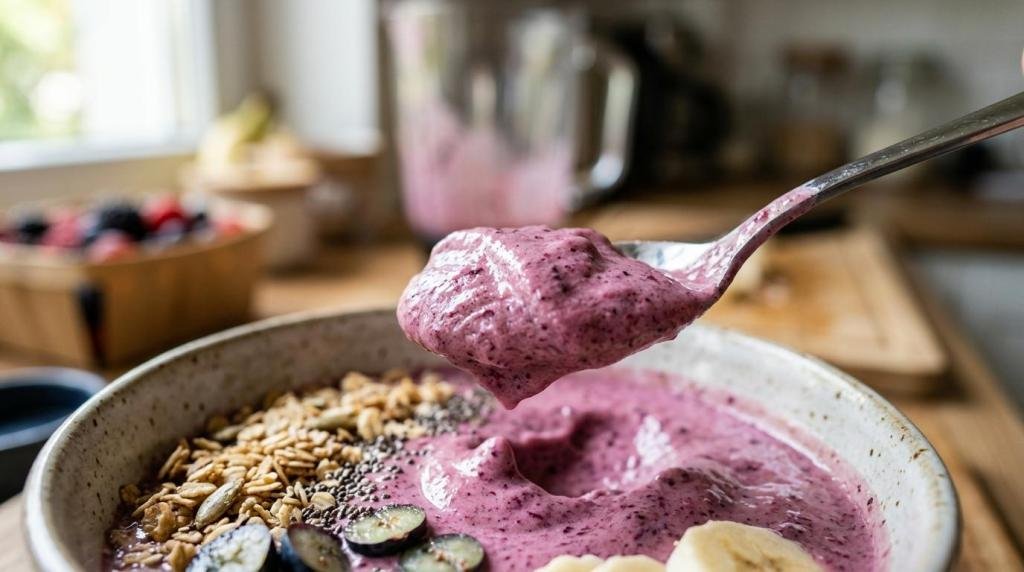
The bowl is ready when the mixture looks creamy, dense, and spoonable, almost like soft-serve. It should mound on a spoon and settle slowly, not run across the bowl.
If it feels too thin, add more frozen fruit. If it feels too icy or stiff, blend in a spoonful of yogurt or a splash of milk.
Step 5: Transfer quickly and add toppings for contrast
Spoon the smoothie into a chilled bowl and smooth the top with the back of the spoon. Add toppings right away so the temperature stays low and the texture stays firm.
Aim for contrast: creamy base, crunchy topping, juicy fruit, and maybe one ingredient that adds depth, like nut butter, cacao nibs, or toasted coconut.
Smoothie Bowl Nutrition Information
Nutrition varies based on ingredients, especially toppings, sweeteners, and the type of yogurt or milk used. The sample below reflects a bowl made with frozen banana, mixed berries, Greek yogurt, almond milk, 1 tablespoon peanut butter, and a modest topping of granola and chia seeds.
| Nutrient | Approximate amount per serving |
|---|---|
| Calories | 350 to 420 |
| Protein | 14 to 20 grams |
| Carbohydrates | 40 to 50 grams |
| Fiber | 7 to 11 grams |
| Fat | 10 to 16 grams |
| Added sugar | 0 to 8 grams, depending on sweetener and granola |
| Calcium | Moderate to high, depending on yogurt and milk |
| Potassium | High, especially with banana |
This balance is one reason smoothie bowls remain popular. They can combine fruit, protein, and healthy fats in one bowl, which often supports better fullness than a lighter carb-only breakfast.
Healthier Smoothie Bowl Alternatives
A smoothie bowl is already flexible, which makes it easy to adjust for different nutrition goals. You can raise the protein, cut added sugar, increase fiber, or make the recipe dairy-free without losing the creamy feel that makes it appealing.
A few smart changes can shift the bowl from dessert-like to more balanced and sustaining:
- For more protein: use Greek yogurt, skyr, cottage cheese, or a scoop of vanilla protein powder
- For less sugar: skip sweeteners and choose unsweetened milk, unsweetened yogurt, and low-sugar granola
- Spinach or cauliflower rice for extra volume
- For more fiber: add chia seeds, ground flaxseed, oats, or extra berries
- For dairy-free needs: use coconut yogurt, almond yogurt, or oat-based yogurt with plant milk
- Avocado for a creamy smoothie bowl without banana
If you are making smoothie bowls for kids, keeping the base simple often works best. Banana, strawberries, yogurt, and a sprinkle of granola is familiar, colorful, and easy to enjoy.
Smoothie Bowl Serving Suggestions
How you serve a smoothie bowl matters almost as much as the recipe itself. Toppings change both taste and texture, and they also help the bowl feel customized instead of routine.
For a bright breakfast bowl, top a berry base with sliced strawberries, blueberries, granola, and chia seeds. For a more dessert-like version, try banana slices, peanut butter, cacao nibs, and coconut. A tropical bowl works beautifully with mango, pineapple, kiwi, and toasted coconut.
You can also match the bowl to the moment. After a workout, use higher-protein toppings like hemp seeds, pumpkin seeds, or extra yogurt. For a lighter afternoon snack, keep the toppings simple and fruit-forward.
Common Smoothie Bowl Mistakes to Avoid
Most smoothie bowl problems come down to texture. The flavor may still be good, but the bowl loses that thick, spoonable quality people want.
Keep an eye on these common mistakes:
- Too much liquid: start with 2 tablespoons and only add more if the blender truly needs it
- Using fresh fruit instead of frozen fruit
- Overloading the blender: blend one serving at a time if your machine is small or low-powered
- Adding toppings too late, after the bowl has already softened
- Too many sweet ingredients: sweetened yogurt, honey, juice, and sugary granola can stack up fast
If your first bowl comes out thinner than expected, do not scrap it. Blend in more frozen banana, frozen berries, or a few ice cubes, then pulse again until it thickens.
Smoothie Bowl Storage and Make-Ahead Tips
Smoothie bowls are best eaten right after blending. That is when the base is at its thickest and the toppings stay crisp. Still, a little planning can make the recipe much easier on busy days.
You can prep freezer packs with sliced banana, berries, mango, spinach, or pineapple. Store each portion in a freezer-safe bag, then dump it straight into the blender with yogurt and a splash of milk. This cuts morning prep to almost nothing.
If you have leftover smoothie bowl base, freeze it in a sealed container and let it soften for several minutes before stirring and serving. The texture will not be quite as fresh as a just-blended bowl, though it still works well. Toppings should always be stored separately so they keep their crunch.
Try This Smoothie Bowl Recipe This Week
Make your first bowl simple, then adjust from there. Start thick, use frozen fruit, keep toppings balanced, and taste as you go. If this recipe works for your routine, leave a comment, share your result in the review section, and subscribe for more easy recipe updates and kitchen tips.
Smoothie Bowl FAQs
Can I make a smoothie bowl without banana?
Yes. Use frozen mango, frozen peaches, avocado, or extra Greek yogurt instead. Banana adds creaminess, but it is not required if the rest of the base is cold and thick.
Why is my smoothie bowl too runny?
The most common cause is too much liquid. Start with only a few tablespoons of milk. If the bowl is already thin, blend in more frozen fruit until the texture firms up.
What is the best blender for a smoothie bowl?
A high-speed blender makes the process easier, especially for frozen fruit. A food processor can also work very well for thicker mixtures. If your blender is basic, smaller fruit pieces and short pauses help a lot.
Are smoothie bowls actually healthy?
They can be. A smoothie bowl with fruit, protein, seeds, and moderate toppings can be a balanced meal. The biggest issue is often added sugar from sweetened yogurt, juice, syrups, or heavy granola portions.
Can I make a smoothie bowl the night before?
You can prep the ingredients the night before, but the best texture comes from blending right before eating. Freezer packs are the most effective make-ahead option.
What toppings go best on a smoothie bowl?
Granola, sliced fruit, chia seeds, hemp hearts, coconut flakes, nuts, and nut butter all work well. The best toppings combine crunch, freshness, and a little richness.
How thick should a smoothie bowl be?
It should be thick enough to eat with a spoon and sturdy enough to hold toppings on the surface. Think soft-serve, not a pourable smoothie.
Can kids eat smoothie bowls?
Absolutely. Keep the flavor familiar, use fruit they already like, and let them choose a topping or two. That small bit of choice can make breakfast more fun and more likely to be eaten.
