

A coconut smoothie bowl can turn a few freezer staples into a breakfast that feels bright, creamy, and genuinely satisfying. If your usual smoothie disappears in three minutes and leaves you hungry soon after, a coconut smoothie bowl changes the experience with thicker texture, spoonable fruit, and toppings that slow every bite.
Why Can a Coconut Smoothie Bowl Keep You Fuller Than a Regular Smoothie?
Could a thicker breakfast actually help you feel satisfied longer than a drinkable smoothie? Research on satiety often points to texture, chewing, and eating speed as factors that shape fullness, which helps explain why a coconut smoothie bowl often feels more substantial than the same ingredients poured into a glass.
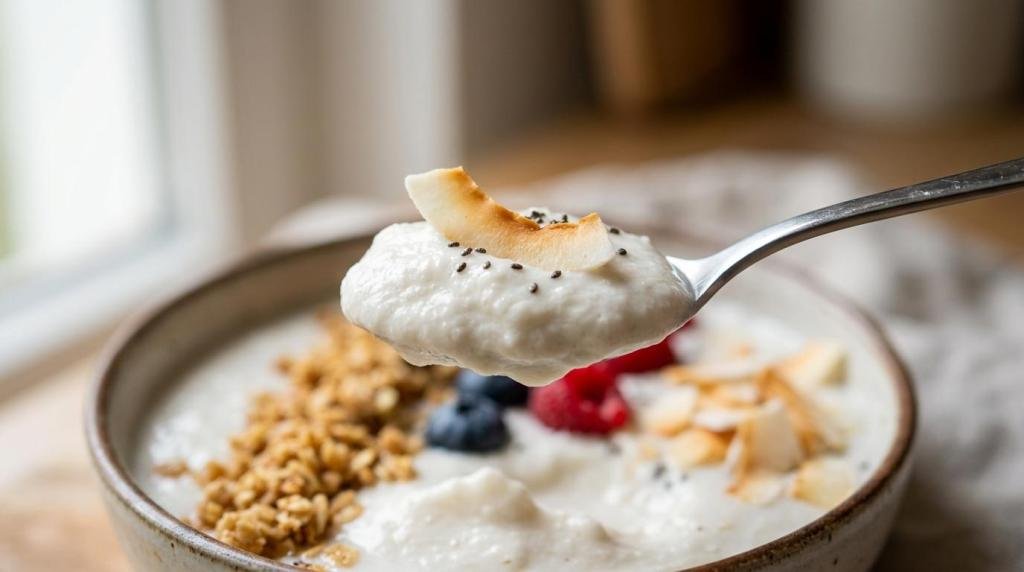
That extra staying power is part of the appeal. A good coconut smoothie bowl combines frozen fruit, creamy coconut milk, and toppings with contrast, whether that means toasted coconut, granola, chia seeds, or fresh berries. You get the tropical flavor of a smoothie, the visual appeal of a breakfast bowl, and the flexibility to make it dairy-free, higher in protein, or naturally sweetened.
This version is designed for home cooks who want a fast, reliable breakfast with approachable ingredients and a polished result.
Coconut Smoothie Bowl Ingredients
The best coconut smoothie bowl has a cold, thick base and a balance of sweet fruit, creamy fat, and a little acidity to keep the flavor fresh instead of heavy. Frozen fruit matters here because it gives the bowl body without needing ice, which can water everything down.
Use the table below as your core formula, then build your own tropical breakfast bowl from there.
| Ingredient | Amount | What it adds | Easy substitution |
|---|---|---|---|
| Frozen banana | 1 large | Creamy texture and natural sweetness | Frozen avocado plus a few dates |
| Frozen pineapple | 1/2 cup | Bright, juicy tropical flavor | Frozen peaches |
| Frozen mango | 1/2 cup | Smooth body and sunny sweetness | Frozen papaya |
| Unsweetened coconut milk | 1/3 to 1/2 cup | Rich coconut flavor and blendability | Almond milk plus 1/4 tsp coconut extract |
| Plain yogurt or coconut yogurt | 1/4 cup | Tang and creaminess | Skyr, Greek yogurt, or dairy-free yogurt |
| Chia seeds | 1 tablespoon | Fiber and a thicker finish | Ground flaxseed or rolled oats |
| Fresh lime juice | 1 teaspoon | Lifts the fruit flavors | Lemon juice |
| Maple syrup or honey | 1 to 2 teaspoons, optional | Extra sweetness if fruit is tart | Leave out for a lower-sugar bowl |
| Pinch of salt | Small pinch | Makes fruit taste more vivid | Fine sea salt or kosher salt |
| Toppings | As desired | Crunch, color, contrast | Kiwi, berries, toasted coconut, granola, hemp hearts |
A useful rule: keep the liquid modest at the start. You can always add more coconut milk, but you cannot easily reverse a runny bowl.
Equipment for a Coconut Smoothie Bowl
A coconut smoothie bowl is simple, but the right tools make the texture much easier to control. The goal is not a thin smoothie. You want a thick, spoonable blend that sits high in the bowl and holds toppings without sinking.
- High-speed blender
- Silicone spatula
- Measuring cups and spoons
- Chilled serving bowl
If your blender struggles with frozen fruit, cut the banana into coins before freezing and let the fruit sit at room temperature for two minutes before blending. That tiny pause can make a real difference.
Coconut Smoothie Bowl Timing
One reason this recipe works so well on busy mornings is speed. The active time is about 10 minutes, which is faster than many cooked breakfasts that land closer to 15 to 20 minutes.
| Task | Time |
|---|---|
| Gather and measure ingredients | 3 minutes |
| Blend the smoothie bowl base | 3 minutes |
| Adjust texture and taste | 2 minutes |
| Add toppings and serve | 2 minutes |
| Total active time | 10 minutes |
If you prep freezer packs ahead, the total can feel even shorter because all the fruit is ready to go.
Coconut Smoothie Bowl Step-by-Step Instructions
A thick smoothie bowl comes down to sequence as much as ingredients. Start with less liquid than you think you need, use frozen fruit, and finish with toppings that bring contrast.
Step 1: Prep the bowl, toppings, and frozen fruit
Place your serving bowl in the freezer while you blend. Slice any fresh toppings now, like kiwi, strawberries, or banana, and set them aside. If your fruit is frozen in one solid block, separate it a little so the blender can grab it more easily.
That quick bowl chill helps the coconut smoothie bowl stay thick longer once served.
Step 2: Add the base ingredients in the right order
Add coconut milk, yogurt, lime juice, and optional sweetener to the blender first. Put the chia seeds in next, then add the frozen banana, pineapple, and mango on top.
Liquids on the bottom help the blades move, while frozen fruit on top keeps the mixture dense.
Step 3: Blend slowly, scrape, and resist adding too much liquid
Pulse a few times, then blend on low to medium speed. Stop and scrape down the sides with a spatula as needed. If the blender stalls, add coconut milk one tablespoon at a time.
This is the point where many smoothie bowls go thin. Patience gives you a better texture than a big splash of extra liquid.
Step 4: Taste and adjust the coconut smoothie bowl texture
Once the mixture is smooth, taste it. If it needs more brightness, add a few drops of lime juice. If it tastes flat, add a tiny pinch of salt. If it feels too thick for your blender but looks perfect for a bowl, that is usually a good sign.
A proper coconut smoothie bowl should mound slightly on a spoon.
Step 5: Add toppings with balance, not clutter
Spoon the base into your chilled bowl. Top with toasted coconut, fresh fruit, granola, chia seeds, hemp hearts, or a drizzle of nut butter. Aim for three or four toppings with different textures rather than covering the whole surface with everything in sight.
That contrast between cold, creamy fruit and crisp toppings is what makes the bowl memorable.
Coconut Smoothie Bowl Nutrition Information
Nutrition will vary with the type of coconut milk, yogurt, and toppings you choose, though the table below gives a useful estimate for one large bowl with a moderate amount of toppings. Most of the calories come from fruit and coconut fat, while granola, nut butter, and sweeteners can shift the totals quickly.
| Nutrition estimate per bowl | Approximate amount |
|---|---|
| Calories | 360 to 430 |
| Carbohydrates | 44 to 52 g |
| Fiber | 7 to 10 g |
| Protein | 6 to 14 g |
| Total fat | 12 to 18 g |
| Saturated fat | 7 to 10 g |
| Natural and added sugars | 24 to 32 g |
| Sodium | 60 to 120 mg |
| Potassium | 500 to 750 mg |
If you want a more balanced breakfast, pair the bowl with a protein-rich side or raise the protein in the blend itself. Greek yogurt, skyr, or a scoop of protein powder can shift the bowl from fruit-forward snack to more filling breakfast.
Healthier Coconut Smoothie Bowl Alternatives
A coconut smoothie bowl is naturally flexible, which makes it easy to adapt for different goals without losing the tropical character. Small swaps can change the bowl’s protein, fiber, sweetness, or fat profile while keeping the flavor familiar.
- More protein: Blend in Greek yogurt, skyr, cottage cheese, or a scoop of vanilla protein powder.
- Less sugar: Skip the honey or maple syrup and rely on ripe banana and mango for sweetness.
- More fiber: Add extra chia seeds, ground flaxseed, or 2 tablespoons of rolled oats.
- Lower saturated fat: Use light coconut milk or half coconut milk and half unsweetened almond milk.
- Dairy-free option: Choose coconut yogurt or another plant-based yogurt with no added sugar.
- Nut-free topping plan: Use pumpkin seeds, sunflower seeds, toasted coconut, and seed-based granola.
If you are making this for kids or mixed preferences at the table, keep the base simple and let everyone build their own bowl. That keeps breakfast easy while making the recipe feel personal.
Serving Suggestions for a Coconut Smoothie Bowl
This bowl works well as a fast breakfast, a post-workout refresher, or a warm-weather afternoon snack. If you want it to feel more filling, serve it with whole grain toast, a boiled egg, or a small bowl of yogurt on the side. If you want it to feel lighter, keep the toppings fruit-forward and skip heavy granola.
For a brunch spread, serve a coconut smoothie bowl in smaller bowls with a topping bar of sliced fruit, toasted coconut flakes, chia seeds, cacao nibs, and crisp granola. It looks colorful, encourages customization, and gives guests a recipe that feels fresh without being complicated.
A nice touch is to arrange toppings in stripes or clusters rather than scattering everything randomly. The bowl instantly looks more polished.
Common Coconut Smoothie Bowl Mistakes to Avoid
Most coconut smoothie bowl problems trace back to texture. The flavor can be excellent, but if the base is thin, icy, or bland, the bowl loses its appeal fast.
| Mistake | What happens | Better approach |
|---|---|---|
| Adding too much liquid too early | The bowl turns drinkable instead of spoonable | Start with 1/3 cup liquid and add only by tablespoons |
| Using fresh instead of frozen fruit | The bowl melts quickly and lacks body | Freeze ripe fruit ahead of time |
| Skipping acid or salt | The flavor tastes dull | Add a little lime juice and a pinch of salt |
| Overloading toppings | The bowl becomes hard to eat and overly sweet | Choose three to four toppings with contrast |
| Using warm bowls | The base softens quickly | Chill the bowl for a few minutes first |
| Blending on high from the start | Air pockets form and blades stall | Pulse first, then blend gradually |
If your first bowl comes out thinner than planned, do not toss it. Add more frozen banana or mango and blend again. A lot of recipe success comes from tiny adjustments, not a full restart.
Storing a Coconut Smoothie Bowl and Prep Tips
A coconut smoothie bowl is at its best right after blending. The texture is thicker, the toppings stay crisp, and the flavors taste brightest when served immediately.
Still, you can prep almost everything ahead. Make freezer packs with banana, pineapple, mango, and chia seeds in portioned bags or containers. Store them in the freezer for up to one month, then empty a pack into the blender with coconut milk and yogurt on busy mornings.
You can also store the blended base in an airtight container in the freezer for a short window, then let it soften slightly and re-blend before serving. If refrigerated overnight, expect the texture to loosen. A quick stir or a few minutes in the blender with extra frozen fruit can bring it back.
Keep toppings separate until the last minute. Granola, toasted coconut, and seeds lose their crunch quickly once they sit on the cold base.
Coconut Smoothie Bowl FAQs
Can I make a coconut smoothie bowl without banana?
Yes. Frozen mango, avocado, or even frozen cauliflower can help create a thick texture without a strong extra flavor. If you remove banana, you may want a date or a little maple syrup to replace some sweetness.
Which coconut milk is best for a coconut smoothie bowl?
Unsweetened coconut milk from a carton gives a lighter bowl. Canned coconut milk creates a richer, more dessert-like texture. Many home cooks like a mix of the two because it balances flavor and calories well.
How do I make my coconut smoothie bowl thicker?
Use fully frozen fruit, begin with less liquid, chill the bowl, and add soft ingredients sparingly. Chia seeds, oats, and frozen banana are especially helpful when you want a thicker result.
Is a coconut smoothie bowl good for meal prep?
It is best for ingredient prep rather than full assembly. Freezer packs work very well, while a fully blended bowl tends to lose texture during storage. Keep toppings portioned separately so everything stays crisp and fresh.
Can I make this recipe kid-friendly?
Absolutely. Use a little extra banana for sweetness, keep the topping choices familiar, and let kids build their own bowls. Sliced strawberries, mini granola clusters, and a light sprinkle of toasted coconut usually go over well.
What toppings work best with coconut flavor?
Fresh berries, kiwi, pineapple, mango, granola, toasted coconut flakes, hemp hearts, cacao nibs, and a small spoon of almond or peanut butter all pair nicely with the creamy coconut base.
Make This Coconut Smoothie Bowl Part of Your Breakfast Plan
This coconut smoothie bowl brings tropical flavor, thick texture, flexible nutrition, and fast prep into one easy breakfast. Try it this week, rate it in the review section, share your favorite toppings in the comments, and subscribe for more recipes, kitchen tips, and fresh meal ideas your family will want.
