
A healthy smoothie bowl works best when it is built like a balanced meal, not just blended fruit in a pretty bowl. That means pairing frozen fruit with a protein source, adding fiber from oats or seeds, and keeping the liquid low so the texture stays rich and spoonable. The result feels like a treat, though it functions like a practical breakfast.
Many café smoothie bowls can pass 500 calories and 40 grams of sugar once sweetened yogurt, juice, and heavy toppings go into the mix. Could a healthy smoothie bowl still taste creamy, bright, and satisfying while keeping protein, fiber, and portion balance in a smart place? Yes, and this version makes that case in about 10 minutes. It is thick enough to eat with a spoon, flexible enough for different diets, and simple enough for a weekday breakfast.
Healthy Smoothie Bowl Introduction and Breakfast Benefits
This recipe is especially useful for home cooks who want a fast breakfast bowl with approachable ingredients. It uses frozen berries, banana, Greek yogurt, spinach, oats, chia seeds, and milk for a nutrient-dense base. From there, toppings bring contrast: crisp granola, juicy fresh fruit, a few seeds, and maybe a small spoonful of nut butter.
The flavor lands in a sweet spot between refreshing and filling, which is why smoothie bowls remain popular in healthy breakfast routines, meal prep plans, and post-workout meals.
Healthy Smoothie Bowl Ingredients List
This healthy smoothie bowl makes 2 servings. The base is creamy, lightly sweet, and easy to adjust based on what you already have in your freezer and fridge.
- Frozen mixed berries: 1 1/2 cups; use frozen mango, cherries, or pineapple if you want a sweeter profile
- Frozen banana: 1 medium, sliced before freezing; swap with frozen avocado plus a few pitted dates for a lower-sugar option
- Plain Greek yogurt: 3/4 cup; use dairy-free yogurt or silken tofu for a plant-based version
- Baby spinach: 1 packed cup; kale works too, though the flavor is a little stronger
- Rolled oats: 1/4 cup; use quick oats, or leave them out if you prefer a lighter texture
- Chia seeds: 1 tablespoon; ground flaxseed is a good alternative
- Unsweetened almond milk: 1/2 cup to start; any milk works, including oat milk, soy milk, or dairy milk
- Vanilla extract: 1/2 teaspoon; optional, though it rounds out the berry flavor nicely
- Ground cinnamon: 1/4 teaspoon; optional, for warmth
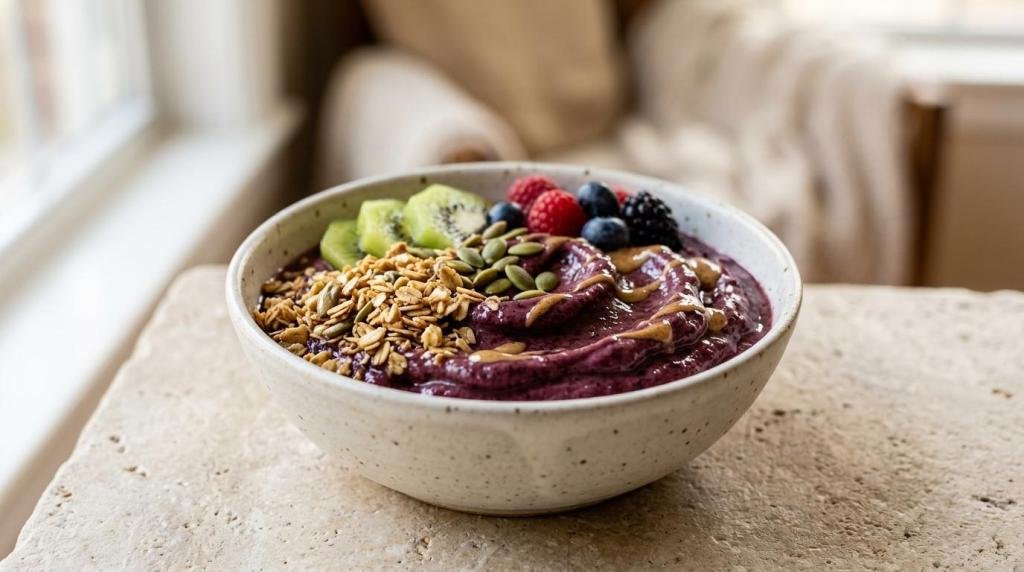
- Toppings: sliced kiwi, fresh berries, granola, pumpkin seeds, coconut flakes, and a drizzle of almond butter
If you like a colder, thicker bowl, keep every fruit ingredient frozen. That one choice makes the biggest difference.
Healthy Smoothie Bowl Timing
This recipe is built for busy mornings.
| Task | Time |
|---|---|
| Prep time | 10 minutes |
| Blending time | 2 minutes |
| Assembly time | 3 minutes |
| Total time | 10 to 15 minutes |
That is quicker than most baked breakfast recipes and right in line with making toast and eggs, yet it gives you fruit, protein, fiber, and color in a single bowl.
Healthy Smoothie Bowl Equipment That Simplifies Preparation
The right tools keep the texture thick and the process smooth.
| Equipment | Why it helps |
|---|---|
| High-speed blender | Crushes frozen fruit without adding too much liquid |
| Tamper or sturdy spatula | Pushes ingredients toward the blades |
| Measuring cups and spoons | Keeps the base balanced and repeatable |
| Wide serving bowls | Gives room for toppings without crowding |
| Sharp knife | Makes fruit topping prep quick and tidy |
| Small scoop or spoon | Helps place toppings in neat rows or clusters |
A personal blender can work, though a full-size blender usually gives better control for a thick smoothie bowl recipe.
Healthy Smoothie Bowl Step-by-Step Instructions
Step 1: Prep the frozen fruit and measured add-ins
Set out all ingredients before blending. Add the frozen berries, frozen banana, Greek yogurt, spinach, oats, chia seeds, vanilla, cinnamon, and half of the milk to the blender.
Starting with measured ingredients matters because smoothie bowls are sensitive to liquid. Even 2 extra tablespoons can turn a thick breakfast bowl into a standard drinkable smoothie.
Step 2: Blend the healthy smoothie bowl base slowly
Start the blender on low, then increase speed as the fruit breaks down. Stop and scrape the sides once or twice if needed. If your blender struggles, add milk 1 tablespoon at a time.
You are aiming for a thick, creamy texture that forms soft swirls. It should mound on a spoon, not pour like juice. If the mixture races around the blender too freely, it is already getting too thin.
Step 3: Adjust thickness and flavor with precision
Taste the base before serving. If you want more sweetness, add a few more banana slices or a date. If you want more brightness, add a squeeze of lemon. If the bowl feels too loose, blend in a few more frozen berries or a tablespoon of oats.
This is also the moment to personalize the bowl for your goal. More protein? Blend in extra Greek yogurt. More satiety? Add a teaspoon of nut butter. A greener breakfast? Increase the spinach.
Step 4: Build the bowl with toppings that add contrast
Spoon the blended base into two chilled bowls. Top with fresh berries, kiwi, granola, pumpkin seeds, coconut flakes, or almond butter.
Texture contrast is what makes a healthy smoothie bowl feel finished. A creamy base plus crunchy toppings gives you more variety in each bite, which often makes the meal feel more satisfying.
Step 5: Serve right away for the best texture
Eat the bowl as soon as it is assembled. Smoothie bowls are at their peak when the base is cold and thick and the toppings still hold their crunch.
If you are serving kids or guests, set out topping choices buffet-style. That small touch makes breakfast more interactive and can help everyone build a bowl that suits their taste.
Healthy Smoothie Bowl Nutritional Information
The values below are approximate for 1 serving, based on 2 servings total and moderate toppings. Exact nutrition will vary with the milk, yogurt, and topping choices you use.
| Nutrient | Per Serving |
|---|---|
| Calories | 320 |
| Protein | 16 g |
| Carbohydrates | 43 g |
| Fiber | 9 g |
| Total sugar | 22 g |
| Fat | 11 g |
| Saturated fat | 2.5 g |
| Sodium | 85 mg |
| Calcium | 20% DV |
| Iron | 10% DV |
A breakfast bowl in this range can feel more balanced than a fruit-only smoothie because the protein, fiber, and fat slow digestion and support fullness through the morning. If you add a high-sugar granola or sweetened yogurt, those numbers can rise quickly, so labels are worth a quick glance.
Healthier Alternatives for a Healthy Smoothie Bowl
One of the best things about a healthy smoothie bowl is how easy it is to adapt. Small changes can shift it toward higher protein, lower sugar, dairy-free, nut-free, or more filling without losing the creamy texture people want.
- High-protein version with extra Greek yogurt or cottage cheese
- Dairy-free version with soy yogurt or coconut yogurt
- Lower-sugar version with cauliflower rice replacing part of the banana
- Gluten-free version with certified gluten-free oats and granola
- Nut-free version with sunflower seed butter instead of almond butter
- Higher-fiber version with more chia, flax, or a spoonful of bran
- Dessert-style version with cocoa powder, cherries, and cacao nibs
If you want a stronger post-workout breakfast, pair the bowl with boiled eggs or a side of turkey sausage. If you want a lighter snack bowl, reduce the oats and keep the toppings simple.
Healthy Smoothie Bowl Serving Suggestions
A healthy smoothie bowl can shift with the moment. On a weekday morning, keep it simple with berries, granola, and seeds. On a weekend brunch table, build a topping bar with sliced fruit, toasted coconut, chopped nuts, and yogurt swirls.
It also pairs well with other easy breakfast staples from a home recipe rotation, like overnight oats, egg muffins, or homemade granola.
| Serving style | Best add-ons |
|---|---|
| Quick weekday breakfast | Granola, berries, pumpkin seeds |
| Post-workout meal | Extra Greek yogurt, hemp seeds, nut butter |
| Kid-friendly bowl | Banana slices, mini chocolate chips, strawberries |
| Brunch spread | Kiwi, toasted coconut, chia jam, fresh mint |
Try serving it in a chilled bowl if your kitchen runs warm. That small step helps the base hold its shape longer.
Common Mistakes to Avoid With a Healthy Smoothie Bowl
Most smoothie bowl problems come down to texture. The good news is that they are easy to fix once you know what to watch.
- Using too much liquid
- Blending fresh fruit instead of frozen fruit
- Adding all toppings at once, then losing crunch before serving
- Relying on sweetened yogurt and sugary granola for flavor
- Skipping protein and ending up hungry an hour later
A thick base needs restraint. Start with less milk than you think you need, then add tiny amounts only if the blender truly needs help.
Healthy Smoothie Bowl Storing Tips and Meal Prep Ideas
This recipe is best eaten fresh, though parts of it can be prepped ahead very well. The smartest method is to make freezer smoothie packs. Portion the berries, banana, spinach, and oats into freezer bags or containers, then blend with yogurt, seeds, and milk when ready.
You can also prep toppings in advance. Keep granola, pumpkin seeds, and coconut in a dry container at room temperature. Wash and slice fresh fruit the night before, then store it in the refrigerator.
If you have leftover blended base, refrigerate it in an airtight container for up to 24 hours. It may loosen as it sits, so stir in a teaspoon of chia seeds or add a few frozen berries and re-blend before serving. Freezing a fully assembled bowl is less ideal because the toppings lose texture.
Make This Healthy Smoothie Bowl This Week
Creamy fruit, Greek yogurt, oats, and seeds turn this healthy smoothie bowl into a fast breakfast with protein, fiber, and vivid flavor. Try it this week, rate the recipe, share your favorite topping in the comments, and subscribe for more easy breakfast ideas, family meals, and simple kitchen tips.
Healthy Smoothie Bowl FAQs
Can I make a healthy smoothie bowl without banana?
Yes. Use frozen mango for sweetness, or frozen avocado for creaminess with less sugar. A pitted date can replace some banana sweetness if needed.
What makes a smoothie bowl thick instead of drinkable?
Frozen fruit, limited liquid, and a strong blender are the big three. Oats, chia seeds, and Greek yogurt also help create a thicker texture.
Is a healthy smoothie bowl good for weight management?
It can be, especially when portioned well and built with protein and fiber. Toppings are the area to watch most closely, since granola, honey, nut butter, and sweetened coconut can add up quickly.
Can I make this healthy smoothie bowl dairy-free?
Absolutely. Swap the Greek yogurt for a thick dairy-free yogurt or silken tofu, and use your preferred plant milk.
How do I increase protein in a healthy smoothie bowl?
Use more Greek yogurt, add cottage cheese, mix in hemp seeds, or include a scoop of protein powder that blends smoothly with fruit.
What blender works best for smoothie bowls?
A high-speed blender is the easiest option because it handles frozen fruit with less added liquid. A standard blender can still work if you stop often and scrape the sides.
Can I serve this as a snack instead of breakfast?
Yes. Reduce the portion size or skip the granola and nut butter if you want a lighter snack bowl that still feels refreshing and satisfying.
