
The best smoothie bowl ideas do more than look colorful. They turn frozen fruit, yogurt, and smart toppings into a breakfast that feels fresh, filling, and practical on a busy morning, while still giving home cooks plenty of room to personalize texture, flavor, and nutrition.
Why do some smoothie bowl ideas feel satisfying while others turn watery and bland?
Why can one smoothie bowl keep you full until lunch while another, made with similar fruit, feels thin and forgettable within minutes? A big reason is balance. Many café smoothie bowls can climb past 500 calories once sweetened granola, nut butter, and fruit-heavy bases are piled on, yet homemade bowls often land closer to 300 to 400 calories with better control over protein, fiber, and sugar.
That is what makes great smoothie bowl ideas so useful for home cooks. You get the cold, spoonable texture people love, but you can also build a healthy breakfast bowl that fits your appetite. A thicker blend slows down how fast you eat it. Toppings add crunch. Protein and seeds help it feel like a real meal instead of a fruit snack dressed up in a pretty bowl.
A well-built smoothie bowl usually follows a simple formula: frozen fruit for body, a creamy element for richness, a small amount of liquid for blending, and toppings that add contrast. Once that formula clicks, you can turn one base recipe into a berry smoothie bowl, tropical bowl, green smoothie bowl, or high-protein smoothie bowl without much extra effort.
Smoothie bowl ingredients and easy substitutions
This version is built around a berry-banana base because it is affordable, familiar, and easy to customize. The flavor is bright, the color is appealing, and the texture stays thick enough to hold toppings instead of swallowing them.
A high-speed blender simplifies the process most, though a food processor also works well for frozen fruit. A wide bowl, measuring cups, and a sturdy spatula help too.
- 1 frozen banana
- Frozen fruit: 1 cup mixed berries, or swap in mango, pineapple, peaches, or acai puree
- Creamy base: 1/2 cup Greek yogurt, or use skyr, cottage cheese, coconut yogurt, or silken tofu
- Liquid: 1/4 cup milk of choice, starting small so the bowl stays thick
- Fiber boost: 1 tablespoon chia seeds or ground flaxseed
- Optional sweetness: 1 to 2 teaspoons honey or maple syrup
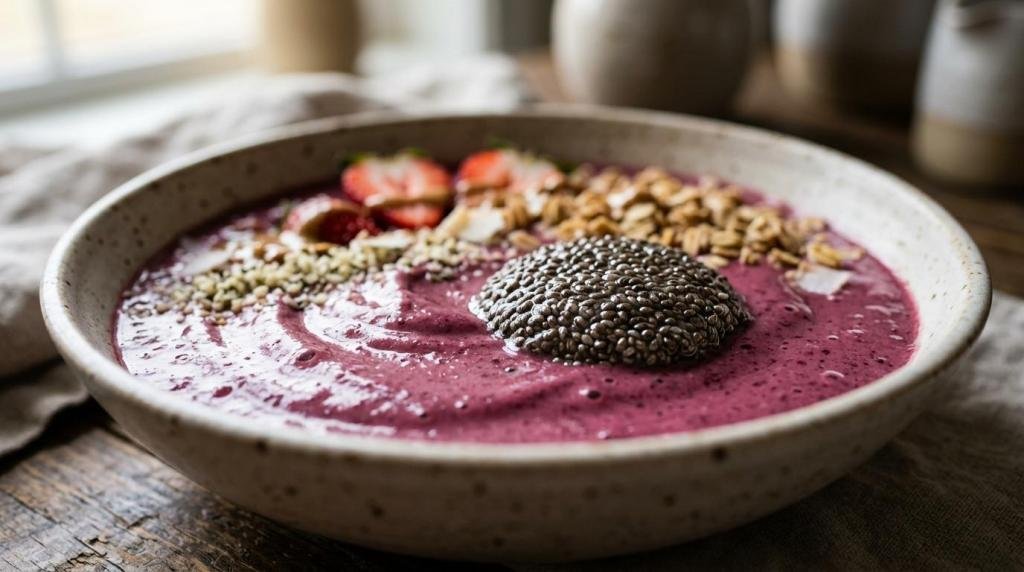
- Sliced strawberries
- Granola
- Hemp seeds
- Nut butter drizzle
- Unsweetened coconut flakes
If your blender struggles with thick mixtures, let the fruit sit for 2 to 3 minutes before blending. That tiny pause often helps more than adding extra liquid right away.
Smoothie bowl timing and prep comparison
Smoothie bowls earn their place in weekday breakfast rotation because they are fast. This recipe takes about 10 minutes from freezer to table, which is much quicker than most baked breakfasts and many stovetop options.
| Task | Time |
|---|---|
| Measure ingredients | 3 minutes |
| Blend base | 2 minutes |
| Add toppings and serve | 5 minutes |
| Total time | 10 minutes |
For context, many cooked breakfasts take 15 to 25 minutes once preheating, pan time, and cleanup are included. A smoothie bowl gives you a fresh, fruit-forward option in less time, especially if fruit and toppings are prepped ahead.
Step-by-step smoothie bowl instructions
Step 1: Freeze and measure the fruit for thick texture
Use fully frozen fruit, not lightly chilled fruit. That is the main reason a smoothie bowl turns spoonable instead of drinkable. Measure the banana, berries, and yogurt first so you can work quickly while everything stays cold.
If you meal prep, portion fruit into freezer bags or containers in advance. That turns this recipe into a two-minute assembly job later in the week.
Step 2: Add the base ingredients in the right order
Place the yogurt and milk in the blender first, then add chia seeds, banana, and berries on top. Starting with liquid at the bottom helps the blades move without forcing you to use too much milk.
Start with only 1/4 cup liquid. You can always add one tablespoon more, but you cannot easily take it back once the bowl gets thin.
Step 3: Blend slowly, scrape, and pulse as needed
Blend on low at first, then increase speed. Stop to scrape down the sides once or twice. A thick smoothie bowl often looks stubborn for the first minute, which is normal.
The texture you want is closer to soft-serve than a breakfast smoothie. If it pours, it is too thin. If it forms a creamy mound on the spoon, you are right where you need to be.
Step 4: Spread the smoothie bowl base into a chilled bowl
Use a spoon or spatula to spread the mixture into a bowl rather than pouring it into the center. That makes the surface look smoother and gives you a better layout for toppings.
Chilling the bowl for five minutes in the freezer is a smart move on warm days. It helps the base stay cold longer while you finish dressing it.
Step 5: Add toppings with balance, not just volume
Top with sliced fruit, granola, hemp seeds, coconut, or a drizzle of almond butter or peanut butter. Aim for contrast: creamy base, juicy fruit, crunchy topping, and one richer element.
A good rule is to choose three or four toppings, not eight. Too many toppings can push a healthy smoothie bowl into dessert territory very quickly.
Smoothie bowl nutrition per serving
Nutrition changes based on toppings, yet the base recipe is naturally rich in vitamin C, potassium, and fiber. Greek yogurt or skyr lifts protein, while chia seeds add omega-3 fats and a thicker finish.
Here is an approximate nutrition snapshot for one bowl made with frozen banana, mixed berries, Greek yogurt, chia seeds, milk, and modest toppings.
| Nutrient | Approximate amount |
|---|---|
| Calories | 340 to 380 |
| Protein | 15 to 20 g |
| Carbohydrates | 45 to 50 g |
| Fiber | 8 to 11 g |
| Total fat | 9 to 13 g |
| Added sugar | 0 to 6 g |
| Potassium | 450 to 600 mg |
| Vitamin C | High |
If you want longer-lasting fullness, the most useful adjustment is usually more protein, not more sweetener. A scoop of protein powder, extra Greek yogurt, or a spoonful of nut butter often changes how satisfying the bowl feels.
Healthier alternatives for smoothie bowl ideas
One of the best parts of smoothie bowl ideas is how easy they are to adapt. You can keep the bright flavor and creamy texture while adjusting for protein goals, lower sugar needs, dairy-free eating, or higher fiber.
- For more protein: add cottage cheese, skyr, plain protein powder, or extra Greek yogurt
- For lower sugar: use unsweetened yogurt, skip honey, and choose berries over banana-heavy blends
- For dairy-free bowls: use coconut yogurt, almond milk, oat milk, or silken tofu
- Green smoothie bowl with spinach and kiwi
- For more fiber: add chia, flax, oats, or a spoonful of avocado
- For dessert-style flavor with better balance: blend cocoa powder and top with cacao nibs instead of chocolate syrup
A tropical version with mango, pineapple, and coconut tastes sunny and sweet. A peanut butter banana version feels richer and works well after workouts. A green bowl with spinach, banana, and pineapple is a smart choice when you want more produce without a strongly vegetal taste.
Smoothie bowl serving suggestions for breakfast and snacks
Smoothie bowls are flexible enough to move beyond breakfast. Serve a smaller portion as an afternoon snack, or pair a lighter fruit bowl with scrambled eggs, turkey sausage, or whole-grain toast for a more substantial morning meal.
If you like building a breakfast board for family or weekend guests, set out topping bowls and let everyone create their own version. Kids often enjoy choosing colors and crunch. Adults usually appreciate the option to add nuts, seeds, or a higher-protein topping.
For a brunch table, pair smoothie bowls with muffins, egg bites, overnight oats, or chia pudding so guests can mix warm and cold options.
You can also rotate the base by season. Think peaches and granola in late summer, pumpkin-spiced banana in fall, or citrus and berries when winter mornings need a brighter start. As Klimaplanter notes, gooseberries are a vitamin-rich, tangy fruit in season locally, which makes them a smart, fiber-forward swap in summer smoothie bowls.
Common smoothie bowl mistakes to avoid
Most smoothie bowl problems come down to texture. The good news is that they are easy to fix once you know what causes them.
- Too much liquid: add milk one tablespoon at a time, not in big pours
- Warm or fresh fruit only
- Too many sweet toppings: sweetened granola, syrup, and large nut butter drizzles add up fast
- Skipping protein or fat: fruit alone may taste good but often will not feel filling for long
- Oversized bowls
- Blending too long: excess blending melts the fruit and thins the base
Portion awareness matters here. A bowl that looks wholesome can still become very calorie-dense if the base is large and the toppings are piled high. Keeping the bowl wide but not huge helps the serving look abundant without quietly doubling the recipe.
Smoothie bowl storing tips and make-ahead prep
Smoothie bowls are best eaten right after blending, when the texture is thick and cold. Still, smart prep makes them much easier on busy mornings.
Freeze fruit in single servings so you can grab, blend, and go. Pre-portion chia seeds, protein powder, or oats into small containers. Wash and slice sturdier toppings ahead, though bananas and apples are best cut fresh. Granola should stay at room temperature in a sealed jar so it keeps its crunch.
If you have leftover blended base, transfer it to a freezer-safe container and freeze it for up to a month. Let it soften for 10 to 15 minutes, then stir or re-blend briefly before serving. The texture will not be as perfect as a freshly blended bowl, but it is still a useful breakfast backup.
For weekly planning, create a simple rotation: berry on Monday, tropical on Wednesday, green on Friday. That keeps breakfast fresh without forcing you to buy a long list of ingredients.
Try this smoothie bowl recipe this week
This smoothie bowl recipe keeps breakfast simple with frozen fruit, a creamy base, smart toppings, and easy swaps for different diets. Try it this week, then leave a review, share your favorite variation in the comments, and subscribe for more approachable recipes, breakfast ideas, and kitchen tips you can use often.
Smoothie bowl FAQs
Can I make a smoothie bowl without banana?
Yes. Use frozen mango, avocado, peaches, or extra berries with a creamy ingredient like yogurt or silken tofu. Banana helps with sweetness and body, but it is not required.
What blender works best for smoothie bowls?
A high-speed blender makes the thickest result with the least fuss. If your blender is less powerful, use slightly smaller fruit pieces, let them sit for a minute or two, and blend in short pulses. A food processor is also a strong option.
How do I make a vegan smoothie bowl?
Use plant milk and a dairy-free creamy base like coconut yogurt, oat yogurt, almond yogurt, or tofu. Maple syrup works well if you want extra sweetness.
Why is my smoothie bowl icy instead of creamy?
This usually happens when the fruit is too hard, the blend lacks creaminess, or the machine did not fully break down the frozen pieces. Adding yogurt, blending longer in short bursts, and using ripe frozen fruit usually helps.
Can I use fresh fruit instead of frozen fruit?
You can, but you will need ice, and ice often creates a more watery, less creamy texture. For the best smoothie bowl consistency, freeze the fruit first.
How can I make it more filling?
Add protein and texture. Greek yogurt, protein powder, cottage cheese, hemp seeds, chia seeds, and nut butter all make a noticeable difference.
Are smoothie bowls actually healthy?
They can be. A smoothie bowl made with whole fruit, unsweetened dairy or dairy-free ingredients, and moderate toppings can be a balanced meal. The main things to watch are portion size, sugary add-ins, and topping overload.
What other recipes pair well with smoothie bowls?
If you want a fuller breakfast spread, look for easy options like overnight oats, egg muffins, whole-grain pancakes, chia pudding, or simple fruit salads. These pair well without adding much stress to the morning routine.
