
Have you ever noticed that many smoothie bowls turn into regular smoothies the moment they hit the blender? The difference is usually not the fruit, it is the ratio. If you want to know how to make a thick smoothie bowl, the key is using far less liquid than a drinkable smoothie, often 25% to 50% less, while keeping every ingredient very cold from start to finish.
Why a Thick Smoothie Bowl Texture Matters
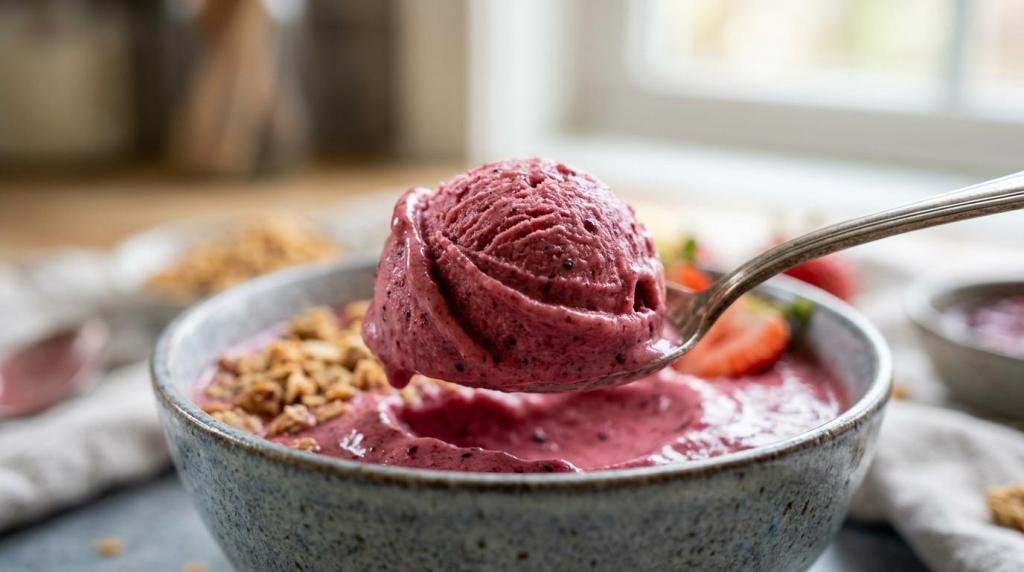
A true smoothie bowl should be spoonable, cold, and rich enough to hold toppings on the surface for at least a few minutes. That thick texture is what gives you contrast: creamy base, crunchy toppings, bright fruit, and a breakfast or snack that feels substantial rather than watery.
The biggest myth is that a thicker bowl needs more powder, more ice, or more complicated ingredients. In most home kitchens, thickness comes from three simple choices: frozen fruit, minimal liquid, and a blender strategy that starts slow and includes frequent scraping.
A reliable formula is this: use about 2 1/2 to 3 cups frozen ingredients with only 1/4 to 1/2 cup liquid. That is the base pattern that keeps the mixture dense and scoopable.
Thick Smoothie Bowl Ingredients and Easy Substitutions
Start with ingredients that bring body, natural sweetness, and a creamy finish. A classic berry-banana version is approachable, budget-friendly, and easy to customize for family tastes.
For one generous bowl or two smaller bowls, use:
- Frozen mixed berries: 2 cups, for a bright, cold base and a deep berry flavor
- Frozen banana: 1 medium, sliced before freezing for creaminess and natural sweetness
- Greek yogurt: 1/4 cup, for protein and a thicker texture
- Milk of choice: 1/4 cup to start, using almond milk, dairy milk, oat milk, or coconut milk
- Chia seeds: 1 tablespoon, for body and fiber
- Honey or maple syrup: 1 to 2 teaspoons, only if your fruit is very tart
- Pinch of salt: tiny, but helpful for rounding out flavor
You can swap the berries for frozen mango, pineapple, peaches, or acai puree. If you want a dairy-free bowl, use coconut yogurt or a thick plant-based yogurt. If bananas are not your favorite, frozen avocado chunks or extra mango can help create a creamy texture without making the bowl thin.
A good topping mix can turn a simple bowl into something that feels café-worthy. Think sliced strawberries, granola, shredded coconut, hemp seeds, nut butter, cacao nibs, or kiwi for a fresh, colorful finish.
Equipment for Making a Thick Smoothie Bowl
The right equipment makes a visible difference, especially when you are blending a low-liquid mixture.
- High-speed blender
- Tamper or long spatula
- Measuring cups
- Chilled bowl
- Sharp knife for toppings
If your blender is not high powered, do not worry. A food processor often works even better for very thick smoothie bowls. The texture may be slightly less silky, though it is often easier to control.
Thick Smoothie Bowl Timing and Prep Plan
This recipe is fast once your fruit is frozen. Active prep takes about 8 minutes, blending and assembly take about 3 to 4 minutes, and total time is roughly 12 minutes. That is quicker than many cooked breakfasts and still gives you a balanced, colorful meal.
If you need to freeze banana slices first, plan ahead by at least 2 hours, though overnight is best. Pre-frozen grocery store fruit can cut your morning prep almost to zero.
For busy weekdays, one smart move is batching smoothie packs. Portion the frozen fruit and chia seeds into freezer-safe bags so you only need to add yogurt and liquid when it is time to blend.
Step-by-Step Thick Smoothie Bowl Instructions
A thick smoothie bowl is less about speed and more about control. Keep the mixture cold, resist the urge to pour in extra liquid, and scrape often.
Step 1: Freeze fruit for smoothie bowl thickness
Use fully frozen fruit, not just chilled fruit. Fresh fruit plus ice usually leads to a more watery result as the ice melts and separates. If you are freezing bananas at home, slice them into coins first so they blend more evenly.
A frozen banana is one of the easiest ways to create a creamy, spoonable base without adding heavy ingredients.
Step 2: Add ingredients in the right blender order
Put the yogurt and milk in the blender first, then add chia seeds, then the frozen fruit on top. This helps the blades catch the softer ingredients first while still keeping the mixture thick.
Start with only 1/4 cup milk. You can always add a splash more later, but you cannot easily undo too much liquid.
Step 3: Blend low, stop often, and scrape the sides
Pulse a few times, then blend on low to medium speed. If the mixture stalls, stop the blender and scrape down the sides. Use a tamper if your blender has one. This stage often takes a little patience.
The texture you want is closer to soft serve than to a drinkable smoothie. If it looks glossy and holds ridges from the spatula, you are on the right track.
Step 4: Adjust texture without watering it down
If the mixture is too thick for the blades to move, add liquid one teaspoon or one tablespoon at a time. That small change matters. A heavy pour of milk can take the bowl from perfect to soupy in seconds.
If it becomes thinner than expected, blend in more frozen banana, frozen berries, or a few cubes of frozen cauliflower rice for neutral body.
Step 5: Transfer quickly and add toppings right away
Scoop the smoothie into a chilled bowl and smooth the top with the back of a spoon. Add toppings immediately so they sit neatly on the surface.
Try arranging toppings in rows if you want a clean look, or scatter them casually for a more relaxed breakfast bowl.
Thick Smoothie Bowl Nutrition Information
Nutrition changes with fruit choice, yogurt type, and toppings. The estimates below are for the base berry-banana bowl before optional granola or nut butter.
| Nutrient | Approx. amount per bowl | Notes |
|---|---|---|
| Calories | 300 to 330 | Depends on sweetener and milk |
| Protein | 9 to 14 g | Higher with Greek yogurt |
| Carbohydrates | 48 to 55 g | Mostly from fruit |
| Fiber | 8 to 11 g | Chia and berries raise fiber |
| Fat | 4 to 7 g | Varies by yogurt and milk |
| Sugar | 28 to 35 g | Mostly natural fruit sugars |
| Calcium | 10% to 20% DV | Depends on dairy or fortified milk |
| Vitamin C | High | Berries contribute a strong amount |
This balance works well for breakfast, a post-workout snack, or an afternoon reset. If you want more staying power, add protein-rich toppings like pumpkin seeds, hemp hearts, or a spoonful of almond butter.
Healthier Thick Smoothie Bowl Alternatives
A thick smoothie bowl is already nutrient-dense, though a few small adjustments can make it better suited to your goals.
If you want more protein, use plain Greek yogurt or add a scoop of vanilla protein powder. If you are watching added sugar, skip the honey and rely on ripe banana or sweet fruit like mango. For higher fiber, blend in flaxseed meal or add extra chia.
If you prefer a lower-sugar version, build the bowl with frozen berries, unsweetened yogurt, and unsweetened almond milk. If you need a nut-free option, choose oat milk or dairy milk and top with sunflower seeds instead of almond butter.
One smart trick for extra volume without a big flavor change is frozen cauliflower rice. In modest amounts, it blends into the fruit and thickens the bowl nicely.
Thick Smoothie Bowl Serving Suggestions
This bowl works at breakfast, as a light lunch, or as a post-exercise snack when you want something cold and satisfying.
Serve it with toppings that create contrast in texture and flavor. Crunchy granola with tart berries is a classic. Sliced banana with peanut butter feels more dessert-like. Mango, coconut, and lime create a tropical bowl that feels sunny even on a rushed weekday.
If you enjoy meal variety, rotate your base and toppings through the week. A berry bowl on Monday, mango-pineapple on Wednesday, and chocolate-banana on Friday can keep the habit fresh without changing the method.
Common Thick Smoothie Bowl Mistakes to Avoid
Most texture problems come down to temperature or liquid ratio, not a bad recipe.
- Too much liquid: Start with less than you think you need and add only by the spoonful
- Using fresh fruit only: Frozen fruit is what gives the bowl body and cold structure
- Blending too long: Extra blending creates heat, which softens the mixture
- Skipping the scrape-down: Thick mixtures need help moving toward the blades
- Heavy toppings too early: Add them after transferring to the bowl so they do not sink into a loose base
If your bowl keeps turning thin, change only one variable next time. Reduce the liquid first. That single fix solves the issue in many home-blended smoothie bowls.
Thick Smoothie Bowl Storing Tips
A smoothie bowl is best eaten right after blending, though a little prep can make mornings much easier.
- Freeze fruit packs ahead of time
- Chill serving bowls before blending
- Store toppings separately in jars
- Freeze leftovers in popsicle molds
- Re-blend leftovers with extra frozen fruit
If you must store the blended base, keep it in an airtight container in the freezer for up to 1 day. Let it sit for 10 to 15 minutes, then stir or re-blend before serving. The texture will not be quite as fresh, though it can still be enjoyable.
Quick Thick Smoothie Bowl Recap and Next Step
Frozen fruit, minimal liquid, a strong blender, and patient blending are the keys to a spoon-thick smoothie bowl. Start cold, scrape often, and add toppings right away for the best texture. Try this method, leave a comment with your favorite combo, and subscribe for more easy Recipesp ideas this week.
Thick Smoothie Bowl FAQs
Can I make a thick smoothie bowl without banana?
Yes. Use frozen mango, avocado, extra berries, or a thick yogurt base. Banana is helpful for creaminess, though it is not required.
Why is my smoothie bowl icy instead of creamy?
This usually happens when the recipe relies too much on ice instead of frozen fruit. Ice adds coldness, but frozen banana, mango, berries, and yogurt build a creamier texture.
What is the best liquid for a thick smoothie bowl?
Any milk can work, though the most important factor is quantity. Start with 1/4 cup. Oat milk and dairy milk usually produce a slightly creamier mouthfeel, while almond milk keeps the flavor light.
Can I make this recipe in a food processor?
Absolutely. A food processor is often easier for very thick mixtures. Stop and scrape the bowl as needed, and use the same low-liquid approach.
Which toppings stay crunchy the longest?
Granola, cacao nibs, toasted coconut, pumpkin seeds, and chopped nuts hold their texture well. Fresh fruit adds brightness, though it softens more quickly.
How can I make it more filling for breakfast?
Add more protein and healthy fat. Greek yogurt, protein powder, nut butter, hemp hearts, and seeds are simple ways to make the bowl more satisfying without losing that thick, spoonable texture.
If you want more easy breakfast ideas, try pairing this method with overnight oats, yogurt parfaits, or make-ahead fruit prep so your next bowl comes together even faster.
