
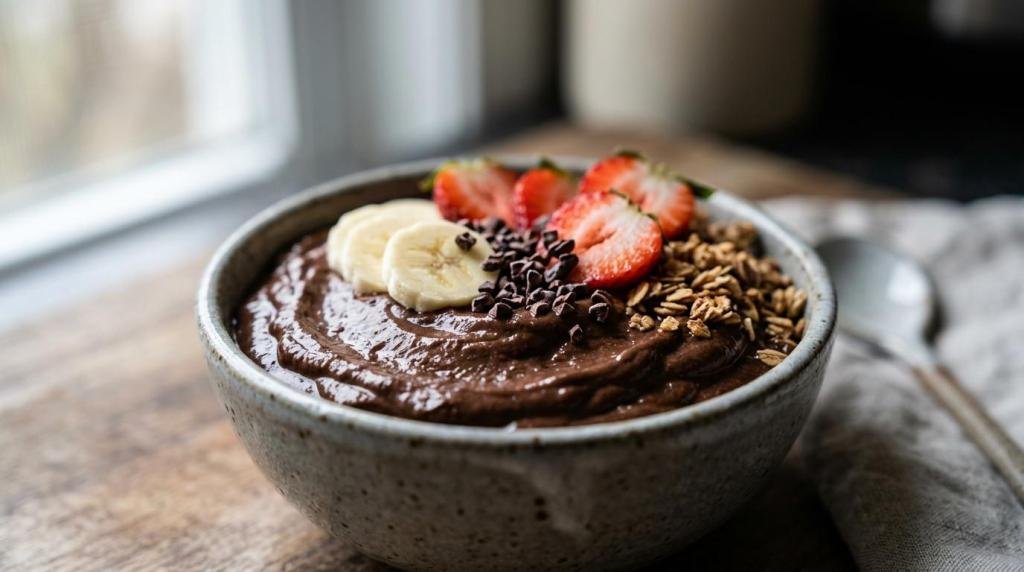
A chocolate smoothie bowl can feel like a treat, yet it can also be a smart breakfast. If many smoothie bowls taste good but leave you hungry an hour later, the issue is usually balance, not the idea itself. A well-built chocolate smoothie bowl brings together frozen fruit, cocoa powder, protein, fiber, and healthy fat in one thick, spoonable bowl that is satisfying from the first bite to the last.
Chocolate smoothie bowl introduction
Can a breakfast that tastes like chocolate pudding still offer protein, fiber, and staying power? Yes, and that question challenges a common belief that a chocolate smoothie bowl is just dessert wearing a healthy label. The difference comes down to ingredient ratios, texture, and toppings.
Many café smoothie bowls lean heavily on juice, sweetened bases, and oversized granola portions. This version takes a steadier path. Frozen banana creates creaminess, Greek yogurt adds body and protein, cocoa powder brings deep chocolate flavor, and a small amount of nut butter rounds everything out. The result is rich, cool, and balanced.
You also get flexibility. This breakfast bowl can be dairy-free, higher in protein, lower in sugar, or packed with extra fiber without losing its appeal. If you enjoy recipes that feel indulgent but fit real mornings, this one earns a regular spot in the rotation.
Chocolate smoothie bowl ingredients and easy substitutions
A great chocolate smoothie bowl starts with cold, concentrated ingredients. Frozen fruit matters because it gives the bowl that thick, scoopable texture without watering down the flavor. A high-speed blender makes the process easier, and a tamper or silicone spatula helps move the mixture without adding extra milk.
Here is a reliable base recipe for 1 large bowl or 2 smaller bowls.
- 1 large frozen banana, sliced before freezing
- 1/2 cup plain Greek yogurt (or dairy-free yogurt)
- 1/4 to 1/2 cup unsweetened almond milk
- 2 tablespoons unsweetened cocoa powder
- 1 tablespoon peanut butter or almond butter
- 1 Medjool date, pitted (or 1 to 2 teaspoons maple syrup)
- 1/2 teaspoon vanilla extract
- Pinch of sea salt
- 1 to 2 tablespoons rolled oats or chia seeds for extra thickness, optional
- Toppings: sliced strawberries, banana coins, cacao nibs, granola, hemp seeds, coconut flakes
A few smart swaps can change the bowl without much effort. Use frozen cauliflower rice for extra volume with a milder fruit profile. Swap Greek yogurt for skyr if you want an even thicker texture. If you like darker chocolate notes, use cacao powder. If you prefer a sweeter finish, add half a date at a time and taste as you go.
Chocolate smoothie bowl timing and prep details
This recipe is fast enough for weekdays and satisfying enough for slower mornings.
| Task | Time |
|---|---|
| Ingredient prep | 5 minutes |
| Blending | 2 minutes |
| Topping and serving | 3 minutes |
| Total time | 10 minutes |
At roughly 10 minutes from start to finish, this chocolate smoothie bowl is quicker than most cooked breakfasts and far faster than pancakes, waffles, or baked oatmeal. If your banana is already frozen and your toppings are ready, the process feels even shorter.
For the easiest workflow, keep smoothie bowl packs in the freezer. A bag with banana slices, a few berries, or frozen cauliflower rice can cut prep time to almost nothing.
Chocolate smoothie bowl step-by-step instructions
Step 1: Chill the bowl for a thicker chocolate smoothie bowl
If you have two spare minutes, place your serving bowl in the freezer while you gather ingredients. This small step helps the smoothie bowl stay cold and thick longer, especially in warm kitchens.
Measure your milk carefully. Start low. You can always add more, but once the mixture turns thin, getting that spoonable texture back takes more frozen ingredients.
Step 2: Load the blender in the right order
Add the almond milk first, then yogurt, nut butter, vanilla, date, cocoa powder, salt, and frozen banana. If using oats or chia seeds, add them now.
This order helps the blender catch the liquid near the blades while still keeping the overall mix thick. It also prevents dry cocoa powder from sticking to the sides.
Step 3: Blend until creamy, not runny
Pulse a few times, then blend on low to medium speed. Stop and scrape down the sides with a spatula if needed. Use the tamper if your blender has one.
The ideal chocolate smoothie bowl texture is thicker than a drinkable smoothie. It should mound slightly on a spoon. If the mixture is too stiff to move, add milk 1 tablespoon at a time. If it becomes too loose, add more frozen banana, a few ice cubes, or a spoonful of oats.
Step 4: Taste and adjust the chocolate flavor
Once smooth, taste before serving. Want it richer? Add another teaspoon of cocoa powder. Want it sweeter? Add a bit more date or maple syrup. Want more depth? A tiny extra pinch of salt often brings the chocolate forward.
This is also the moment to personalize the bowl. If you want a post-workout version, blend in a scoop of chocolate or vanilla protein powder and add a splash more milk.
Step 5: Add toppings with contrast and serve right away
Spoon the mixture into your chilled bowl and smooth the top. Then build contrast. Creamy bases need crunch, brightness, and texture.
Try a mix of fresh berries, crunchy granola, cacao nibs, chopped nuts, hemp hearts, or toasted coconut. The bowl looks better, tastes better, and feels more satisfying when each bite has a little variation.
Chocolate smoothie bowl nutritional information
Nutrition will change based on your milk, yogurt, sweetener, and toppings. For the base recipe above, using Greek yogurt, almond milk, peanut butter, cocoa powder, and one Medjool date, this is a practical estimate for 1 large bowl.
| Nutrient | Approximate amount |
|---|---|
| Calories | 380 to 410 |
| Protein | 17 to 20 g |
| Carbohydrates | 45 to 50 g |
| Fiber | 8 to 10 g |
| Total sugars | 22 to 28 g |
| Fat | 10 to 12 g |
| Sodium | 120 to 180 mg |
That balance is part of what makes this bowl work well as a breakfast or recovery snack. Protein supports fullness, fiber helps slow the meal down, and fat adds staying power. If you divide the recipe into two smaller bowls, each serving lands at about half those numbers before toppings.
Compared with many dessert-style smoothie bowls, this version keeps the ingredient list tighter and puts more emphasis on texture and satiety than added sweetness.
Healthier chocolate smoothie bowl alternatives
This recipe already lands in a useful middle ground: rich, satisfying, and easy to adapt. Still, there are several ways to shift it based on your goals.
- Higher protein: add 1 scoop protein powder, or replace part of the banana with extra Greek yogurt or cottage cheese
- Lower sugar: skip the date, use unsweetened yogurt, and top with nuts and cacao nibs instead of sweet granola
- Dairy-free: use coconut yogurt, almond yogurt, or silken tofu in place of Greek yogurt
- More fiber: blend in chia seeds, flaxseed meal, rolled oats, or frozen raspberries
- Nut-free: swap nut butter for sunflower seed butter or tahini
- Extra greens: add a handful of spinach, which is hard to taste under the cocoa
If you are serving kids or anyone new to smoothie bowls, start with the standard version and make lighter adjustments later. Texture wins people over first. Once that creamy texture is there, healthier tweaks tend to go over well.
Chocolate smoothie bowl serving suggestions
A chocolate smoothie bowl works in more than one lane. It can be breakfast, an afternoon snack, or a lighter dessert. The easiest way to change its mood is through toppings.
For breakfast, pair it with a crunchy topping and fresh fruit. Granola, strawberries, banana slices, and hemp seeds make it feel complete. For a post-workout bowl, keep toppings simple and focus on protein with extra yogurt, pumpkin seeds, and a spoonful of nut butter. For a dessert-style version, use dark chocolate shavings, toasted coconut, and raspberries.
This bowl also plays well with make-ahead breakfast habits. Serve it alongside egg muffins, overnight oats, or a simple yogurt parfait if you are feeding a family with different preferences. If you like building a breakfast rotation, this recipe fits naturally with berry smoothie bowls and peanut butter banana smoothies.
Common chocolate smoothie bowl mistakes to avoid
A few small errors can turn a thick, luxurious bowl into a thin smoothie that needs a straw. Most issues are easy to fix once you know where they start.
- Too much liquid: begin with 1/4 cup milk and increase slowly, 1 tablespoon at a time
- Using mostly fresh fruit: frozen ingredients create the dense, cold texture a smoothie bowl needs
- Skipping salt: a tiny pinch sharpens the chocolate flavor and balances sweetness
- Overblending: long blending warms the mixture and makes it looser
- Overloading toppings: a heavy layer can bury the base and push the bowl into dessert territory
One more note: sweeteners are easy to overdo in chocolate recipes. Taste after blending before adding more. Banana and dates already contribute plenty of natural sweetness for many palates.
Chocolate smoothie bowl storing tips and meal prep ideas
This recipe is best eaten right after blending. That is when the texture is thickest and the chocolate flavor feels freshest. If you need to store it, place the smoothie bowl base in an airtight container and refrigerate for up to 24 hours. Stir well before serving, knowing the texture will be softer.
For longer storage, freeze the base in a freezer-safe container. Let it sit at room temperature for 10 to 15 minutes, then stir or re-blend with a splash of milk. The texture will not be identical to freshly made, though it can still taste very good.
A better meal-prep method is to prep ingredients rather than the finished bowl. Freeze banana slices in single portions. Bag smoothie packs with banana, cauliflower rice, or berries. Keep cocoa powder, chia seeds, and oats together in a small jar so they are ready to grab. That setup keeps mornings quick without sacrificing texture.
Make this chocolate smoothie bowl this week
Thick, creamy chocolate smoothie bowl turns frozen fruit, cocoa, yogurt, and nut butter into a breakfast that tastes rich yet stays balanced. It comes together fast, welcomes easy swaps, and works for busy mornings, post-workout snacks, or a lighter dessert when topped with crunch, berries, and seeds for extra texture.
Try it this week, then leave a comment or review with your favorite topping combo. If you want more easy breakfast ideas and family-friendly recipes, subscribe for new updates.
Chocolate smoothie bowl FAQs
Can I make a chocolate smoothie bowl without banana?
Yes. Use frozen avocado, frozen mango, frozen cauliflower rice, or extra yogurt for body. Banana adds sweetness and creaminess, though it is not required. If you remove it completely, you may want a little extra sweetener.
What blender is best for a thick smoothie bowl?
A high-speed blender makes the process easiest, especially with frozen fruit and minimal liquid. A personal blender can still work, though you may need to stop more often and scrape the sides. A tamper and silicone spatula help a lot.
How do I thicken a runny chocolate smoothie bowl?
Add more frozen banana, a few ice cubes, extra yogurt, oats, or chia seeds. Blend briefly after each addition. Next time, start with less milk and build slowly.
Can I use cocoa powder instead of cacao powder?
Absolutely. Cocoa powder gives a classic, familiar chocolate flavor and works very well here. Cacao powder tastes a bit darker and less processed. Either one can make a strong, satisfying bowl.
Is a chocolate smoothie bowl good for kids?
Yes, especially if you keep the texture thick and the sweetness moderate. Many kids enjoy the chocolate flavor right away. Top with sliced fruit, a small spoonful of granola, or mini chocolate chips to make it feel fun without going overboard.
Can I turn this into a protein smoothie bowl?
Yes. Add a scoop of protein powder and a splash more milk if needed. Greek yogurt, skyr, cottage cheese, or silken tofu can also raise the protein content while keeping the bowl creamy.
