
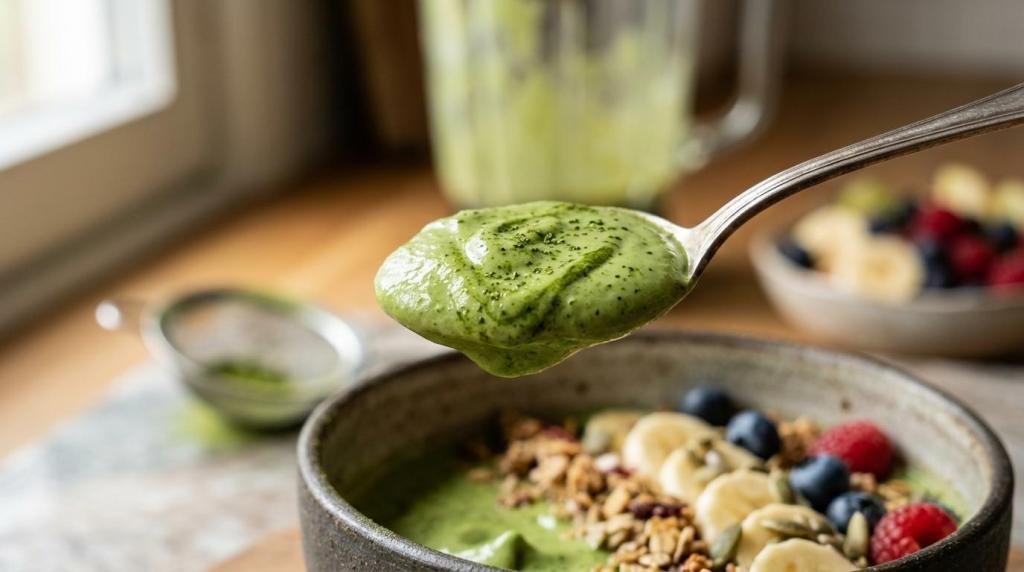
A matcha smoothie bowl can make breakfast feel fresh, bright, and a little more exciting without adding much work to your morning. When it is thick enough for a spoon, balanced with fruit, and topped with a little crunch, it lands somewhere between a smoothie, soft serve, and a café-style breakfast treat.
Introduction to a Matcha Smoothie Bowl Breakfast
Can a breakfast you make in about 10 minutes really offer the creamy texture of dessert, the freshness of fruit, and the steady lift people look for in green tea? A well-built matcha smoothie bowl absolutely can.
This recipe works because it combines a few smart basics: frozen fruit for body, matcha green tea powder for earthy depth, a modest amount of liquid for thickness, and toppings that bring contrast. Many smoothie bowl recipes fall into the 5 to 10 minute range, which makes this a faster option than most cooked breakfasts. It also feels flexible enough for weekdays, meal prep, and slow weekend mornings.
If you enjoy antioxidant-rich breakfast ideas, dairy-free smoothie bowls, or quick healthy recipes, this one checks every box. The flavor is clean and lightly sweet, the color is vibrant, and the method is simple enough for any home cook.
Ingredients for a Thick and Creamy Matcha Smoothie Bowl
The best matcha smoothie bowl starts with frozen ingredients and a careful liquid ratio. That is what gives you a spoonable texture instead of a drinkable smoothie. Frozen banana brings sweetness and creaminess, while mango or pineapple adds brightness that softens matcha’s grassy notes.
A high-speed blender makes the process easier, though a standard blender can still work if you pause and scrape down the sides once or twice. A fine-mesh sieve is also helpful because sifted matcha blends more smoothly and avoids clumps.
| Ingredient | Amount | Why it works | Easy substitution |
|---|---|---|---|
| Frozen banana | 2 medium | Creamy texture and natural sweetness | 1/2 avocado plus 1 to 2 dates |
| Frozen mango or pineapple | 1/2 cup | Bright, tropical flavor | Frozen peaches or frozen cauliflower for lower sugar |
| Baby spinach | 1 packed cup | Mild green flavor and extra nutrients | Kale, or leave it out |
| Unsweetened almond milk | 3/4 cup | Keeps the bowl creamy | Oat milk, coconut milk, soy milk |
| Matcha powder | 1 1/2 to 2 tsp | Earthy flavor and green color | No direct swap, though less can be used for a milder taste |
| Chia seeds | 1 tsp | Thickens slightly and adds fiber | Ground flaxseed or hemp hearts |
| Maple syrup | 1 to 2 tsp, optional | Balances bitterness | Honey, agave, or a pitted date |
| Vanilla extract | 1/4 tsp | Softens the grassy notes | Leave out or use almond extract sparingly |
| Pinch of salt | Small pinch | Sharpens flavor | Optional but useful |
For toppings, keep a mix of soft, crisp, and crunchy textures on hand. Fresh berries, sliced banana, kiwi, granola, coconut flakes, pumpkin seeds, hemp hearts, and nut butter all work beautifully.
Matcha Smoothie Bowl Timing and Helpful Equipment
This recipe is quick by design.
Prep time is about 10 minutes, blending time is about 1 minute, and cooking time is zero. Total time is roughly 10 minutes, or closer to 5 if your fruit is already portioned and frozen. Compared with breakfasts that need a skillet or oven, this can cut your morning cooking time by half or more.
A few tools make a real difference. A high-speed blender creates the smoothest texture. A silicone spatula helps you get every bit of the thick smoothie base out of the pitcher. Chilling your serving bowl for a few minutes can also help the smoothie stay cold and thick a little longer.
Step-by-Step Matcha Smoothie Bowl Instructions
Step 1: Prep the frozen fruit and matcha
Set out your frozen banana, frozen mango, spinach, milk, and toppings. Sift the matcha into a small bowl or directly into the blender. This small step helps prevent gritty pockets of green tea powder in the final bowl.
Step 2: Add ingredients in the right order
Pour the almond milk into the blender first. Add the vanilla, maple syrup if using, and the sifted matcha. Then add spinach, frozen banana, frozen mango, and chia seeds. Putting liquid at the bottom helps the blades catch more quickly.
Step 3: Blend until thick and smooth
Start on low, then increase the speed. Stop once or twice to scrape the sides if needed. The goal is a thick, soft-serve texture. If it will not move, add milk 1 tablespoon at a time. If it gets too thin, add a few more frozen banana slices.
Step 4: Taste and adjust the flavor
Taste a spoonful before serving. If the matcha tastes too strong, add a little more banana or a touch of maple syrup. If it tastes too sweet, add a pinch more matcha or a squeeze of lemon juice to sharpen it.
Step 5: Add toppings and serve right away
Spoon the smoothie into a bowl and smooth the top with the back of a spoon. Add your toppings while the base is still very cold. This is when the texture is best and the bright green color looks most appealing.
Nutritional Information for One Matcha Smoothie Bowl
Nutrition will shift depending on your toppings and the milk you use, though the base recipe stays fairly balanced. A simple version made with banana, mango, spinach, almond milk, chia, and matcha usually lands in the moderate-calorie range while offering fiber, potassium, and plant compounds from green tea.
Here is a practical estimate for one bowl before toppings:
| Nutrient | Approximate amount |
|---|---|
| Calories | 260 to 300 |
| Carbohydrates | 40 to 45 g |
| Fiber | 6 to 8 g |
| Protein | 5 to 7 g |
| Fat | 6 to 9 g |
| Added sugar | 0 to 8 g |
| Caffeine | 50 to 70 mg |
| Vitamin C | Moderate to high |
| Potassium | High |
| Antioxidants | High, thanks to matcha catechins |
If you add granola, nut butter, or protein powder, expect the calories and protein to rise. That can be useful if you want a more filling post-workout breakfast.
Healthier Alternatives for a Matcha Smoothie Bowl
This recipe is already adaptable, which is one reason smoothie bowls stay popular. You can adjust sweetness, protein, fiber, and allergens without losing the core appeal of the dish.
A few easy swaps can help you tailor it to your goals:
- Lower sugar: Use frozen cauliflower instead of mango and skip maple syrup.
- Higher protein: Blend in Greek yogurt, silken tofu, or vanilla protein powder.
- More fiber: Add oats, extra chia seeds, or ground flaxseed.
- Banana-free: Use avocado plus a date for creaminess and balance.
- Nut-free: Choose oat milk and top with pumpkin seeds or sunflower seeds.
Ceremonial-grade matcha gives a smoother flavor, while culinary-grade matcha is more budget-friendly and often a bit stronger. Either can work in a matcha smoothie bowl, though a good-quality powder will give you a brighter color and less bitterness.
Serving Suggestions for a Matcha Smoothie Bowl
A great bowl has contrast. Matcha is earthy and creamy, so the toppings should bring freshness, crunch, and a little visual pop. Bright fruit and crisp granola do that instantly.
Try one of these combinations when you want a new spin:
- strawberries and hemp hearts
- kiwi with toasted coconut
- blueberries and almond butter drizzle
- granola with banana slices
- cacao nibs and raspberries
This is also a smart base for a breakfast board or brunch spread. Pair it with overnight oats, a yogurt parfait, or a simple fruit salad if you want a few easy options on the table.
Common Matcha Smoothie Bowl Mistakes to Avoid
Even a simple recipe can miss the mark if the texture or flavor gets out of balance. Most problems come down to liquid ratio, matcha quality, or blending technique.
Keep an eye on these common issues:
- Too much liquid: Start with less than you think you need and add only by the tablespoon.
- Unsifted matcha: Clumps can leave bitter pockets and a grainy finish.
- Room-temperature fruit: The bowl turns thin fast and loses that frosty texture.
- Overdoing the matcha: More powder does not always mean better flavor.
- Skipping the taste test: A quick adjustment before serving makes a big difference.
If your bowl comes out too thin, add frozen banana, a spoonful of yogurt, or a few ice-cold mango chunks. If it is too thick for the blender, add milk slowly rather than all at once.
Storing Tips for Matcha Smoothie Bowl Freshness
A matcha smoothie bowl is best eaten right after blending. That is when the texture is thickest and the color is most vivid. If you need to prep ahead, store the blended base in an airtight jar in the refrigerator for up to 24 hours. Stir before serving because some separation is normal.
For longer storage, freeze the smoothie base in a sealed container or silicone cube tray for up to 1 month. Let it thaw slightly, then re-blend with a splash of milk. Add toppings only when serving so they stay crisp.
Matcha powder also deserves a little care. Keep it in an airtight container away from heat, moisture, and strong odors. Refrigeration after opening can help preserve its color and flavor, especially if you use it over a few weeks rather than letting it sit for months.
Try This Matcha Smoothie Bowl This Week
This matcha smoothie bowl is quick, creamy, flexible, and packed with color, fiber, and feel-good flavor. Blend one tomorrow, make it your own with toppings, and share your results in the comments or review section. Subscribe for more easy breakfast ideas, bowls and family-friendly recipes delivered regularly to your kitchen.
Matcha Smoothie Bowl FAQs
Can I make a matcha smoothie bowl without banana?
Yes. Avocado, silken tofu, frozen zucchini, or frozen cauliflower can replace banana for texture. If you remove banana, you may want a date or a little maple syrup to bring back some sweetness.
What kind of matcha is best for a smoothie bowl?
A good-quality culinary matcha is usually the most practical choice. It is made for mixing into recipes and costs less than ceremonial grade. If you want the smoothest flavor and brightest green color, ceremonial grade is excellent too.
How do I make my smoothie bowl thicker?
Use more frozen fruit and less liquid. Start with 1/2 to 3/4 cup milk, then add more only if needed. Chia seeds, oats, yogurt, and avocado also help create a thicker consistency.
Is a matcha smoothie bowl good for breakfast?
Yes, especially when it includes fruit, fiber, and some protein or healthy fat. It can be a smart breakfast for busy mornings because it is quick to prepare and easy to adapt to different nutrition goals.
Can I add protein powder to this recipe?
Absolutely. Vanilla or unflavored protein powder blends in well and makes the bowl more satisfying. If the powder thickens the mixture too much, add a small splash of milk to keep the texture smooth.
Why does my matcha smoothie bowl taste bitter?
The most common reasons are too much matcha, low-quality matcha, or not enough sweet fruit to balance it. Try reducing the matcha slightly and using ripe frozen banana, mango, or a small amount of natural sweetener.
