
A green smoothie bowl can turn an ordinary morning into something bright, cold, creamy, and seriously satisfying. It brings together fruit, leafy greens, yogurt, and smart toppings in a format that feels like a treat, yet fits neatly into a quick breakfast routine.
Green Smoothie Bowl Introduction
Can a 10-minute breakfast really deliver more fiber, color, and staying power than many boxed cereals or bakery items? In many cases, yes. Many ready-to-eat breakfasts provide less than 4 grams of fiber per serving, while a well-built green smoothie bowl can often reach 8 grams or more before extra toppings even hit the bowl.
That is the appeal of a green smoothie bowl. You get the refreshing texture of a thick smoothie, the spoonable satisfaction of a breakfast bowl, and an easy way to work spinach, fruit, seeds, and protein into one meal. It also gives home cooks something many fast breakfasts miss: flexibility. You can keep it dairy-free, make it higher in protein, cut the sugar, or lean into tropical flavor with mango, kiwi, and coconut.
This version is built for busy mornings and repeat success. The ingredient list is approachable, the method is simple, and the finished bowl looks as good as it tastes.
Green Smoothie Bowl Ingredients and Easy Substitutions
The best green smoothie bowl recipes balance sweetness, creaminess, and thickness. Frozen fruit creates that soft-serve texture, spinach adds color and nutrients without dominating the flavor, and yogurt or avocado gives the bowl body.
| Ingredient | Amount | What it adds | Easy swap |
|---|---|---|---|
| Frozen banana | 1 large | Creamy texture and natural sweetness | Frozen avocado plus 1 to 2 dates |
| Frozen mango | 1 cup | Bright tropical flavor and thick consistency | Frozen pineapple or peaches |
| Baby spinach | 1 packed cup | Fresh green color and mild earthy note | Kale, use 1/2 cup and remove stems |
| Greek yogurt | 1/2 cup | Protein and tangy richness | Coconut yogurt for dairy-free |
| Unsweetened almond milk | 1/3 to 1/2 cup | Helps blend without thinning too much | Oat milk, dairy milk, soy milk |
| Chia seeds | 1 teaspoon | Fiber and a slight thickening effect | Ground flaxseed or hemp hearts |
| Lime juice | 1 teaspoon | Brightness that wakes up the fruit | Lemon juice |
| Honey or maple syrup | 1 to 2 teaspoons, optional | Extra sweetness if needed | Skip it if your fruit is very ripe |
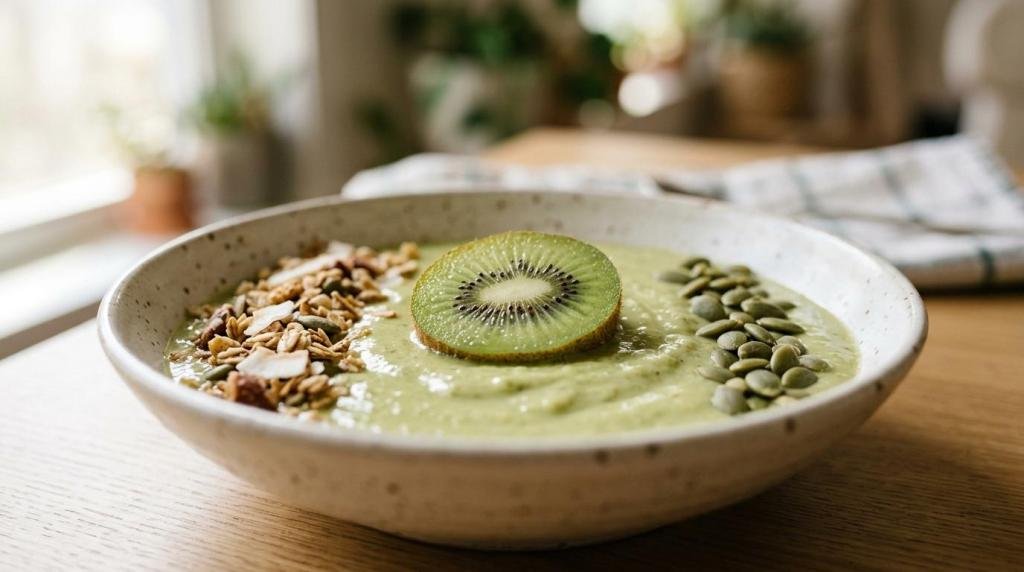
For toppings, think texture. A green smoothie bowl tastes better when every spoonful has contrast. Try sliced kiwi, berries, granola, pumpkin seeds, toasted coconut, hemp hearts, or a drizzle of nut butter. If you like a colder bowl, chill it in the freezer for 3 minutes before serving.
Green Smoothie Bowl Timing and Helpful Equipment
One reason this recipe works so well for weekdays is speed. There is no cooking time, very little cleanup, and the entire process can be finished before coffee cools down.
| Task | Time |
|---|---|
| Ingredient prep | 8 minutes |
| Blending | 2 to 3 minutes |
| Topping and serving | 2 minutes |
| Total time | 12 to 13 minutes |
That is much faster than many baked breakfasts, which often need 35 to 45 minutes from mixing bowl to table. If your fruit is pre-frozen and your toppings are already portioned, you can cut total time to under 10 minutes.
A few tools make the process much easier:
- High-speed blender
- Measuring cups and spoons
- Silicone spatula
- Wide, shallow bowl
- Small knife and cutting board
- Topping jars or prep containers
A food processor can work in place of a blender if your machine struggles with thick mixtures. Just pulse slowly and scrape the sides often.
How to Make a Green Smoothie Bowl Step by Step
Step 1: Freeze the fruit for thick green smoothie bowl texture
If your banana is fresh, slice it and freeze it first. Frozen fruit is the reason a smoothie bowl stays thick enough to hold toppings on the surface instead of letting them sink. Mango should also be frozen, not chilled.
This one choice changes everything. A cold, dense base means less liquid, better texture, and a more satisfying bowl.
Step 2: Add liquids first, then soft ingredients, then frozen ingredients
Pour the almond milk into the blender first. Add yogurt, spinach, chia seeds, and lime juice next. Place the frozen banana and Mango on top.
That stacking order helps the blades catch the liquid early and pull the heavier frozen ingredients down more evenly. It also reduces the urge to add too much milk too soon.
Step 3: Blend slowly, then increase speed
Start on low speed for 10 to 15 seconds. Move to medium or high once the fruit begins to break down. Stop and scrape the sides if needed.
The goal is a very thick mixture, closer to soft frozen yogurt than a drinkable smoothie. If the blender stalls, add milk 1 tablespoon at a time. Small adjustments matter here. Too much liquid can turn a green smoothie bowl into a regular smoothie in seconds.
Step 4: Taste and adjust the balance
Taste the mixture before serving. If it needs more brightness, add a little more lime juice. If it tastes too earthy, add a few extra mango chunks or a small drizzle of honey. If it feels too sweet, a spoonful of yogurt can bring it back into balance.
This is where personalization makes the recipe feel yours. Some people want a fruit-forward bowl. Others want a more neutral base that lets nut butter and granola take the lead.
Step 5: Spoon into a bowl and add toppings right away
Use a spatula to transfer the smoothie into a wide bowl. Smooth the top gently. Then add toppings in rows, clusters, or a casual scatter.
Try combining one crunchy topping, one juicy topping, and one rich topping. A simple trio like granola, kiwi, and pumpkin seeds creates enough contrast to make the bowl feel complete.
Step 6: Serve immediately for the best texture
A green smoothie bowl is at its best right after blending. The top stays crisp, the center stays cold, and the texture remains thick enough for slow spoonfuls.
If you want a breakfast that feels more substantial, pair it with a hard-boiled egg, a slice of toast with almond butter, or a small muffin from your meal prep rotation.
Green Smoothie Bowl Nutrition Information
Nutrition will vary based on yogurt, milk, sweetener, and toppings. The values below are estimates for one bowl made with banana, mango, spinach, Greek yogurt, almond milk, chia seeds, and no optional sweetener.
| Nutrition | Estimated amount per serving |
|---|---|
| Calories | 290 to 330 |
| Protein | 11 to 15 g |
| Carbohydrates | 45 to 50 g |
| Fiber | 8 to 10 g |
| Total fat | 5 to 8 g |
| Natural sugars | 24 to 30 g |
| Calcium | 15 to 20% daily value |
| Potassium | 15 to 20% daily value |
| Vitamin C | 50% or more daily value |
That profile makes this bowl especially appealing for readers looking for a high-fiber breakfast, a post-workout fruit bowl, or a lighter option that still feels filling. Add nut butter, seeds, or extra yogurt if you want more protein and satiety.
Healthier Green Smoothie Bowl Alternatives
The base recipe is already flexible, which makes it easy to fit different nutrition goals without losing flavor. Small swaps can shift the bowl toward more protein, lower sugar, or added healthy fats.
- Higher protein: Add 1/2 scoop vanilla protein powder or increase Greek yogurt to 3/4 cup.
- Lower sugar: Replace half the mango with cauliflower rice or zucchini chunks.
- Dairy-free: Use coconut yogurt or soy yogurt instead of Greek yogurt.
- More fiber: Add 1 tablespoon chia seeds, flaxseed, or oat bran.
- Extra healthy fats: Blend in 1/4 avocado for a richer, silkier bowl.
- Kid-friendly flavor: Use spinach instead of kale and top with sliced strawberries and granola.
If you are feeding a family, set up a topping bar. That keeps the base consistent while letting everyone build a bowl that matches their taste.
Green Smoothie Bowl Serving Suggestions
A green smoothie bowl can be breakfast, a light lunch, or a smart afternoon snack. For breakfast, pair it with coffee, tea, or a savory side if you like contrast. For a post-exercise meal, add extra protein and a topping with crunch.
It also fits nicely into brunch spreads. Serve smaller portions in compact bowls with a topping station of berries, granola, toasted coconut, chopped nuts, and seeds. If you enjoy make-ahead breakfast ideas, keep this recipe next to overnight oats, chia pudding, or egg muffins for variety during the week.
Common Green Smoothie Bowl Mistakes to Avoid
A great bowl is not hard to make, though a few common missteps can leave it thin, bland, or overly grassy. Paying attention to texture and ingredient order solves most problems quickly.
- Too much liquid
- Not enough frozen fruit
- Overdoing kale or other strong greens
- Skipping acid like lime or lemon
- Using watery toppings too early
- Blending too long and warming the mixture
When the bowl turns runny, the fix is usually simple: add more frozen banana or mango and blend briefly. When the flavor tastes flat, acidity is often missing. A teaspoon of lime juice can sharpen the fruit and make the entire bowl taste fresher.
Green Smoothie Bowl Storage and Make-Ahead Tips
A green smoothie bowl is best eaten fresh, though smart prep can make it much easier to pull together during busy mornings. Freeze fruit in single-serve bags so the base is ready to blend. Wash spinach ahead of time and keep toppings in small jars.
If you have leftovers, transfer the bowl to an airtight container and refrigerate it for up to 24 hours. The texture will soften, so it may be better as a drinkable smoothie the next day. For longer prep, make freezer packs with banana, mango, spinach, and chia seeds. Then add yogurt and milk when you blend.
Why This Green Smoothie Bowl Deserves a Spot in Your Breakfast Rotation
Cold, creamy, colorful, and easy to personalize, this green smoothie bowl brings together fruit, greens, protein, and crunch in minutes. Try it this week, then share your results in the comments or review section and subscribe for more easy recipes, practical kitchen tips, and family-friendly meal ideas.
Green Smoothie Bowl FAQs
Can I make a green smoothie bowl without banana?
Yes. Use frozen avocado, frozen cauliflower, or extra frozen mango for thickness. Banana adds sweetness and body, though it is not required. If you remove it, you may want a date or a touch of maple syrup to keep the flavor round and balanced.
What greens work best in a green smoothie bowl?
Baby spinach is usually the easiest choice because its flavor is mild and its texture blends quickly. Kale works too, though it has a stronger taste and a slightly tougher texture. If you use kale, remove the stems and start with a smaller amount.
How do I make my smoothie bowl thicker?
Use frozen fruit, not fresh fruit with ice. Start with less milk than you think you need, then add more in small amounts. Greek yogurt, avocado, chia seeds, and mango all help create a thicker texture.
Is a green smoothie bowl actually filling?
It can be, especially if you include protein, fiber, and healthy fats. A bowl with yogurt, chia seeds, and toppings like pumpkin seeds or nut butter will usually feel more satisfying than a fruit-only version.
Can I prep a green smoothie bowl the night before?
You can prep the ingredients, though the fully blended bowl tastes best fresh. Assemble freezer packs in advance, store toppings separately, and blend in the morning. That gives you the best texture with very little effort.
What toppings go best with a green smoothie bowl?
Granola, kiwi, berries, coconut, hemp hearts, sliced banana, pumpkin seeds, and almond butter are all strong options. Aim for contrast: one crunchy topping, one juicy topping, and one rich topping. That simple formula makes the bowl taste more complete.
Can kids enjoy this recipe?
Yes, especially when the base leans fruity and the spinach stays mild. Let kids choose their own toppings. That one step often makes the bowl more appealing and gives breakfast a little extra fun without extra work for the cook.
