
In many kitchens, the answer is yes. A homemade smoothie bowl recipe healthy enough for breakfast often combines frozen fruit, yogurt, seeds, and milk into a thick base that feels satisfying rather than drinkable. Many ready-made breakfasts land in the double digits for added sugar while still falling short on protein or fiber. A bowl built at home gives you far more control over sweetness, texture, and nutrition.
A smart breakfast does not need to be complicated. A smoothie bowl recipe healthy enough for busy weekdays can deliver fruit, protein, fiber, and texture in one colorful bowl, often faster than toast and eggs. It is also one of the easiest ways to turn simple freezer staples into a meal that feels fresh, filling, and worth repeating.
Introduction to a Smoothie Bowl Recipe Healthy Enough for Every Morning
Could a 10-minute breakfast really give you more fiber, produce, and staying power than many packaged morning options?
This version is designed for home cooks who want approachable ingredients, quick prep, and consistent results. It is thick enough to hold toppings, naturally sweet from fruit, and flexible enough for dairy-free, high-protein, or lower-sugar needs. If you like berry smoothies, yogurt parfaits, chia pudding, or acai bowls, this recipe fits right into that breakfast rotation.
Ingredients for a Smoothie Bowl Recipe Healthy and Creamy
The magic of a great bowl comes from balance. Frozen fruit brings body and chill. Yogurt adds creaminess and protein. A small amount of liquid keeps the blender moving without turning the mixture thin. Seeds and toppings add texture, healthy fats, and a little crunch.
Use these ingredients for 2 servings:
- Frozen mixed berries: 2 cups, for color, antioxidants, and natural sweetness. Swap with frozen mango, pineapple, cherries, or strawberries.
- Frozen banana: 1 medium, sliced before freezing. Swap with frozen cauliflower for lower sugar, or avocado for extra richness.
- Greek yogurt: 3/4 cup, plain or vanilla. Swap with skyr, coconut yogurt, or soy yogurt.
- Unsweetened almond milk: 1/3 to 1/2 cup, added gradually. Swap with oat milk, dairy milk, or coconut water.
- Chia seeds: 1 tablespoon, for fiber and omega-3 fats. Swap with ground flaxseed or hemp hearts.
- Nut butter: 1 tablespoon, almond or peanut. Swap with sunflower seed butter for a nut-free option.
- Optional protein powder: 1 scoop, plain or vanilla, if you want a more filling post-workout bowl.
- Toppings: sliced fresh fruit, granola, pumpkin seeds, coconut flakes, cacao nibs, or a drizzle of nut butter.
A few tools make the process much easier, especially if you want that spoonable, thick smoothie bowl texture instead of a thin smoothie.
| Equipment | Why it helps |
|---|---|
| High-speed blender | Blends frozen fruit into a thick, creamy base |
| Tamper or spatula | Pushes ingredients toward the blades safely |
| Measuring cups | Helps you avoid too much liquid |
| Shallow bowl | Shows off toppings and keeps the bowl visually balanced |
| Small spoon or scoop | Makes topping placement neat and quick |
Timing for This Smoothie Bowl Recipe Healthy Enough for Busy Days
Speed is one reason smoothie bowls stay popular. This recipe takes less time than most cooked breakfasts and almost no cleanup if you rinse the blender right away.
| Task | Time |
|---|---|
| Ingredient prep | 5 minutes |
| Blending | 3 to 4 minutes |
| Topping and serving | 2 minutes |
| Total time | 10 to 11 minutes |
That total is often 30 to 50 percent faster than many stovetop breakfast recipes, especially if your fruit is already portioned in freezer bags.
Step-by-Step Instructions for a Smoothie Bowl Recipe Healthy and Thick
Step 1: Freeze and measure the ingredients
For the best texture, start with frozen fruit, not chilled fresh fruit. Frozen berries and banana create the thick, scoopable consistency that makes a smoothie bowl feel like a meal. If you prep often, slice ripe bananas and freeze them flat in small bags so they blend faster.
Measure everything before you turn on the blender. This matters more than it seems. Once blending starts, the window between thick and too thin is small.
Step 2: Add ingredients in the right order
Place the yogurt and 1/3 cup milk in the blender first, then add chia seeds, nut butter, banana, and berries on top. The small amount of liquid at the bottom helps the blades catch quickly while keeping the mixture dense.
If you are using protein powder, add it now. If your blender struggles, pause and scrape down the sides instead of pouring in extra milk right away.
Step 3: Blend slowly, then increase speed
Pulse a few times to break up the fruit, then blend on low to medium until the mixture starts moving. Increase speed only when you see a thick vortex forming. This usually takes 60 to 90 seconds in a strong blender.
If needed, add more milk one tablespoon at a time. That slow approach is the difference between a thick smoothie bowl and a smoothie you have to drink. The goal is a texture close to soft-serve, not a pourable shake.
Step 4: Taste and adjust the base
Spoon a small amount and check the flavor. If the berries are very tart, add a couple of slices of extra banana or a teaspoon of honey or maple syrup. If the bowl tastes flat, a squeeze of lemon juice can brighten it without adding much sweetness.
You can also shift the nutrition profile here. More yogurt increases protein. More chia boosts fiber. A little nut butter adds richness and makes the bowl more satisfying.
Step 5: Build the bowl with toppings that add contrast
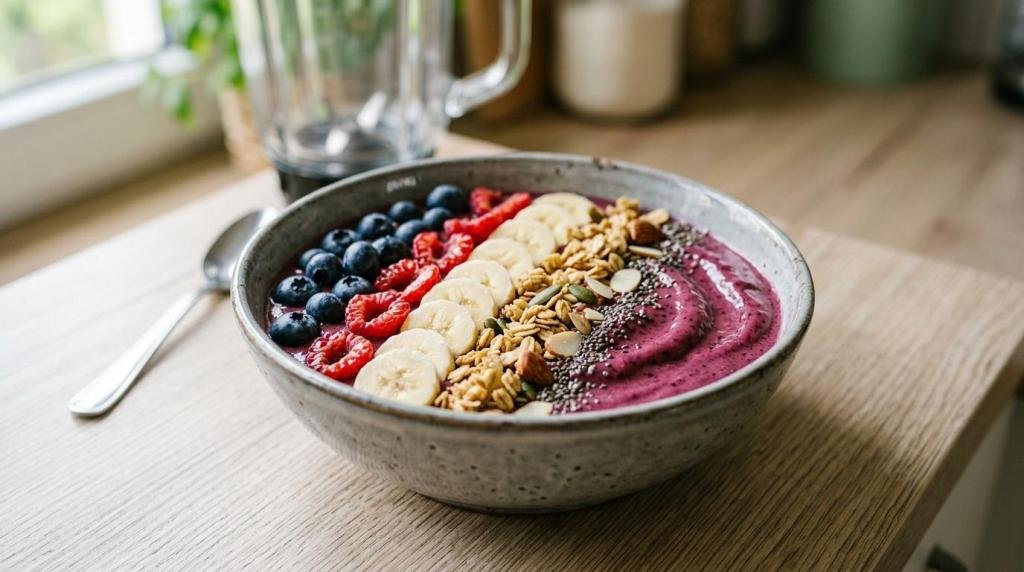
Transfer the smoothie to shallow bowls and smooth the top with the back of a spoon. Add toppings in rows, clusters, or a simple scattered layer. Fresh berries, banana slices, granola, hemp hearts, and pumpkin seeds all work well.
Texture matters as much as flavor here. A creamy base with a crisp topping gives each bite more interest, which is one reason smoothie bowls feel more complete than standard smoothies.
Nutritional Information for a Smoothie Bowl Recipe Healthy and Balanced
Nutrition will vary based on milk, yogurt, and toppings, yet this recipe gives a solid mix of carbohydrates, protein, fiber, and healthy fat. That balance helps many people feel full longer than they would after fruit alone.
Here is an approximate nutrition estimate per serving, based on plain Greek yogurt, unsweetened almond milk, berries, banana, chia seeds, and nut butter, without granola:
| Nutrient | Amount per serving |
|---|---|
| Calories | 310 |
| Protein | 15 to 18 g |
| Carbohydrates | 38 to 42 g |
| Fiber | 8 to 10 g |
| Total fat | 9 to 11 g |
| Saturated fat | 1.5 to 2.5 g |
| Added sugar | 0 to 4 g |
| Potassium | 450 to 550 mg |
| Calcium | 180 to 260 mg |
That profile makes this bowl a strong option for a high-fiber breakfast, a lighter lunch, or a post-workout snack when topped with extra protein.
Healthier Alternatives for a Smoothie Bowl Recipe Healthy for Different Diets
The best part of this recipe is how easy it is to adapt. You can shift it toward higher protein, lower sugar, more fiber, or dairy-free with small changes that keep the bowl enjoyable.
- Higher protein: Add protein powder, use extra Greek yogurt, or top with hemp hearts.
- Lower sugar: Replace banana with frozen cauliflower and choose unsweetened yogurt.
- Dairy-free: Use coconut or soy yogurt and plant-based milk.
- Higher fiber: Add oats, extra chia, flaxseed, or raspberries.
- Nut-free: Use sunflower seed butter and pumpkin seeds.
- More healthy fats: Add avocado, walnuts, or unsweetened coconut.
If you are cooking for a family, set out toppings buffet-style. One bowl base can become kid-friendly with strawberries and granola, or more filling for adults with seeds, protein, and less sweet fruit.
Serving Suggestions for a Smoothie Bowl Recipe Healthy Enough for More Than Breakfast
A smoothie bowl works well far beyond the standard weekday breakfast. Serve it in a wide bowl with sliced kiwi, berries, and granola for a bright weekend brunch. Pair it with hard-boiled eggs or whole-grain toast if you want a bigger meal.
It also works beautifully after a workout. In that case, use Greek yogurt or protein powder and top with banana, hemp hearts, and a spoonful of peanut butter. The combination of carbs and protein is practical and satisfying.
For warm-weather gatherings, make a smoothie bowl bar. Blend the base, keep it cold, and let everyone build their own bowl with fruit, seeds, coconut, and crunchy toppings. It feels casual, colorful, and very easy to scale.
One more tip: if you enjoy make-ahead breakfasts, keep smoothie freezer packs beside your overnight oats and egg muffins so mornings stay simple.
Common Mistakes to Avoid With a Smoothie Bowl Recipe Healthy and Spoonable
Most smoothie bowl problems come down to texture. The good news is that each one is easy to fix once you know what to watch for.
- Too much liquid at the start
- Fresh fruit instead of frozen fruit
- Overblending until the mixture warms up
- Toppings that add too much sugar
- Skipping protein or healthy fat
- Letting the bowl sit too long before serving
A thick bowl should hold toppings on the surface, not let them sink. If your bowl turns thin often, cut the milk first. In many cases, that one change improves the result immediately.
Storing Tips for a Smoothie Bowl Recipe Healthy for Meal Prep
Smoothie bowls are best eaten right after blending, when the texture is cold, thick, and vibrant. Still, a little prep work makes them much easier on busy days.
Freeze portioned fruit packs ahead of time. Add the berries, banana, and any freezer-friendly extras to small bags or containers. In the morning, you only need to add yogurt, milk, and seeds. This method saves several minutes and gives more consistent results.
If you have leftovers, store the base in an airtight container in the freezer for up to 1 week. Let it soften at room temperature for 10 to 15 minutes, then stir well. The texture will not be identical to fresh, though it will still taste good. Toppings should always be stored separately so they stay crisp.
For the freshest flavor, keep cut fruit chilled and dry, and wait to add granola, seeds, or coconut until just before serving.
Quick Recipe Recap
This smoothie bowl recipe healthy enough for daily breakfast is fast, flexible, and genuinely filling. Blend frozen fruit, yogurt, milk, chia, and nut butter until thick, then top with crunch and fresh fruit. Try it this week, leave a comment or review, and subscribe for more easy recipe updates and ideas.
FAQs About a Smoothie Bowl Recipe Healthy for Everyday Use
Can I make this smoothie bowl without banana?
Yes. Use frozen mango for sweetness, or frozen cauliflower plus a little extra yogurt for a lower-sugar version. Avocado also works well when you want creaminess without banana flavor.
How do I make the smoothie bowl thicker?
Use frozen fruit, reduce the liquid, and blend slowly. Add milk one tablespoon at a time. A high-speed blender helps, though careful liquid control matters even more than power.
Is a smoothie bowl actually healthy?
It can be, especially when built with whole fruit, plain yogurt, seeds, and moderate toppings. The healthiest version keeps added sugar low and includes protein, fiber, and healthy fat for better balance.
Can I prepare smoothie bowls in advance?
You can prep ingredient packs in advance very successfully. Fully blended bowls are best fresh, though the base can be frozen for short-term storage if needed.
What are the best toppings for texture and nutrition?
Granola, chia seeds, hemp hearts, pumpkin seeds, berries, banana slices, cacao nibs, and unsweetened coconut are all excellent options. Aim for one crunchy topping, one fresh fruit topping, and one nutrient-dense topper like seeds or nuts.
Which blender works best for smoothie bowls?
A high-speed blender gives the easiest result, especially with frozen fruit. A standard blender can still work if you use smaller fruit pieces, pause often, and keep the liquid amount low.
Can kids enjoy this recipe too?
Absolutely. Keep the base simple with berries, banana, and yogurt, then let kids choose toppings. That small bit of choice often makes the bowl more fun and more likely to be finished.
