


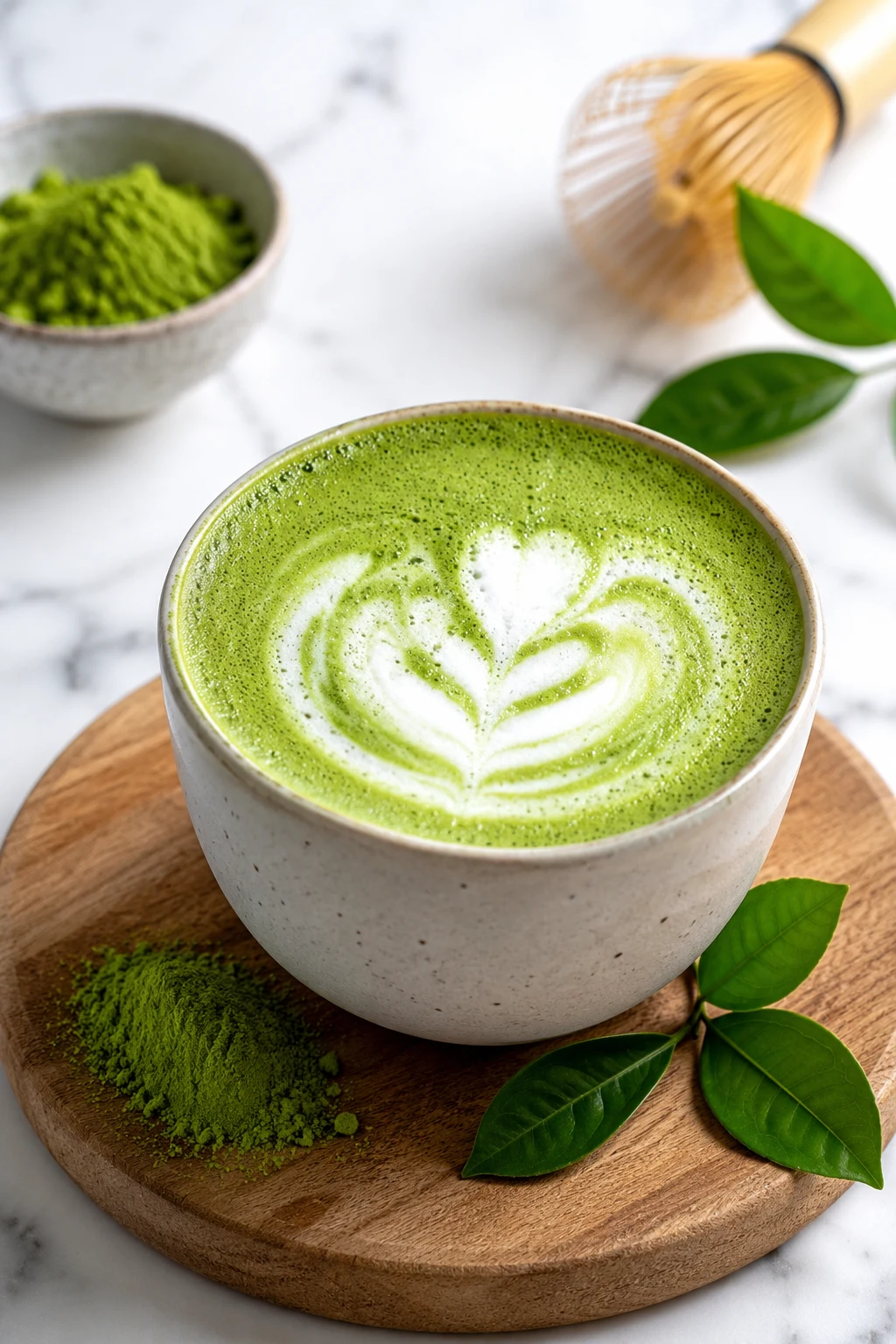
matcha recipe people are obsessed with usually falls into two camps: the sad grassy cup that tastes like lawn clippings, or the café version that somehow costs the same as a small mortgage payment. This one fixes both problems. It gives you a smooth, bright, lightly creamy cup with that earthy-sweet matcha flavor you actually want, and it’s easy enough to make before your brain fully boots up in the morning. No tea ceremony pressure, no fancy barista drama, no mystery ingredients. Just good matcha, hot-not-boiling water, a little whisking, and a method that won’t leave you with swampy green lumps floating around like bad decisions.
Why This Recipe is Awesome
This matcha recipe works because it keeps the flavor bold without turning the drink bitter, chalky, or weirdly spinach-adjacent. You only need a few ingredients, the whole thing takes about 5 minutes, and you can drink it hot or iced depending on whether you’re feeling cozy or dramatically overheated. It’s also wildly customizable, so if you like your matcha sweet, unsweetened, dairy-free, or extra strong, this recipe won’t judge you. I might. The recipe won’t.
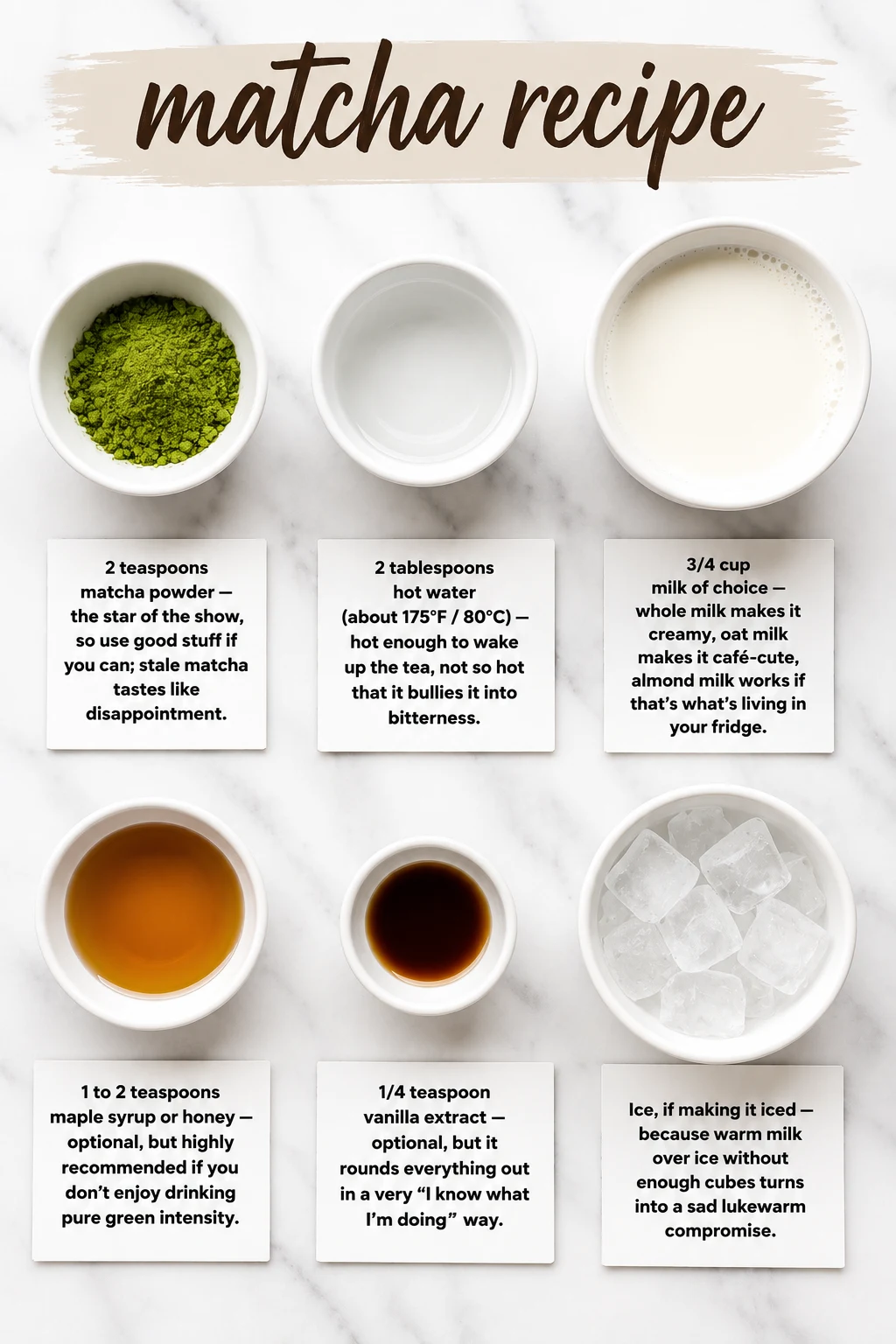
Ingredients You’ll Need
- 2 teaspoons matcha powder — the star of the show, so use good stuff if you can; stale matcha tastes like disappointment.
- 2 tablespoons hot water (about 175°F / 80°C) — hot enough to wake up the tea, not so hot that it bullies it into bitterness.
- 3/4 cup milk of choice — whole milk makes it creamy, oat milk makes it café-cute, almond milk works if that’s what’s living in your fridge.
- 1 to 2 teaspoons maple syrup or honey — optional, but highly recommended if you don’t enjoy drinking pure green intensity.
- 1/4 teaspoon vanilla extract — optional, but it rounds everything out in a very “I know what I’m doing” way.
- Ice, if making it iced — because warm milk over ice without enough cubes turns into a sad lukewarm compromise.
Step-by-Step Instructions
- Sift the matcha into a bowl or large mug. This step matters more than people want to admit. Matcha clumps the second it feels emotionally unsafe, and sifting keeps your drink smooth instead of speckled with bitter green blobs.
- Add the hot water and whisk into a smooth paste first. Don’t dump in all the milk yet; that’s how you get lumps that refuse to dissolve. Use a bamboo whisk, a small regular whisk, or even a milk frother, and whisk in a zigzag motion until the matcha looks glossy and no dry pockets remain.
- Whisk until foamy, about 15 to 20 seconds more. Once the paste is smooth, keep whisking until you see a light foam on top. This is the point where your matcha recipe stops tasting flat and starts tasting like you paid for it on purpose.
- Stir in the sweetener and vanilla if using. Add the maple syrup or honey while the matcha mixture is still warm so it dissolves fast. Give it a quick whisk or stir so you don’t end up with a sugary puddle at the bottom.
- Warm the milk or prep your ice. For a hot latte, heat the milk until steaming but not boiling, around 150°F to 160°F. For an iced version, fill a glass nearly to the top with ice so the drink stays cold instead of becoming a weird tepid swamp.
- Pour in the milk and stir gently. Add the milk to the matcha mixture and stir until fully combined. If you want a little café flair, froth the milk first, then pour it in for a fluffier top.
- Taste and adjust before serving. If it tastes too strong, add a splash more milk. If it tastes flat, add a tiny pinch more sweetener or another 1/4 teaspoon matcha next time instead of drowning it in sugar and pretending that was the plan.
Common Mistakes to Avoid
- Using boiling water. Matcha gets bitter fast when you hit it with 212°F water like it owes you money.
- Skipping the sifting. That’s how you end up chewing your drink. Not ideal.
- Adding milk before making a paste. Matcha does not dissolve politely in a full cup of liquid.
- Using too much milk. If all you can taste is oat milk, congratulations, you made green milk.
- Letting matcha sit open in a warm cabinet for months. Fresh matcha tastes vibrant; old matcha tastes tired and vaguely haunted.
Alternatives & Substitutions
A good matcha recipe is flexible, but not infinitely forgiving. Use oat milk for the creamiest dairy-free version, coconut milk for a richer tropical vibe, or skim milk if you want it lighter. Swap maple syrup for honey, agave, or a little vanilla syrup if that’s your thing. If you want a stronger flavor, add an extra 1/2 teaspoon matcha instead of reducing the water; thick matcha sludge is not the upgrade you think it is. For a lower-caffeine version, make a smaller serving instead of using less matcha, because watered-down tea sadness helps no one.
Frequently Asked Questions
What is the best water temperature for a matcha recipe?
The best water temperature for a matcha recipe is around 175°F (80°C). Boiling water can make matcha taste bitter and harsh, while cooler water won’t dissolve it as smoothly or bring out as much flavor.
Can I make this matcha recipe without a bamboo whisk?
Yes, you can make this matcha recipe without a bamboo whisk. A small regular whisk, a handheld milk frother, or even a jar with a tight lid will work better than angrily stirring with a spoon for 45 seconds and getting nowhere.
How do I store leftover matcha latte?
Matcha tastes best fresh, but you can store a prepared latte in the fridge for up to 24 hours. Shake or stir it well before drinking because the matcha will settle at the bottom like it’s taking a nap.
Why does my matcha taste bitter?
Matcha usually tastes bitter because the water was too hot, the powder was low quality, or the ratio was off. Start with fresher matcha, use water around 175°F, and don’t go overboard with powder unless you enjoy being personally challenged by your drink.
Make It Tonight!
If you’ve been paying café prices for a basic green latte, this is your sign to stop that immediately. This matcha recipe gives you a smooth, balanced drink with actual matcha flavor, and once you make it a couple of times, you’ll be able to throw it together half-awake with suspiciously good results. Pair it with breakfast, sip it over ice in the afternoon, or make it alongside strawberry matcha when you want something fruitier. And if you’re in a full tea era, add iced chai latte to your next kitchen project too. Whisk boldly and caffeinate responsibly.
🍽️ Recipes You Can Try
Loved this one? Here are a few more worth your time.
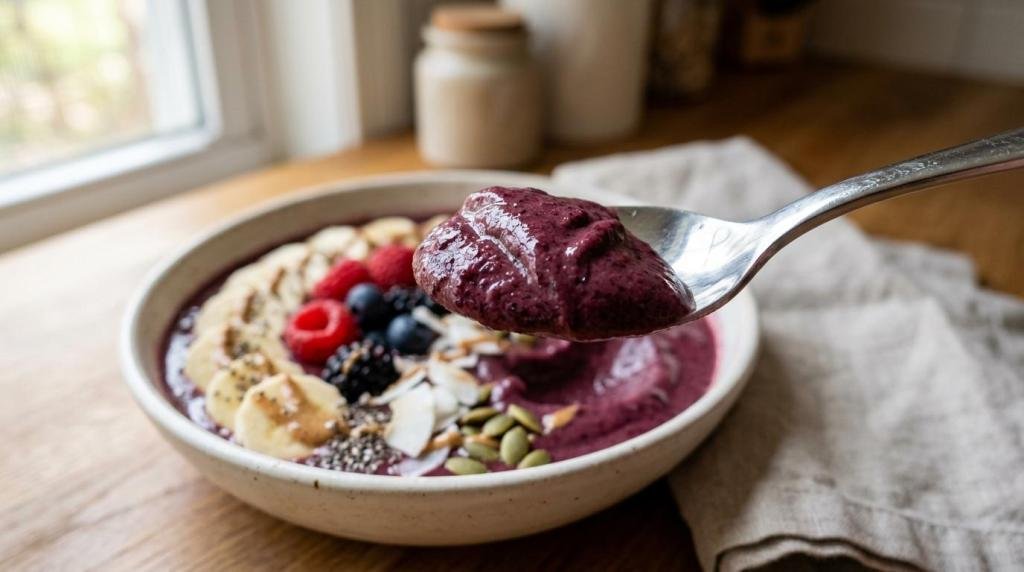
Matcha recipe
- ✓2 teaspoons matcha powder — the star of the show, so use good stuff if you can; stale matcha tastes like disappointment.
- ✓2 tablespoons hot water (about 175°F / 80°C) — hot enough to wake up the tea, not so hot that it bullies it into bitterness.
- ✓3/4 cup milk of choice — whole milk makes it creamy, oat milk makes it café-cute, almond milk works if that’s what’s living in your fridge.
- ✓1 to 2 teaspoons maple syrup or honey — optional, but highly recommended if you don’t enjoy drinking pure green intensity.
- ✓1/4 teaspoon vanilla extract — optional, but it rounds everything out in a very “I know what I’m doing” way.
- ✓Ice, if making it iced — because warm milk over ice without enough cubes turns into a sad lukewarm compromise.
- 1Sift the matcha into a bowl or large mug. This step matters more than people want to admit. Matcha clumps the second it feels emotionally unsafe, and sifting keeps your drink smooth instead of speckled with bitter green blobs.
- 2Add the hot water and whisk into a smooth paste first. Don’t dump in all the milk yet; that’s how you get lumps that refuse to dissolve. Use a bamboo whisk, a small regular whisk, or even a milk frother, and whisk in a zigzag motion until the matcha looks glossy and no dry pockets remain.
- 3Whisk until foamy, about 15 to 20 seconds more. Once the paste is smooth, keep whisking until you see a light foam on top. This is the point where your matcha recipe stops tasting flat and starts tasting like you paid for it on purpose.
- 4Stir in the sweetener and vanilla if using. Add the maple syrup or honey while the matcha mixture is still warm so it dissolves fast. Give it a quick whisk or stir so you don’t end up with a sugary puddle at the bottom.
- 5Warm the milk or prep your ice. For a hot latte, heat the milk until steaming but not boiling, around 150°F to 160°F. For an iced version, fill a glass nearly to the top with ice so the drink stays cold instead of becoming a weird tepid swamp.
- 6Pour in the milk and stir gently. Add the milk to the matcha mixture and stir until fully combined. If you want a little café flair, froth the milk first, then pour it in for a fluffier top.
- 7Taste and adjust before serving. If it tastes too strong, add a splash more milk. If it tastes flat, add a tiny pinch more sweetener or another 1/4 teaspoon matcha next time instead of drowning it in sugar and pretending that was the plan.
📝 Chef’s Notes
Store leftovers in an airtight container in the refrigerator for best freshness. Let come to room temperature before serving for the best texture and flavor.
Nutrition Information
(per serving)* Estimated values based on typical ingredients — actual nutrition may vary. % Daily Values based on a 2,000 calorie diet.
