


What if a homemade chili beans recipe could give you deeper flavor, better texture, and often less sodium than many canned options, all in about 50 minutes? That is the appeal here: pantry-friendly beans, a rich tomato base, warm spices, and a method that feels easy on a weeknight but tastes like it simmered all afternoon.
Introduction to This Homemade Chili Beans Recipe
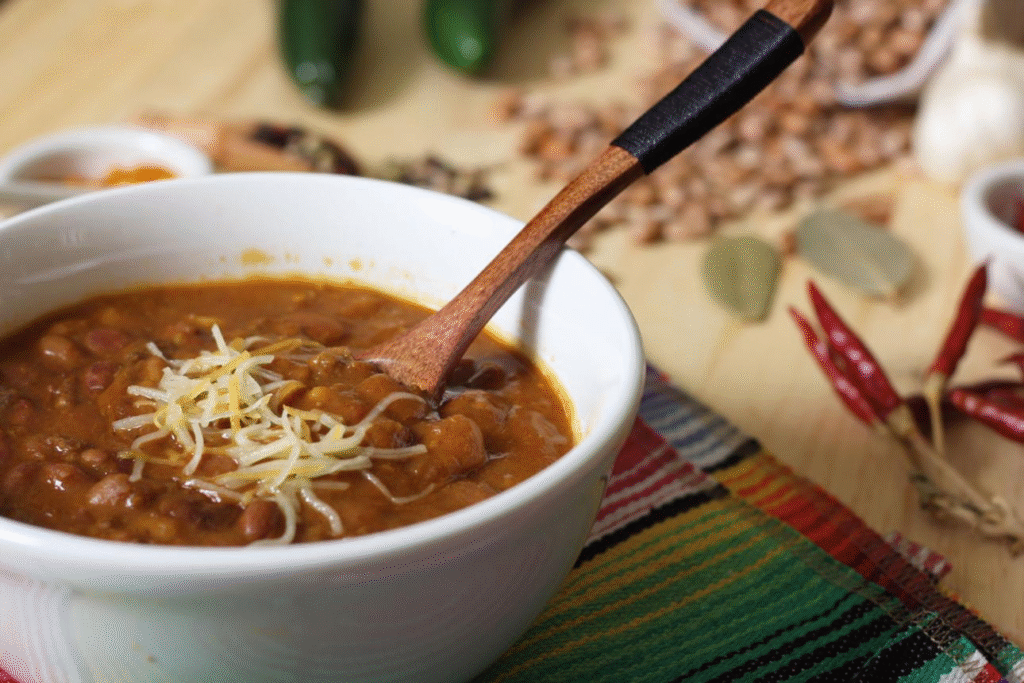
Homemade chili beans sit in a sweet spot between comfort food and practical meal prep. You get saucy beans that work as a side dish, burrito filling, baked potato topping, or quick lunch with rice. The flavor is fuller because the chili powder, cumin, garlic, and tomato paste are cooked in layers instead of poured straight from a can.
There is also a nutrition advantage. Many prepared chili beans can land in the 400 to 600 milligram sodium range per half-cup, while a from-scratch version gives you control over salt, sugar, spice, and fat. If you use low-sodium beans and broth, you can keep the bold taste without the heavy processed-food feel.
Ingredients for a Homemade Chili Beans Recipe
This recipe makes about 6 servings and uses mostly pantry staples, which is one reason it earns a regular place in home kitchens.
| Ingredient | Amount | Why it matters | Easy swap |
|---|---|---|---|
| Olive oil | 2 tablespoons | Builds the base and carries flavor | Avocado oil |
| Yellow onion, diced | 1 medium | Sweetness and depth | White onion |
| Bell pepper, diced | 1 medium | Adds body and freshness | Omit or use poblano |
| Garlic, minced | 4 cloves | Sharp, savory backbone | 1 teaspoon garlic powder |
| Chili powder | 2 tablespoons | Main chili flavor | Mild or hot blend |
| Ground cumin | 2 teaspoons | Warm earthiness | Toasted cumin seeds, ground |
| Smoked paprika | 1 teaspoon | Smoky note | Regular paprika |
| Dried oregano | 1/2 teaspoon | Herbal lift | Mexican oregano if available |
| Cayenne | 1/4 teaspoon | Optional heat | Chipotle powder |
| Tomato paste | 2 tablespoons | Deepens the sauce | Extra crushed tomatoes, reduced longer |
| Crushed tomatoes | 1 can, 15 ounces | Forms the chili base | Tomato sauce |
| Pinto beans, drained and rinsed | 2 cans, 15 ounces each | Creamy texture | Cooked dried pinto beans |
| Kidney beans, drained and rinsed | 1 can, 15 ounces | Firmer bite and classic chili look | Black beans |
| Vegetable broth or water | 1 cup | Loosens the sauce | Chicken broth if not vegetarian |
| Apple cider vinegar or lime juice | 1 tablespoon | Bright finish | Red wine vinegar |
| Brown sugar or maple syrup | 1 teaspoon, optional | Balances acidity | Omit |
| Kosher salt | 1 to 1 1/2 teaspoons | Seasons the pot | Adjust to taste |
| Black pepper | 1/2 teaspoon | Mild heat and depth | Fresh cracked pepper |
| Cilantro or green onion | For serving | Fresh contrast | Parsley |
If you want a more traditional “beans from scratch” approach, cooked dried beans work beautifully here. Just use about 4 1/2 to 5 cups cooked beans and keep an extra splash of broth nearby, since dried beans often absorb sauce differently than canned ones.
Timing for Homemade Chili Beans
This is a strong weeknight recipe because the sauce develops quickly once the aromatics and spices are properly cooked.
| Stage | Time |
|---|---|
| Prep time | 15 minutes |
| Cook time | 35 minutes |
| Total time | 50 minutes |
At about 50 minutes total, this is much faster than starting with dried beans on the same day, which can stretch beyond two hours even before seasoning and simmering are finished.
Step-by-Step Homemade Chili Beans Instructions
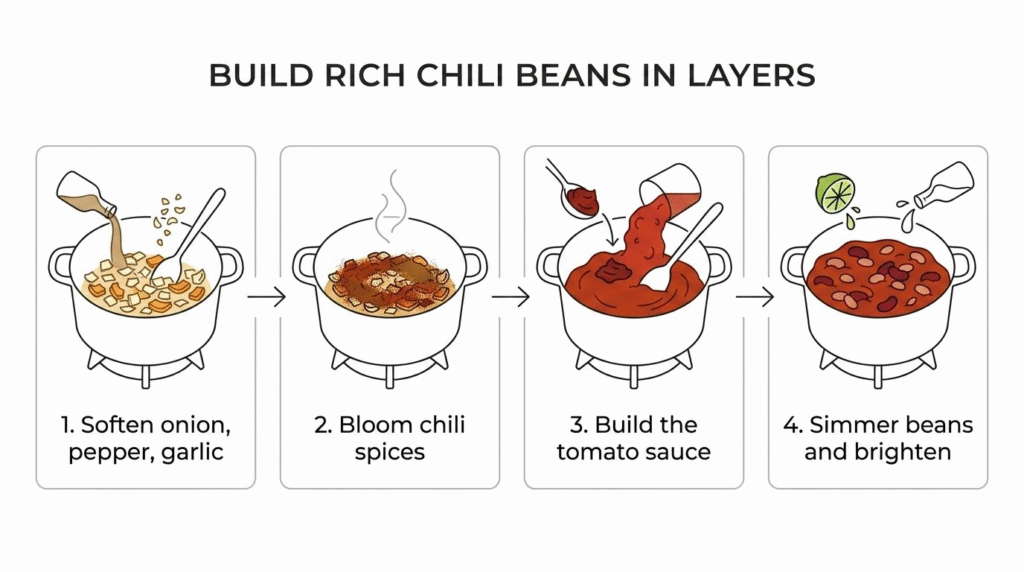
Step 1: Cook the onion, pepper, and garlic
Heat the olive oil in a large pot or deep skillet over medium heat. Add the onion and bell pepper and cook for 6 to 8 minutes, stirring now and then, until softened and lightly golden. Add the garlic and cook for 30 seconds.
Do not rush this step. A properly cooked onion base gives the whole pot a rounder flavor and keeps the final dish from tasting sharp or flat.
Step 2: Bloom the chili spices
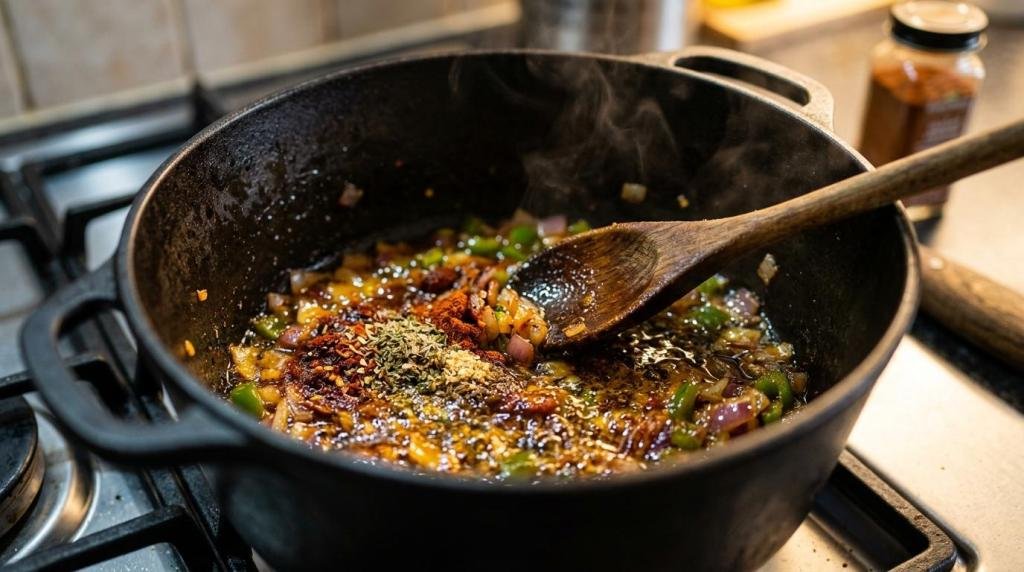
Add the chili powder, cumin, smoked paprika, oregano, and cayenne directly to the vegetables. Stir for 30 to 45 seconds, just until fragrant.
This quick spice bloom matters. Dry spices wake up in hot oil, which gives the sauce a richer aroma and a more layered taste than adding them later with the liquid.
Step 3: Build the tomato-rich chili sauce
Stir in the tomato paste and cook for 1 to 2 minutes until it darkens slightly. Then add the crushed tomatoes and broth, scraping up anything stuck to the bottom of the pot.
That short tomato paste cook is one of the easiest ways to make homemade chili beans taste deeper and less acidic. If the mixture looks very thick at this stage, that is fine. The beans will loosen it as they simmer.
Step 4: Add the beans and simmer gently
Add the pinto beans and kidney beans, then season with salt, black pepper, and the optional brown sugar or maple syrup. Bring the pot to a gentle simmer, then reduce the heat to low and cook uncovered for 20 to 25 minutes, stirring once or twice.
During this time, some beans will soften and release starch into the sauce. That is exactly what you want. It creates the creamy, clingy texture that makes chili beans perfect for spooning over rice, tucking into tortillas, or serving next to grilled foods.
Step 5: Adjust the texture and balance the flavor
Taste the beans. Add the vinegar or lime juice and stir well. If you want a thicker pot, mash a small scoop of beans against the side of the pot and stir them back in. If the sauce feels too thick, add a splash of broth or water.
A bright acidic finish makes the whole recipe taste fresher and more focused. Without it, even well-seasoned chili beans can seem heavy.
Step 6: Let the chili beans rest before serving
Turn off the heat and let the beans sit for 5 minutes. Finish with cilantro or green onion if you like.
That short rest gives the starches time to settle and the sauce time to tighten slightly, which means better spoonability and a smoother final texture.
Nutritional Information for Homemade Chili Beans
Nutrition will shift based on the brand of beans, tomatoes, and broth you use, though a homemade version is usually easier to manage for sodium, added sugar, and saturated fat.
| Nutrition per serving | Approximate amount |
|---|---|
| Calories | 260 |
| Protein | 11 g |
| Carbohydrates | 38 g |
| Fiber | 11 g |
| Fat | 7 g |
| Sodium | 350 to 450 mg |
| Sugar | 6 g |
This profile makes homemade chili beans appealing for meal prep: high fiber, moderate protein, and satisfying volume without relying on heavy cream, cheese, or processed sauces.
Healthier Alternatives for Homemade Chili Beans
One of the best parts of this recipe is how easy it is to adjust without losing the comforting character of classic chili beans. You can keep the smoky tomato base and still tailor it for lower sodium, extra protein, or more vegetables.
A few small changes can shift the nutrition in a meaningful way while keeping the flavor strong.
- Lower sodium: Use no-salt-added beans, unsalted broth, and increase garlic, cumin, and lime juice for a fuller taste.
- Higher protein: Add a cup of cooked lentils or stir in seasoned tofu crumbles during the final simmer.
- Extra vegetables: Mix in diced zucchini, mushrooms, or grated carrot for more body and natural sweetness.
- Lower sugar: Skip the sweetener unless your tomatoes taste especially sharp.
Serving Suggestions for Homemade Chili Beans
These beans are flexible enough to work across breakfast, lunch, and dinner, which is why they are so useful for batch cooking. Keep the pot thick for burritos and bowls, or loosen it slightly with broth if you want more of a spoonable side dish.
They also pair well with creamy, crisp, and starchy foods that balance the warmth of the spices.
- Over steamed rice
- With cornbread
- On baked sweet potatoes
- Inside burritos or tacos
- Topped with avocado and pickled onions
Common Mistakes to Avoid With Homemade Chili Beans
Even a simple pot of beans has a few pressure points. Most disappointing results come down to texture or seasoning rather than the ingredient list itself.
Watch for these common slipups:
- Undercooking the onions
- Burning the garlic
- Skipping the spice bloom
- Adding too much liquid
- Not simmering long enough
- Forgetting the acid at the end
If your beans ever taste dull, do not reach for more salt first. Try a squeeze of lime, a spoon of tomato paste, or another pinch of chili powder and cumin.
Storing Tips for Homemade Chili Beans
Homemade chili beans store very well, and many cooks think they taste even better the next day. As the beans sit, the sauce thickens and the spices settle into a deeper, more unified flavor.
Let the beans cool before storing, then refrigerate them in an airtight container for up to 4 days. If the mixture thickens too much in the fridge, reheat gently with a splash of water or broth. For freezing, portion the beans into individual containers or freezer bags and store for up to 3 months. Thaw overnight in the refrigerator when possible for the best texture.
If you meal prep often, make the full batch and hold back a little extra broth. That way you can reheat a portion later and adjust the consistency based on how you plan to serve it.
Make This Homemade Chili Beans Recipe Tonight
These chili beans are rich, smoky, budget-friendly, and easy enough for a weeknight. Make a pot, adjust the heat to your taste, and turn one recipe into several meals. If you try it, share a review, leave a comment, and subscribe for more fresh recipe ideas and practical cooking tips.
FAQs About Homemade Chili Beans
Can I use dried beans instead of canned beans?
Yes. Cook the dried beans first until tender, then use about 4 1/2 to 5 cups cooked beans in place of the canned beans. You may need a little more broth during the simmer because cooked dried beans can absorb sauce more quickly.
Are these homemade chili beans spicy?
They are mildly spicy as written. The chili powder brings warmth more than heat, and the cayenne is optional. If you want a hotter pot, add chipotle powder, more cayenne, or a diced jalapeño with the onion.
Can I make this homemade chili beans recipe vegan?
It already is, as long as your broth and sugar fit your preferences. That makes it useful for mixed households because it pairs well with plant-based meals and also works beside grilled meats if you serve a crowd.
What is the best bean for chili beans from scratch?
Pinto beans are the classic choice because they turn creamy and absorb flavor well. Kidney beans bring structure and a familiar chili look. A blend of both gives the best balance of creaminess and bite.
Why do my chili beans taste flat?
Flat flavor usually comes from one of three things: not enough salt, spices that were not bloomed in oil, or no acidic finish. A small squeeze of lime or spoon of vinegar can wake the whole pot up quickly.
Can I turn these chili beans into a full meal?
Absolutely. Add rice, roasted vegetables, avocado, or cornbread and you have a very satisfying plate. You can also spoon the beans over quinoa, nachos, or scrambled eggs if you want a hearty breakfast-for-dinner option.
