
Many supermarket pints labeled frozen yogurt still carry 20 grams or more of sugar per serving, so why do so many home cooks assume homemade frozen yogurt has to be icy, flat, or difficult? It does not. With the right yogurt, a balanced sweetener, and a smart freezing method, you can make a creamy, tangy dessert at home with very little active work and flavor that tastes fresher than most store-bought tubs.
Homemade frozen yogurt introduction
Frozen yogurt sits in a sweet spot between ice cream and a fruit smoothie. It has the cool, scoopable appeal of a frozen dessert, but it keeps that bright cultured tang that makes yogurt so refreshing. When made at home, it is also easy to tune to your taste. You can make it richer, lighter, fruitier, more tart, or just sweet enough.
This method is designed for home cooks who want reliable texture without a long ingredient list. The base starts with Greek yogurt for body, a modest amount of sweetener for softness, and a little cream to keep the finish smooth and satisfying. If you own an ice cream maker, great. If not, there is still a practical path to excellent frozen yogurt.
Frozen yogurt ingredients and easy substitutions
A short ingredient list works best here because every element affects texture. Yogurt brings tang and protein, sweetener lowers the freezing point, and a bit of fat keeps the mixture from turning hard and chalky.
- Whole-milk Greek yogurt: 3 cups, cold. This gives the frozen yogurt a thick, creamy base. Plain regular yogurt can work, though it usually benefits from straining first.
- Sugar or honey: 1/2 to 2/3 cup. Granulated sugar gives a clean finish, while honey adds floral depth and a softer scoop.
- Heavy cream: 1/2 cup. This rounds out the texture. For a lighter version, use half-and-half.
- Vanilla extract: 2 teaspoons. A simple way to warm up the flavor profile.
- Fine salt: 1 pinch. Small amount, big payoff. It sharpens sweetness and brightens the yogurt tang.
- Optional fruit puree: 1/2 to 3/4 cup strained strawberry, mango, peach, or blueberry puree for a fruit frozen yogurt variation.
If you want the process to feel even easier, keep the equipment simple. A large bowl, whisk, rubber spatula, blender or food processor, and freezer-safe container are enough for the no-churn route. An ice cream maker gives the smoothest texture with the least effort. A loaf pan works well if you plan to freeze and stir manually.
Frozen yogurt timing and recipe yield
This recipe is quick to mix, and most of the total time is passive chilling and freezing. Compared with many cooked ice cream recipes that require a custard base, tempering eggs, and long chilling, homemade frozen yogurt usually takes less hands-on effort.
| Stage | Time |
|---|---|
| Mix ingredients | 10 minutes |
| Chill base | 30 minutes |
| Churn in ice cream maker | 20 to 25 minutes |
| Freeze to firm up | 1 to 2 hours |
| Total time | About 2 to 3 hours |
| Yield | 6 servings |
Hands-on time is usually about 15 minutes. That makes this a strong choice for a weeknight dessert prep or a make-ahead treat for the weekend.
Frozen yogurt step-by-step instructions
A good frozen yogurt recipe is really about managing texture. The steps are simple, but each one has a purpose.
Step 1: Choose thick, cold yogurt for the frozen yogurt base
Start with cold whole-milk Greek yogurt straight from the refrigerator. Thickness matters because excess water turns into ice crystals. If your yogurt looks loose or glossy, let it drain in a fine-mesh strainer lined with cheesecloth for 30 to 60 minutes.
If you love a sharper, more tart frozen yogurt, stay with plain Greek yogurt. If you want a milder profile, use vanilla yogurt and reduce the added sweetener slightly.
Step 2: Whisk the sweetener, cream, vanilla, and salt until smooth
In a large bowl, whisk together the sugar or honey, heavy cream, vanilla, and salt. Keep whisking until the sugar is mostly dissolved, then fold in the yogurt. The mixture should look silky, thick, and evenly blended with no streaks.
Taste the base before freezing. It should seem a touch sweeter than you want the final dessert to be. Cold temperatures mute sweetness, so a base that tastes perfect at room temperature may taste bland once frozen.
Step 3: Chill the frozen yogurt mixture before churning
Cover the bowl and refrigerate the base for about 30 minutes. This small step helps in two ways. First, a colder base churns faster. Second, the flavor settles into a more balanced, rounded taste.
If you are adding fruit puree, stir it in after chilling. Strained puree gives a cleaner texture than chunky fruit. For a marbled look, add part of the puree during the final minute of churning rather than mixing it in fully.
Step 4: Churn the frozen yogurt until it looks like soft serve
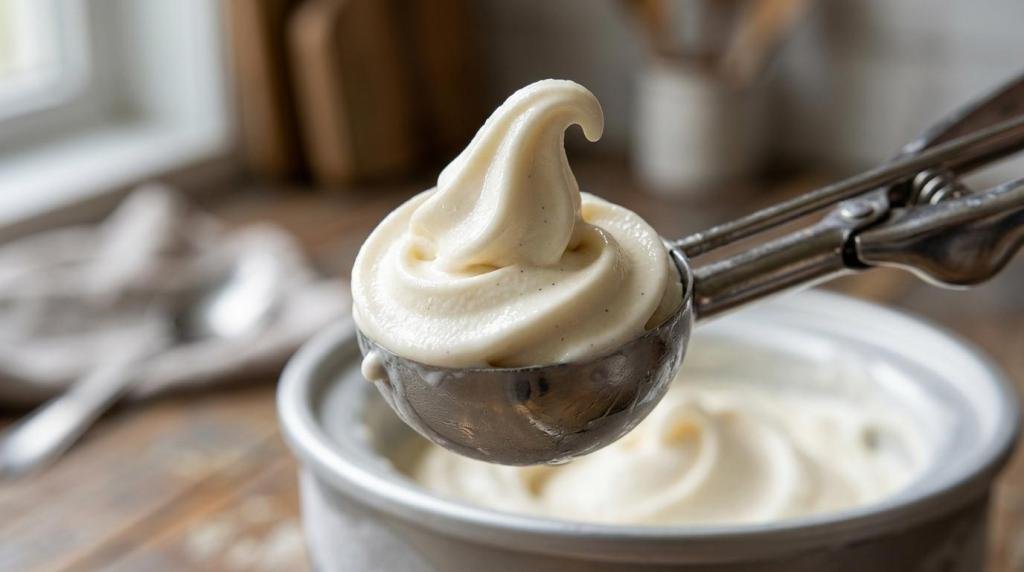
Pour the chilled base into your ice cream maker and churn according to the machine’s instructions, usually 20 to 25 minutes. You are looking for a soft-serve texture: fluffy, thick, and just able to hold a soft peak.
No ice cream maker? Pour the base into a metal loaf pan and freeze for 45 minutes. Stir vigorously with a fork or sturdy whisk, scraping the icy edges into the softer center. Repeat every 30 minutes for 2 to 3 hours. It will not be quite as airy, though it can still be very good.
Step 5: Fold in mix-ins with a light hand
Once the frozen yogurt reaches soft-serve consistency, fold in extras if you want them. Mini chocolate chips, chopped toasted nuts, crushed cookies, lemon zest, or ribboned fruit sauce all work well.
Keep mix-ins small and use restraint. Too many heavy add-ins weigh the base down and make scooping harder later. About 1/2 cup total is a smart range for this batch.
Step 6: Freeze until scoopable, then soften briefly before serving
Transfer the churned frozen yogurt to a chilled container. Press a piece of parchment or plastic wrap directly on the surface, then cover tightly and freeze for 1 to 2 hours to firm it up.
When ready to serve, let it sit on the counter for 5 to 10 minutes. Frozen yogurt is often firmer than ice cream because it contains more water and less fat, so this short rest gives you cleaner scoops and a creamier mouthfeel.
Frozen yogurt nutrition per serving
Nutrition changes based on the yogurt brand, sweetener choice, and any fruit or mix-ins. The values below estimate a plain vanilla frozen yogurt made with whole-milk Greek yogurt, sugar, and heavy cream.
| Nutrient | Approximate amount per serving |
|---|---|
| Calories | 185 to 220 |
| Protein | 7 to 9 g |
| Carbohydrates | 18 to 24 g |
| Total sugar | 16 to 21 g |
| Fat | 8 to 10 g |
| Saturated fat | 4 to 6 g |
| Calcium | 10% to 15% DV |
Compared with many premium ice creams, frozen yogurt often brings more protein and less fat per serving. That does not automatically make every bowl “light,” though it does give you more room to shape the recipe around your goals.
Healthier frozen yogurt alternatives
You can make frozen yogurt lighter without stripping away the pleasure. The trick is to protect texture while adjusting sweetness, fat, or add-ins.
- Swap part of the sugar for mashed ripe banana
- Use 2% Greek yogurt for a lighter bowl
- Blend in strawberries, peaches, or mango for natural sweetness
- Choose toasted nuts or cacao nibs over candy pieces
- Try dairy-free coconut yogurt for a non-dairy version
- Flavor with citrus zest, cinnamon, or vanilla bean
If you need a lower-sugar version, reduce the sweetener gradually rather than cutting it in half at once. Too little sugar can make frozen yogurt hard and icy. For a higher-protein batch, add 2 to 4 tablespoons of dry milk powder or use extra-thick strained Greek yogurt.
Frozen yogurt serving suggestions for desserts and snacks
Frozen yogurt is flexible enough to feel casual on a Tuesday night and polished enough for guests. A simple scoop with fresh berries works beautifully, though there are many other directions worth trying.
Serve vanilla frozen yogurt with roasted peaches, warm berry compote, or a drizzle of espresso for a more grown-up finish. For kids, pair it with sliced bananas, granola, and mini chocolate chips. If you like breakfast-for-dessert ideas, spoon it into a parfait glass with fruit and crunchy oats.
It also works well in frozen pops, ice cream sandwiches, and smoothie bowls. A scoop of tart frozen yogurt beside a fudgy brownie or a slice of fruit crisp creates a strong contrast in temperature and flavor.
Common frozen yogurt mistakes to avoid
A few small errors can turn a creamy frozen yogurt recipe into a grainy or overly hard one. Most of them are easy to prevent once you know what to watch.
- Using low-fat, watery yogurt: More water means more ice crystals and a less creamy scoop.
- Skipping the taste test: Frozen desserts taste less sweet when cold, so under-sweetened bases often seem flat.
- Overloading with fruit: Too much puree or juicy fruit can thin the base and slow freezing.
- Churning too long: Once it reaches soft-serve texture, stop. Over-churning can create a buttery or dense texture.
- Freezing uncovered: Air exposure encourages freezer burn and stale flavors.
- Serving straight from deep freeze: A brief rest at room temperature makes texture far better.
If your frozen yogurt comes out too hard, let it soften longer and next time raise the sweetener slightly or add a bit more cream. If it seems too soft, chill the base longer before churning and freeze the finished batch until fully set.
Storing frozen yogurt for the best texture
Homemade frozen yogurt tastes best within the first week, when the texture is smooth and the flavor still feels bright. It usually keeps well for up to two weeks in an airtight container.
Press parchment, wax paper, or plastic wrap directly onto the surface before sealing the lid. That barrier helps limit ice crystals. Store the container toward the back of the freezer where temperature stays steadier.
For make-ahead prep, you can mix the base a day in advance and keep it chilled until ready to churn. If you plan to serve guests, scoop the frozen yogurt into bowls or glasses, then return them to the freezer for a cleaner presentation and faster dessert service.
Frozen yogurt recipe recap and next steps
This frozen yogurt recipe keeps things simple: thick Greek yogurt, balanced sweetness, quick churning, and a short freeze for scoopable texture. Try it with vanilla first, then make it your own with fruit or mix-ins. If you make it, leave a comment, share your review, and subscribe for more easy recipe updates.
Frozen yogurt FAQs
Can I make frozen yogurt without an ice cream maker?
Yes. Freeze the mixed base in a metal loaf pan and stir every 30 minutes after the first 45 minutes. Repeat until thick and creamy. The texture is usually a bit denser than machine-churned frozen yogurt, though still very satisfying.
Why is my frozen yogurt icy?
The most common reasons are watery yogurt, too little sugar, or too much fruit. Start with thick Greek yogurt, sweeten the base enough, and avoid adding large amounts of unstrained puree.
Is Greek yogurt better than regular yogurt for frozen yogurt?
Usually, yes. Greek yogurt has less water and more body, which gives you a smoother result. Regular yogurt can work if you strain it first to remove excess liquid.
Can I use flavored yogurt?
You can. Vanilla or fruit yogurt can be convenient, though check the sweetness before adding more sugar or honey. Flavored yogurt often creates a softer, milder frozen yogurt with less tang.
How long should frozen yogurt sit out before scooping?
About 5 to 10 minutes is a good starting point. If your freezer runs very cold, it may need a couple more minutes. You want it just soft enough for the scoop to glide through without melting around the edges.
What fruit works best in fruit frozen yogurt?
Strawberries, mango, peaches, and raspberries are all strong choices. Cook and strain very seedy or watery fruits if needed. A concentrated puree gives better flavor and a smoother texture than large raw fruit pieces.
Can I make this frozen yogurt recipe dairy-free?
Yes, with a good-quality dairy-free yogurt, especially coconut-based yogurt. Choose one that is thick and unsweetened if possible. Texture and tang will vary by brand, so a short test batch is a smart idea.
Does frozen yogurt taste as rich as ice cream?
It tastes different rather than lesser. Ice cream is richer and more buttery because of its higher fat content. Frozen yogurt is brighter, tangier, and often more refreshing, which is exactly why many people love it.
