
Lunch that tastes good straight from the fridge is a small daily win. No microwave line, no reheated chicken roulette, no sad, soggy salads by day three. With the right components, a no-heat meal prep bowl can be bright, filling, and seriously high in protein.
At Meal Magic, we’re big fans of meals that feel “assembled on purpose,” not “thrown together in a rush.” These bowls are exactly that: mix-and-match building blocks that hold up for several days and stay satisfying when eaten cold.
Why no-heat meal prep bowls work so well
Cold meals are easier to keep consistent during busy weeks because you’re removing a whole step. The trick is choosing ingredients that want to be eaten chilled: marinated proteins, sturdy grains, crunchy vegetables, and sauces that don’t break or get watery.
A good no-reheat bowl also solves the “I’m hungry again at 3 pm” problem. Protein helps, and so does pairing it with fiber (beans, lentils, veggies) and a little fat (olive oil, nuts, avocado).
The cold-proof bowl formula (use this every week)
Think in layers, not recipes. Start with a base, add a protein, pile on crunch, then finish with something punchy.
Here are bowl components that reliably stay tasty after a couple days in the fridge.
- Grains: quinoa, brown rice, farro
- Noodles: soba, whole-wheat rotini
- Greens: kale, spinach, shredded romaine
- Crunch: cucumber, radish, cabbage, snap peas
- Extras: olives, feta, pickled onions, seeds
If you’ve ever meal prepped a bowl that turned soggy, it usually came down to moisture management: watery veggies touching grains too early, or dressing soaking everything for days.
High-protein picks that still taste great cold
Not every protein improves after chilling, but plenty do. Aim for proteins that are firm, well-seasoned, and not overly delicate.
The table below gives you a “what to use, what it pairs with, and how long to keep it” cheat sheet.
| Protein (cold-friendly) | Why it works in no-heat bowls | Great pairings | Fridge timing |
|---|---|---|---|
| Grilled or shredded chicken breast | Stays firm; takes marinades well | quinoa, cucumber, tzatziki, lemon | 3 to 4 days |
| Cooked shrimp (chilled) | Naturally “snappy” texture | tomato, lime, avocado, cilantro | about 3 days |
| Canned tuna | Zero cooking; easy protein boost | rice, cucumber, sesame, soy-style dressing | 3 to 4 days |
| Smoked salmon | Already “ready to eat,” bold flavor | lentils, dill, radish, vinaigrette | about 3 days |
| Hard-boiled eggs | Travel-proof, filling | kale, grains, mustardy dressing | up to 1 week (peeled is best sooner) |
| Lentils, chickpeas, edamame | Fiber + protein; great texture | roasted veggies, pesto, vinaigrette | 3 to 5 days |
| Firm tofu or tempeh (baked or marinated) | Holds shape; absorbs sauce | cabbage, peanut-sesame sauce, rice | 3 to 4 days |
| Sushi-grade fish for poke-style bowls | Delicious cold, but perishable | rice, mango, avocado, coconut aminos | best within 1 to 2 days |
If you want “high protein” without thinking too hard, a simple target is 25 to 40 grams per bowl: chicken, shrimp, tuna, salmon, tofu, and lentils get you there fast.
Bases and veggies that don’t turn sad
Cold bowls live or die on texture. You want chew, crunch, and little bursts of fresh flavor.
Quinoa is a weeknight hero here. It chills well, doesn’t clump as badly as some rice, and brings extra protein compared to many grains. Brown rice is great too, and soba noodles make a surprisingly satisfying cold base when tossed with a little sesame oil to prevent sticking.
Vegetables should be picked with “day three” in mind. Cucumbers, radishes, carrots, cabbage, snap peas, and cherry tomatoes stay crisp. Lettuce can work, but it’s better packed on top or stored separately if you’re prepping multiple days.
One sentence that saves bowls: keep wet ingredients away from absorbent ones until you’re ready to eat.
Dressings and sauces that make cold food exciting
Cold food needs bold seasoning. A warm meal can rely on aroma and steam; a chilled bowl needs acidity, salt, and herbs to wake everything up.
Oil-based vinaigrettes are the easiest (lemon, lime, red wine vinegar). Creamy sauces can work too, especially Greek-yogurt-based dressings like tzatziki or a ranch-style sauce made with yogurt. Nut and seed sauces (tahini, peanut) cling well to cold noodles and shredded veggies.
Pack sauces separately when you can. It keeps crunch intact and gives you that “freshly tossed” feeling at lunch.
Five no-reheat bowl combos to prep this week
These aren’t strict recipes. They’re reliable combos you can adjust based on what’s in your fridge.
1) Mediterranean chicken quinoa bowl (sweet-savory twist)
Build it with quinoa, grilled chicken, chopped celery, scallions, roasted squash (or sweet potato), and a handful of pomegranate seeds. Dress with a lime vinaigrette.
It’s bright, a little sweet, and still tastes fresh after a few days because the ingredients are sturdy.
2) Greek-style chicken power bowl
Use lemon-herb chicken, brown rice or quinoa, cucumber, tomatoes, olives, and a scoop of tzatziki. Add feta if you like.
This one stays satisfying because you’ve got protein, fiber, and fat all in one container, and the lemony flavors pop when cold.
3) Cold soba chicken salad with sesame-peanut sauce
Soba noodles + shredded chicken + shredded cabbage + carrots + cilantro. Keep the sauce in a small container and toss right before eating.
If you want extra protein without extra cooking, add shelled edamame.
4) Southwest shrimp, tomato, and avocado bowl
Chilled cooked shrimp, chopped tomato, lime, cilantro, and avocado over shredded romaine or cauliflower rice. Add pepitas for crunch.
If you’re prepping more than a day or two, consider adding the avocado the morning you plan to eat it, or use a thicker slice and tuck it on top.
5) Smoked salmon lentil salad bowl
Lentils (canned and rinsed is fine), smoked salmon, radish, cucumber, greens, and a dill-lemon vinaigrette.
It feels fancy, takes almost no cooking, and keeps well for several days.
A simple 60-minute meal prep flow (with less chaos)
You can prep bowls quickly if you treat it like an assembly line: cook once, chop once, portion once.
Here’s an order that tends to work in real kitchens:
- Start your base: cook quinoa, rice, or pasta, then spread it out to cool faster.
- Cook or portion protein: grill chicken, chill shrimp, drain tuna, bake tofu.
- Chop sturdy veg: cabbage, carrots, cucumbers, radishes, tomatoes.
- Mix a sauce: vinaigrette in a jar, yogurt sauce in a small container.
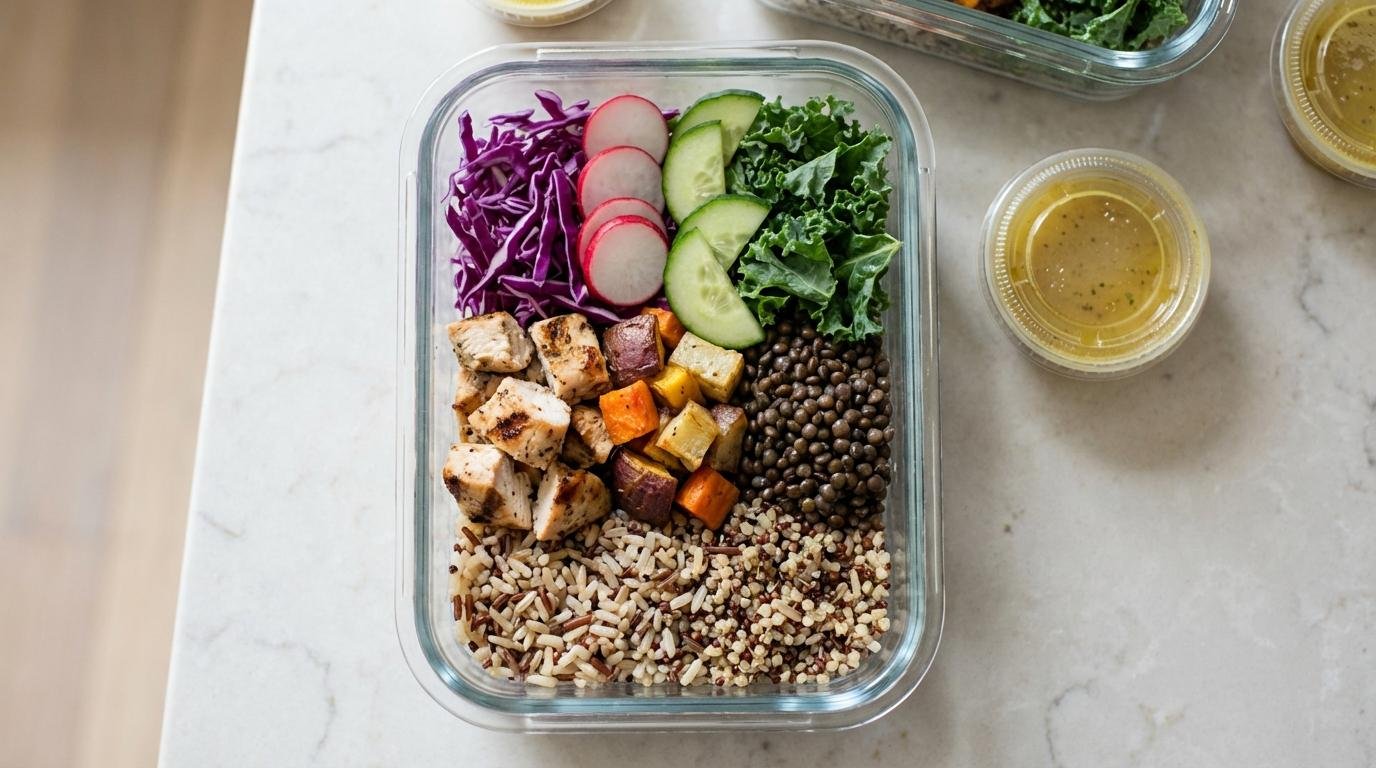
- Assemble: base on bottom, protein next, crunchy veg on top, sauce separate.
Most people find that prepping two proteins and one base is the sweet spot. You can mix and match all week without feeling like you’re eating the same lunch five times.
How to pack bowls so they stay crisp (and not watery)
Your container strategy matters as much as your ingredient list. Airtight containers help with both freshness and food safety, and small sauce cups are worth it.
Use this packing approach when you’re aiming for “just assembled” texture at lunchtime.
- Bottom layer: grains or noodles (cool first so you don’t trap steam)
- Middle layer: protein, roasted vegetables, beans or lentils
- Top layer: crunchy raw vegetables and greens
- On the side: dressing, salsa, or sauce in a separate cup
If you’re using ingredients that release water (tomatoes, cucumbers, pineapple, mango), keep them near the top or in their own compartment.
Food safety for no-reheat meals (quick, practical rules)
Because these bowls are meant to be eaten cold, storage matters. The main goals are keeping food cold enough and not pushing storage time too far.
Refrigerate meal prep bowls promptly and keep your fridge at 40°F (4°C) or below. For cooked proteins and mixed meals, a good rule is 3 to 4 days in the fridge. Raw fish poke bowls are more delicate, and they’re best eaten within about 1 to 2 days.
If a bowl sits out at room temperature for more than 2 hours (less if it’s very hot out), it’s safer to toss it.
When you’re commuting or traveling, an insulated lunch bag with an ice pack turns “hope it stays cold” into “it stayed cold.”
Quick fixes for common bowl problems
If your bowls have ever turned out bland, soggy, or weirdly dry, it’s usually one small tweak.
Too bland? Add something acidic (lemon, vinegar, pickles) plus something salty (olives, feta, soy-style sauce). Cold food often needs a stronger seasoning hand.
Too soggy? Store dressing separately and swap tender greens for shredded cabbage or kale.
Too dry? Add a creamy element (tzatziki, hummus, tahini sauce) or a little olive oil and lemon right before eating.
Not enough protein? Add one “no-cook” booster: canned tuna, edamame, lentils, Greek yogurt dressing, or a couple hard-boiled eggs.
Pick two bowl styles from above, prep them back-to-back, and you’ll have a week of lunches that still taste like real food on day four.
