


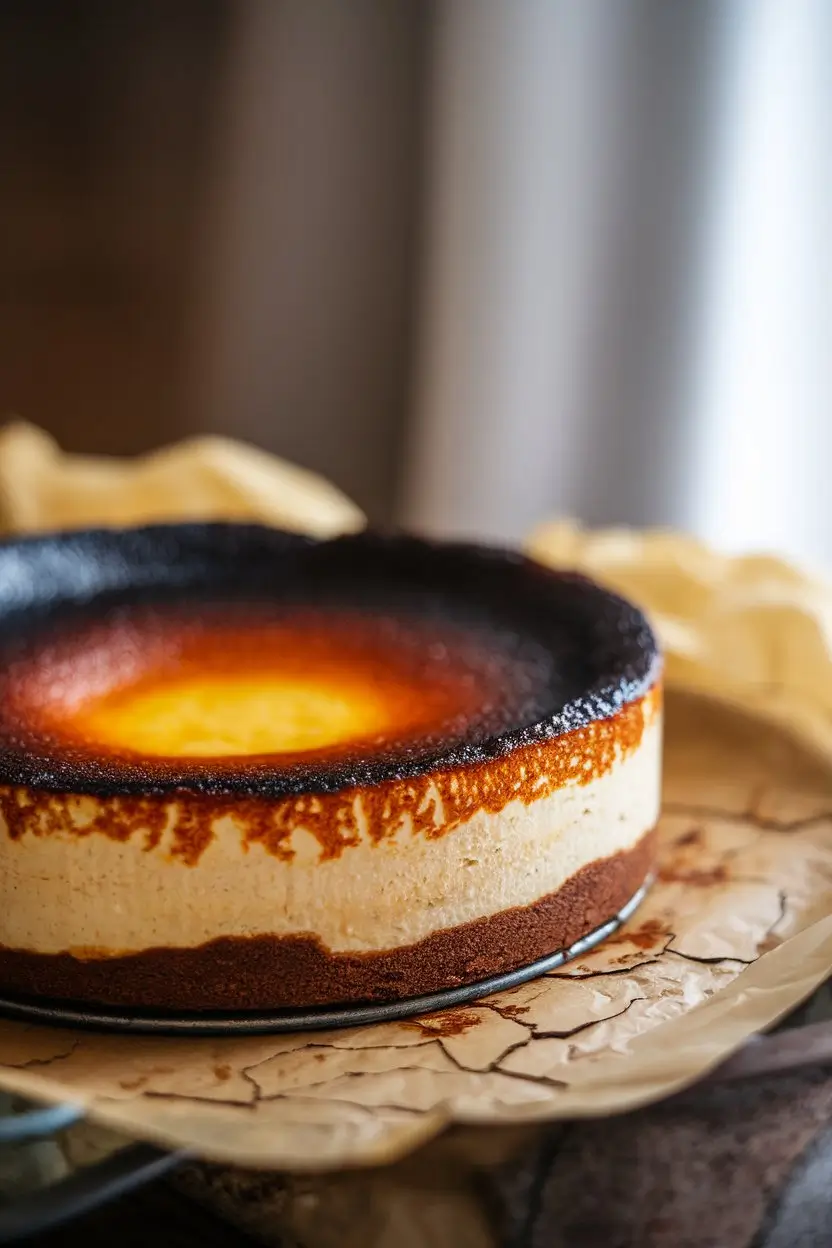
If you think cheesecake must be pale, neat, and crack free, wait until you meet its smoky, caramel-topped cousin.
Introduction: Why burnt basque cheesecake keeps winning hearts
Here is a quick question to start us off: why did Google Trends show sustained worldwide interest in burnt basque cheesecake since 2019, with spikes around major holidays, even as home baking searches cooled? The answer is simple cooking math. One hot oven, no crust, no water bath, and a wobbly center that sets into velvet. It is dramatic and low fuss, and that mix is hard to resist.
Originating at La Viña in San Sebastián, this rustic Spanish cheesecake breaks rules in the best way. A near-char on top, a custardy center, and that signature parchment ruffle. If you love New York cheesecake but want something lighter on technique and bigger on personality, burnt basque cheesecake is your next showstopper.
Ingredients List for burnt basque cheesecake
A classic 9 inch cake, generously tall, with a plush center. Use room temperature ingredients for a smooth batter.
- 900 g cream cheese, blocks not whipped (full fat preferred, Neufchâtel works for a lighter version)
- 250 g granulated sugar (reduce to 200 g if you like less sweet)
- 5 large eggs, room temperature
- 480 ml heavy cream
- 1.5 tsp vanilla extract or paste
- 1/2 tsp fine sea salt
- 30 to 40 g all-purpose flour or 20 g cornstarch for gluten free
- Softened butter, for greasing the pan
- Large sheet of parchment paper
Potential swaps that keep texture close: Greek yogurt can replace up to 25 percent of the cream cheese by weight, and coconut sugar adds a gentle caramel note with a slightly deeper color. Allulose works for lower sugar, though the top may brown a touch less.
Timing: short prep, hands-off magic
A standard New York cheesecake can stretch past 6 hours with water bath and full chill. This version cuts active time sharply.
- Prep: 15 minutes
- Bake: 28 to 35 minutes at high heat
- Cool to room temp: 1 to 2 hours
- Chill for clean slices: 2 to 3 hours
- Total: about 4.5 hours, which is roughly 25 to 30 percent less time than most traditional baked cheesecakes
Note: You can serve it slightly warm and jiggly at the center, traditionally how La Viña does it. For photo-worthy slices, chill.
Step 1: Prep the pan and oven
Line a 9 inch springform pan with a large sheet of parchment, pressing it into the corners and letting the paper extend at least 2 inches above the rim. Grease lightly so the parchment adheres. Preheat your oven to 500°F or 260°C. If your oven runs hot, 475°F still works.
Tip: Double layer parchment if yours is thin. The overhang is part of the signature look and helps contain the rise.
Step 2: Cream cheese and sugar to silky
In a large bowl with a paddle or a sturdy whisk, beat cream cheese and sugar until completely smooth, 2 to 3 minutes. Scrape the bowl and paddle once or twice. You should see no lumps.
Data-backed tip: Most complaints about grainy texture trace to cold cream cheese. Aim for 68 to 70°F.
Step 3: Add eggs, one by one, without whipping
Add eggs one at a time, mixing on medium low until fully incorporated before adding the next. You want a glossy, unified batter, not airy. Air creates tunnels and an overly souffléd rise.
If you see streaks of unmixed yolk, pause and scrape.
Step 4: Stream in heavy cream, then season
With the mixer on low, pour in heavy cream. Add vanilla and salt. Mix just until smooth. The batter should flow in a thick ribbon.
Flavor options: a teaspoon of orange zest, a splash of sherry, or a touch of espresso. These play nicely with the caramelized top.
Step 5: Fold in flour or cornstarch, then strain
Sift flour over the bowl and fold gently until you no longer see dry pockets. For gluten free, cornstarch gives a similarly tender set. Strain the batter through a fine mesh sieve into a large pitcher or bowl. Straining removes micro lumps that would show up in slices.
Step 6: Fill, then bake hot and fast
Pour the batter into the parchment lined pan and give a small tap to release any large bubbles. Bake on the middle rack at 500°F until the top is deep amber with some near black freckles, 28 to 35 minutes. The center should jiggle like loose custard when nudged, edges slightly set.
Convection note: If using convection, drop the temperature by 25°F and start checking at 24 minutes.
Step 7: Cool for that creamy set
Let the cheesecake cool in the pan on a rack until it drops to room temperature. The dramatic rise will gently settle. Expect a few wrinkles, it is part of the charm.
If you like a more fluid center, slice once it cools. For tidy edges, cover and chill a few hours.
Step 8: Release, slice, and serve
Unclasp the springform, peel back the parchment, and transfer to a platter. Use a hot, dry knife for clean cuts, wiping between slices. Serve plain or add a restrained flourish. The flavor is rich and nuanced, so a light hand with toppings works best.
Nutritional Information
These values are estimates based on a 12 slice yield from the ingredient list above. Actual numbers vary with brands and swaps.
| Serving size | Calories | Protein | Carbs | Fat | Sugar | Sodium |
|---|---|---|---|---|---|---|
| 1 slice of 12 | ~520 kcal | ~9 g | ~24 g | ~40 g | ~22 g | ~260 mg |
Data notes:
- Using Neufchâtel and trimming sugar to 200 g typically drops calories by 8 to 12 percent per slice.
- Allulose sweetened versions brown slightly less, which may reduce caramelization flavor intensity by a small margin, though the texture remains lush.
Healthier Alternatives for the recipe
You can dial this cake toward your goals without losing the Basque character, which is scorched top, custardy middle, and a crustless profile.
Lighten the dairy load by using 600 g cream cheese plus 300 g 2 percent Greek yogurt. Keep the heavy cream, as it helps set without creating a dense bite. The tang from yogurt reads pleasantly bright under the caramelized notes.
Want fewer carbs? Swap 60 to 100 percent of the sugar for allulose or a blend of allulose and erythritol. Allulose is the better choice for texture because it dissolves well. It also resists browning a bit, so push doneness closer to the upper end of the time window.
Gluten free is straightforward. Use 20 g cornstarch or rice flour instead of wheat flour. You can skip starch entirely if you prefer a very soft set, but your slices will lean more custard.
For portion control, bake the same batter in two 6 inch pans or as individual 5 ounce ramekins. Minis will bake in 16 to 20 minutes at the same temperature. The payoff is built-in serving sizes and faster cooling.
Serving suggestions
Serve at cool room temperature for the creamiest mouthfeel. Too cold and the fats feel firm. Too warm and it can ooze more than you like on the plate.
Pairings that let the cake shine: a few raspberries, a spoon of tart cherry compote, or citrus zest microplaned over the top. A pinch of flaky sea salt cuts the sweetness and raises the caramel tones.
If you enjoy beverages with dessert, try a small espresso, oloroso sherry, or an orange blossom tea. Each one complements the toasty top and vanilla custard center in a different way.
Looking to add flair for a dinner party? Lightly whip sour cream with a touch of sugar and vanilla, then dollop. Keep it thin, this cake does not need a heavy crown.
Common mistakes to avoid
Home bakers often report the same handful of issues. Most are easy to fix once you know what to watch.
- Oven too cool: Without high heat, you will not get that signature caramelized top and the center may bake too evenly.
- Overbaking: If the center is set firm in the oven, it will be dry when cool. Pull it when the middle still wobbles.
- Cold ingredients: Lumps in the batter lead to uneven texture. Aim for room temperature dairy and eggs.
- Whipping too much air: Extra air expands and collapses, causing tunnels and a soufflé rise. Mix just until smooth.
- Skimping on parchment: The tall parchment collar shapes the cake and controls spillover. It is not just decorative.
- Rushing the cool: Cutting too hot creates a runny center and messy slices. Let it hit room temp first, then chill if you want tidy cuts.
Storing tips for the recipe
Cool the cheesecake completely before covering. Moisture that escapes while warm will turn to condensation and soften the top. Store covered in the refrigerator for 3 to 4 days. Keep the parchment on for protection, then wrap loosely in plastic wrap.
Freezer friendly? Yes. Slice, wrap each piece in parchment, then plastic, and freeze up to 1 month. Thaw slices in the refrigerator overnight for texture that is nearly identical to fresh. The top will darken slightly during storage but flavor remains intact.
If the surface loses its sheen after a couple of days, let the cake sit at room temperature for 20 to 30 minutes before serving. The aroma and mouthfeel spring back.
FAQs
Q: What makes burnt basque cheesecake different from New York cheesecake? A: It is baked hot, without a crust or water bath, and it welcomes a deeply caramelized top. The center stays soft and custardy rather than dense. The method is simpler and more forgiving, which explains its global popularity.
Q: Can I skip the flour or cornstarch? A: Yes. The cake will be a bit looser and more custard forward. If you value neat slices, keep a small amount of starch. If you prize a molten middle, omit it.
Q: How do I know it is done? A: Color and wobble tell the story. Look for a deep amber top with a few darker spots and a pronounced jiggle in the center when you shake the pan. The edges should look set but not stiff.
Q: Will springform leaks be a problem at this heat? A: Leakage is rare with a thick batter, but lining with a single piece of parchment that covers the base and sides acts like a gasket. A light butter coat under the parchment improves the seal.
Q: Can I use convection? A: Yes, reduce the temperature by about 25°F and watch color early. Convection can brown faster at the edges, so rotate the pan at the 15 minute mark for even color.
Q: What if the top gets too dark before the center is ready? A: Tent loosely with foil for the final minutes. Note that the signature style invites a near char, so trust the jiggle test before reaching for foil.
Q: Can I flavor the batter with chocolate or matcha? A: You can. Matcha mixes best sifted with the flour. For chocolate, whisk in 120 g melted 70 percent chocolate after the cream. Both variants will change bake time by a few minutes, so start checking earlier.
Q: Where did this style originate? A: The modern version is credited to La Viña in San Sebastián, Spain. The restaurant’s original cake sparked a wave of adaptations, from home kitchens to pastry menus worldwide.
Q: How can I share my results or ask for help? A: Leave a comment with your bake time, oven type, and any swaps you used. Your feedback helps others fine tune their own cakes, and you can subscribe for updates when new flavor spins and technique guides go live.
Print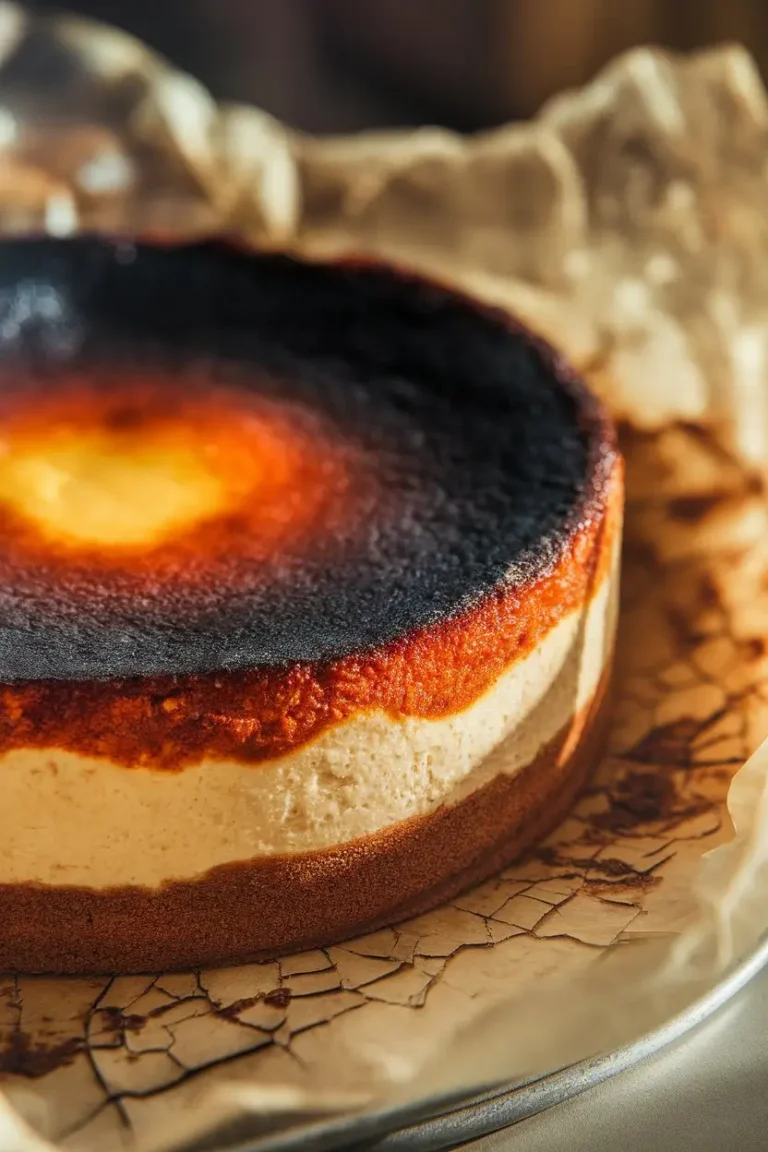
Burnt Basque Cheesecake: A Delicious Journey
A rustic, crustless cheesecake with a caramelized “burnt” top and a lusciously creamy center—simple ingredients, unforgettable flavor.
- Total Time: 75
- Yield: 8 servings
Ingredients
- 2 cups (450 g) cream cheese, room temperature
- 1 cup (200 g) sugar
- 3 large eggs
- 1 ½ cups (360 ml) heavy cream
- ¼ cup (30 g) all-purpose flour
- 1 tsp vanilla extract
- ½ tsp salt
Instructions
- Prep:
Heat oven to 425°F (220°C). Line a 9-inch (23 cm) springform pan with parchment, letting it overhang. - Mix the batter:
- Beat the cream cheese and sugar until smooth.
- Add eggs one at a time.
- Add heavy cream, vanilla, and salt.
- Sift in flour and mix just until combined
- Bake:
Pour into the pan. Bake 55–65 minutes until the top is very dark brown (almost burnt) and the center still jiggles. - Cool:
Let cool in the pan—center will fall and set into a custardy texture. Chill at least 4 hours for clean slices.
Notes
- For extra creaminess: reduce flour to 2 tbsp.
For runnier center: bake closer to 50–55 min. - Serve at room temp for the most velvety texture.
- Prep Time: 10
- Cook Time: 65
- Category: Dessert
- Method: Baking
- Cuisine: Spanish
- Diet: Vegetarian
