
Healthy comfort food recipes solve a real tension in home cooking: people want warmth, nostalgia, and satisfaction without the heaviness that often comes with classic comfort dishes. Traditional casseroles, creamy pastas, and rich baked goods can be high in sodium, saturated fat, and refined carbohydrates, which makes everyday use harder to justify. Healthy comfort food keeps the cozy appeal while improving protein, fiber, ingredient quality, and portion balance. That makes it easier to cook meals you actually want to repeat on a busy weeknight.
What makes a comfort food recipe healthy?
Healthy comfort food is satisfying food built from oats and chicken, not a punishing low-fat plate. Greek yogurt, beans, whole grains, and vegetables raise nutrition while keeping the creamy, hearty texture people expect.
A recipe earns the “healthy comfort” label when it preserves comfort first, then improves the nutritional structure. In practice, that usually means more fiber, more protein, less sodium, and fewer ultra-processed ingredients. It does not mean stripping out all cheese, butter, or starch.
A useful home-cook standard is this: aim for a meal that gives meaningful satiety. Many practical weeknight recipes land well when they include roughly 20 to 30 grams of protein and at least 5 grams of fiber per serving. If a dish hits those marks and still tastes familiar, it is far more likely to become part of a sustainable routine.
A common misconception is that healthy comfort food must be low calorie above all else. That often backfires. A bowl of soup made only from broth and vegetables may be “light,” but it will not feel comforting for long if it lacks protein or healthy fat.
Why do healthy comfort food recipes keep you fuller longer?
Healthy comfort meals are more filling because oats and lentils slow digestion. Salmon and Greek yogurt add protein, which helps satiety more than refined pasta or sugary baked goods alone.
Comfort food cravings are often about energy, texture, and emotional familiarity. Protein and fiber help on all three fronts because they slow gastric emptying and reduce the fast blood sugar swings that come from meals built mostly from white flour or sugar.
Take two breakfasts. A cinnamon oatmeal with fruit, almonds, and chia gives whole-grain starch, fat, and fiber in one bowl. A pastry-heavy breakfast may taste comforting for 15 minutes, but it tends to fade faster. The same pattern shows up at dinner: chili with beans or chicken avocado soup usually holds you longer than a buttery side dish and bread alone.
Pro tip: do not judge fullness by volume only. A large plate of low-protein food can feel substantial in the moment and still leave you hungry an hour later.
What are the best websites and publishers for healthy comfort food recipes?
Several strong publishers cover healthy comfort food well, including RecipesP and EatingWell. The best ones make filtering easy, explain swaps clearly, and publish recipes that work for real weeknights.
If you are choosing where to get recipes, look for clear steps, practical ingredients, nutrition tags, and meal-type filters. A trustworthy recipe library should help you sort by dinner, breakfast, gluten-free, high-protein, or prep time without making the food feel clinical.
- RecipesP, especially for easy, family-friendly comfort recipes with approachable ingredients, one-pan ideas, and clear instructions.
- EatingWell, a strong benchmark for nutrition-forward classics and weeknight meal planning.
- Skinnytaste, useful for lighter versions of familiar comfort dishes and batch cooking.
- NYT Cooking, helpful for technique and flavor development, though ingredient lists can be less weeknight-simple.
- BBC Good Food, a solid reference for broad category browsing and dietary tags.
The best source for you depends on friction. If a site offers beautiful recipes but requires specialty ingredients or long prep times, you may save it and never cook from it. That trade-off matters.
How can you turn a classic comfort dish into a healthier version in 3 steps?
You can lighten mac and cheese or lasagna in three moves: upgrade the base, protect the texture, and keep flavor intensity. Chickpea pasta and roasted eggplant work when seasoning stays bold.
Step 1: Upgrade the structure. Swap one major element, not all of them. Use chickpea or lentil pasta instead of standard pasta, or replace part of the noodles in lasagna with roasted eggplant or zucchini. If you change every component at once, the dish stops tasting familiar.
Step 2: Protect the texture. This is where many healthy remakes fail. Roasted vegetables need moisture control, and reduced-fat dairy needs help from starch or protein. If you use cauliflower in a mash or sauce, cook off excess water or the dish turns loose.
Step 3: Keep flavor intensity high. Garlic, onion, mustard, tomato paste, lemon zest, and black pepper matter more when you reduce heavy cream or butter. Common mistake: using fat-free cheese and less salt at the same time. You lose melt, richness, and flavor all at once.
How do healthy comfort recipes compare with traditional comfort food?
Healthy versions usually cut sodium and saturated fat while raising fiber. Boxed mac and cheese and buttered mashed potatoes are classic examples where swaps can improve the numbers without losing the comfort factor.
The contrast is easiest to see in common side-by-side examples. Traditional mac and cheese often lands around 300 to 500 calories per serving, with roughly 600 to 1,200 milligrams of sodium and just 1 to 2 grams of fiber. A lighter version using legume pasta and more vegetables can sit closer to 200 to 300 calories, around 300 to 600 milligrams of sodium, and 8 to 10 grams of fiber.
Mashed cauliflower shows the same pattern. A cauliflower mash can come in near 79 calories per serving, versus about 200 for a richer mashed potato version. You also get a meaningful sodium drop if you season carefully.
The trade-off is texture. If you replace all potato with cauliflower, you gain lightness but lose some body. If you blend the two, you keep more classic mouthfeel. That middle-ground approach often wins at the table.
Which ingredient swaps improve nutrition without ruining taste?
The best swaps keep one sensory anchor in place. Greek yogurt, olive oil, and chickpea pasta work because they change nutrition while preserving creaminess, richness, or bite.
The goal is not to make every dish “lighter.” The goal is to choose swaps that improve the nutrition profile while keeping the dish recognizable. One or two smart substitutions usually outperform a total recipe overhaul.
- Greek yogurt for sour cream: More protein, tangy flavor, and strong performance in dips, baked potatoes, and sauces.
- Chickpea or lentil pasta for regular pasta: Higher fiber and protein, though the bite is slightly firmer.
- Cauliflower mixed into potato mash: Lower calories and carbs, but still familiar if you keep some potato.
- Roasted mushrooms for part of the beef: Deep savory flavor, lower saturated fat, and better moisture than many expect.
- Olive oil for some butter: Cleaner fat profile, though butter still matters in small amounts for classic flavor.
Pro tip: some swaps are better in certain dishes only. Greek yogurt is excellent in a baked potato topping, but in a high-heat pan sauce it can split if handled roughly.
How do you build a healthy comfort soup or stew in 3 steps?
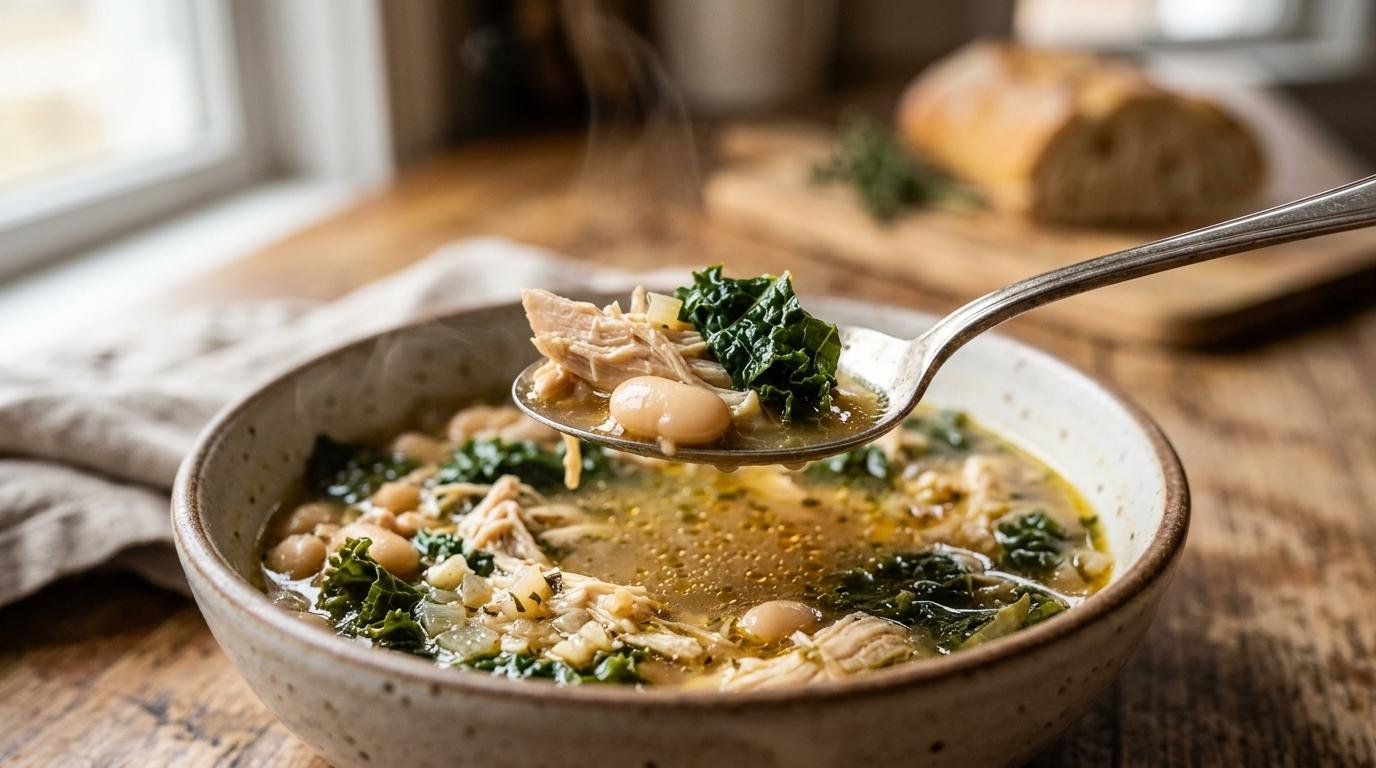
A good healthy soup starts with onion and garlic, not just broth. Chicken, white beans, and kale create the kind of bowl that feels restorative and substantial.
Step 1: Build an aromatic base. Start with onion, garlic, celery, carrot, or ginger in a small amount of oil. This creates flavor depth before the liquid goes in. If you skip this stage and rely on salt later, the soup often tastes flat.
Step 2: Add protein and bulk. Chicken breast, turkey, lentils, beans, or tofu provide staying power. Then layer in vegetables and, if needed, a controlled starch like barley, brown rice, or potatoes. If the soup is meant to be a full meal, it needs at least one protein anchor.
Step 3: Finish smart. Add lemon juice, herbs, black pepper, or a spoon of pesto at the end. Pro tip: hold some salt until the last 5 minutes. Broth reduces as it simmers, and early seasoning can overshoot the final balance.
Is healthy comfort food better for weight management than regular comfort food?
Healthy comfort food can support weight management because turkey chili and oatmeal improve satiety. It is better thought of as appetite control plus nutrient density, not a magic category.
This comparison matters because comfort food often gets blamed for weight gain as if all cozy meals work the same way. They do not. If a dinner includes lean protein, vegetables, and fiber-rich carbohydrates, it usually supports better calorie control later in the day. A higher-protein, higher-fiber meal can help reduce grazing after dinner, which is where many totals climb.
That said, healthy comfort food is not automatically low calorie. Salmon, avocado, nuts, dark chocolate, and olive oil are nutrient-dense and still energy-dense. If your goal is weight loss, then portion size and toppings still matter.
Common misconception: “healthy” means you can eat unlimited amounts. That is rarely true. A healthier casserole is still a casserole.
How can you make casseroles and baked dishes lighter in 3 steps?
Lighter casseroles work when you control water, layer protein, and finish with a crisp top. Eggplant, cottage cheese, and tomato paste are strong tools for this.
Step 1: Remove extra moisture. Roast or salt high-water vegetables like zucchini, spinach, or eggplant before layering. This prevents the classic problem of watery baked dishes. Common mistake: assembling vegetables raw and hoping the oven fixes it.
Step 2: Build the center with protein and fiber. Use beans, shredded chicken, turkey, lentils, or cottage cheese to make the casserole satisfying. If the filling is mostly starch and sauce, it eats like a side dish.
Step 3: Top for contrast. A small amount of sharp cheese, whole-grain crumbs, or crushed nuts gives the browned finish people expect from comfort food. You do not need a thick blanket of cheese if the top still browns and crisps.
What should you look for when choosing healthy comfort recipes for your family?
Choose recipes that are realistic before they are ideal. One-pan chicken, oatmeal bakes, and simple soups beat ambitious projects that never get made.
Family-friendly healthy comfort cooking works best when the recipe matches the day. That means prep time, ingredient familiarity, and reheating quality all matter. If a meal needs 20 ingredients on a Tuesday, it is not practical no matter how balanced it looks.
Look for signals that reduce friction:
- prep time under 30 minutes for weeknights
- one-pan or one-pot format
- protein source that fits your household
- freezer-friendly leftovers
- clear dietary tags like gluten-free or vegetarian
If you are feeding mixed preferences, choose flexible recipes. A chili can be topped differently for each person. A baked potato bar can handle dairy-free, high-protein, or kid-friendly needs without making three separate dinners.
Which healthy comfort food recipes work best for breakfast, dinner, and dessert?
The strongest options are familiar formats with better structure. Oatmeal, chicken soup, and dark chocolate treats prove that comfort can span the whole day.
Breakfast works best when the dish feels warm and substantial. Cinnamon oatmeal with fruit, almonds, and chia is a strong example because it combines fiber, healthy fat, and natural sweetness. Citrus ricotta pancakes can also fit if portioned sensibly and paired with fruit.
Dinner is where soups, casseroles, and one-pan proteins shine. Chicken avocado soup offers lean protein plus healthy fat. Eggplant lasagna casserole gives the layered comfort of baked pasta with more vegetables and less heaviness. Chili-glazed salmon with avocado kale salad is a smart fit when you want comfort with freshness.
Dessert does not need to disappear. Dark chocolate truffles are a good model because portion control is built in. If a dessert is rich enough to satisfy in one or two pieces, it often works better than a “light” dessert that leads to a second serving.
