


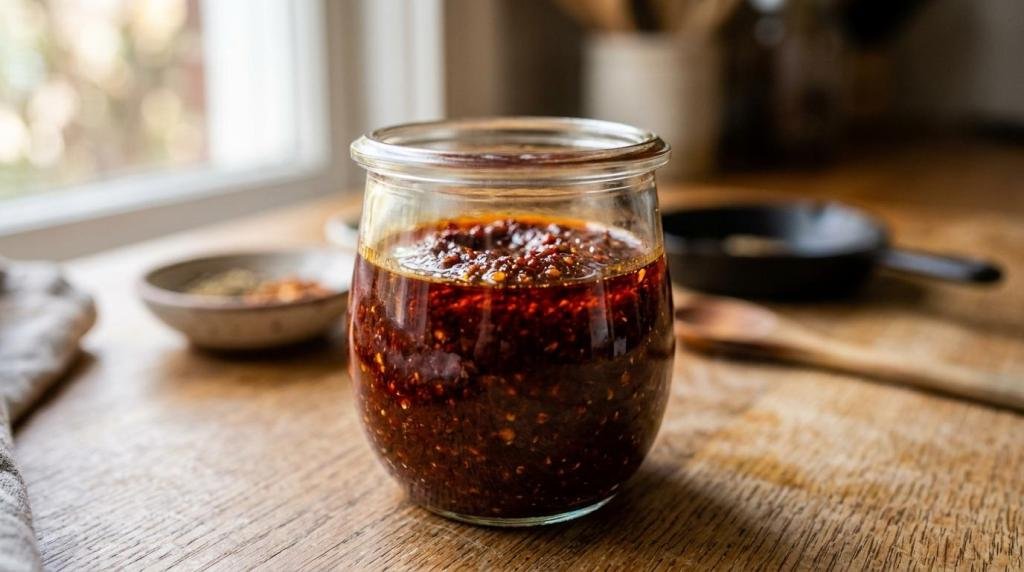
This chili paste recipe makes a bold, smoky, customizable condiment in 25 minutes, perfect for noodles, marinades, soups, and more.
What if the most useful condiment in your kitchen took about 25 minutes to make and gave you more flavor control than many store-bought jars, which often carry added sugar, preservatives, or well over 100 milligrams of sodium per teaspoon? This chili paste recipe is the answer for cooks who want bold heat, deep roasted flavor, and a flexible sauce that works in noodles, marinades, soups, grain bowls, and quick weeknight dinners.
A well-balanced homemade chili paste should taste hot, savory, slightly sweet, and aromatic, not just aggressively spicy. Once you make it yourself, you can tune the heat level, choose the chilies you like, and keep the texture exactly where you want it, from rustic and spoonable to smooth and spreadable.
Why This Chili Paste Recipe Belongs in Your Kitchen
A strong chili paste recipe is less about sheer heat and more about control. Dried chilies bring depth, garlic gives sharpness, tomato paste adds body, and a small amount of vinegar helps the flavors stay bright. When those pieces are handled well, the result feels more rounded than many one-note hot sauces.
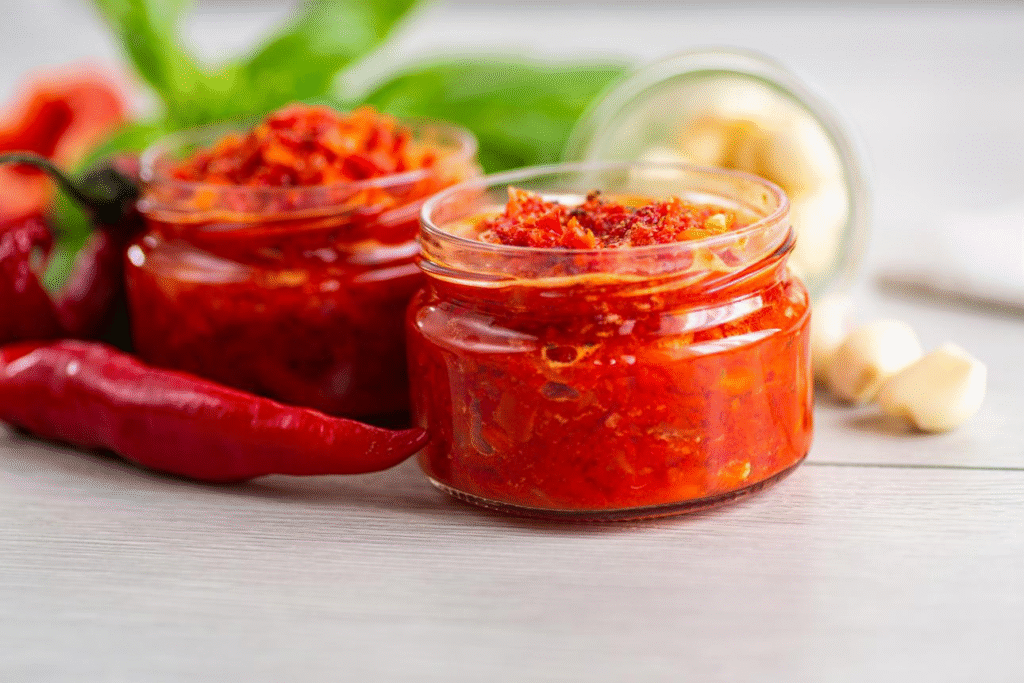
This kind of condiment also saves time during the week. A spoonful can season a pan of fried rice, wake up a simple pot of beans, or turn plain roasted vegetables into something memorable. That is one reason homemade chili paste shows up so often in practical meal prep routines.
It also gives home cooks a more flexible base than a ready-made sauce with a fixed flavor profile.
Chili Paste Recipe Ingredients and Smart Substitutions
The ingredient list is short, but each item pulls real weight. This version aims for a balanced, versatile paste with smoky warmth, gentle acidity, and enough richness to carry through stir-fries, dipping sauces, and braises.
| Ingredient | Amount | What it adds | Easy substitution |
|---|---|---|---|
| Dried guajillo chilies, stemmed and seeded | 6 | Mild heat, fruitiness, deep red color | New Mexico chilies |
| Dried arbol chilies, stemmed | 8 to 12 | Sharp heat | Thai dried chilies, fewer in number |
| Garlic cloves | 6 | Strong savory backbone | Roasted garlic for a softer edge |
| Shallot | 1 medium | Sweet aromatic depth | 1/4 small onion |
| Tomato paste | 2 tablespoons | Body and umami | Roasted red pepper paste |
| Neutral oil | 1/4 cup | Smooth texture and preservation | Avocado oil |
| Rice vinegar | 2 tablespoons | Brightness and balance | Apple cider vinegar |
| Soy sauce | 1 tablespoon | Salty umami | Tamari or coconut aminos |
| Brown sugar or maple syrup | 1 tablespoon | Softens bitterness and heat | Honey if not vegan |
| Smoked paprika | 1 teaspoon | Gentle smokiness | Leave out if using smoky chilies |
| Salt | 1/2 teaspoon, or to taste | Flavor balance | Adjust after simmering |
| Hot water | 1/2 to 3/4 cup | Blending liquid | Chili soaking liquid, strained |
If you want to tailor the paste to your pantry or heat tolerance, these swaps work especially well:
- Milder heat: Use more guajillo and fewer arbol chilies.
- Smokier flavor: Add 1 chipotle pepper or a pinch more smoked paprika.
- Slight sweetness: Maple syrup gives a softer finish than brown sugar.
- Soy-free option: Coconut aminos work, though the paste will be a touch sweeter.
Chili Paste Recipe Timing and Yield
This is a fast condiment by homemade standards. Many pepper-based spreads take 40 minutes or longer once roasting and cooling are included. This version skips that extra waiting and still builds layered flavor.
| Task | Time |
|---|---|
| Prep ingredients | 10 minutes |
| Soak chilies | 10 minutes |
| Blend and cook | 12 to 15 minutes |
| Total time | 22 to 25 minutes |
| Yield | About 1 cup |
That yield gives you roughly 16 tablespoons, enough for several meals without taking over your fridge.
Chili Paste Recipe Step-by-Step Instructions
Step 1: Soften the dried chilies
Place the guajillo and arbol chilies in a heatproof bowl and cover them with hot water. Let them soak for about 10 minutes, until pliable. If any seeds float loose, skim them off.
This is the point where heat control begins. Remove more seeds for a smoother, less fiery paste. Keep some in if you want a sharper finish. If the soaking liquid looks gritty, do not use all of it in the blender.
Step 2: Cook the aromatics for depth
Warm the oil in a small skillet over medium heat. Add the shallot and cook for 2 to 3 minutes until softened. Add the garlic and stir for another 30 to 45 seconds, just until fragrant. Stir in the tomato paste and smoked paprika and cook for 1 minute.
That short cooking step changes everything. Raw tomato paste can taste flat, while briefly frying it concentrates sweetness and umami. Keep the heat moderate so the garlic stays golden, not bitter.
Step 3: Blend until mostly smooth
Drain the chilies. Add them to a blender or food processor with the cooked shallot mixture, vinegar, soy sauce, sugar, salt, and 1/2 cup hot water. Blend until thick and smooth, scraping down the sides as needed.
If the paste struggles to move, add water 1 tablespoon at a time. Aim for a texture thicker than hot sauce but looser than tomato paste. A small high-speed blender usually gives the smoothest result, though a food processor creates a nice rustic version.
Step 4: Simmer the chili paste recipe until glossy
Pour the blended mixture back into the skillet or a small saucepan. Simmer over low heat for 5 to 7 minutes, stirring often, until the color deepens and the oil begins to look integrated rather than separate.
This is where the flavors settle. The vinegar loses its raw edge, the chilies become rounder, and the paste turns glossy. Taste carefully, then adjust with a pinch more salt, a few drops of vinegar, or a little sugar if the chilies taste too sharp.
Step 5: Cool and jar it properly
Transfer the chili paste to a clean glass jar and let it cool fully before sealing. A thin layer of oil on top can help protect the surface during storage.
Once cooled, it is ready to use in dressings, soups, noodle sauces, sandwich spreads, and quick marinades. The flavor usually tastes even better the next day.
Chili Paste Recipe Nutrition Per Tablespoon
Nutrition changes with the exact chilies and amount of oil used, though a tablespoon generally remains modest in calories while delivering a lot of flavor. That makes chili paste an efficient way to build taste without relying on large amounts of butter or cream-based sauces.
| Nutrient | Approximate amount per tablespoon |
|---|---|
| Calories | 30 to 35 |
| Fat | 2.5 to 3 g |
| Carbohydrates | 2 to 3 g |
| Sugars | 1 to 1.5 g |
| Fiber | 0.5 to 1 g |
| Sodium | 70 to 110 mg |
| Protein | Under 1 g |
The big nutritional advantage is concentration. You only need a little to season a dish, which keeps portions practical while still delivering strong flavor.
Healthier Alternatives for Chili Paste Recipe
If you want a lighter version, reduce the oil to 2 tablespoons and add a little extra hot water while blending. The texture will be less rich but still very usable for soups, grain bowls, and braises. A smaller amount of oil also brings the chili flavor into sharper focus.
For lower sodium, cut the soy sauce in half and season with a little extra vinegar plus a pinch of salt only after simmering. That approach keeps the paste from tasting flat. If you are avoiding added sugar, a small piece of soaked date can round out bitterness in a more natural way.
You can also build a more nutrient-dense version by blending in roasted red peppers or cooked carrots. Both soften the heat, add body, and bring mild sweetness without pushing the paste into a sauce that feels overly sugary.
Serving Suggestions for Homemade Chili Paste
Homemade chili paste earns its keep when it moves beyond one recipe. Think of it as a fast flavor starter rather than a single-use condiment.
- Stirred into ramen or noodle bowls
- Mixed with mayo for burgers and wraps
- Rubbed onto tofu before roasting
- Folded into vinaigrettes
- Swirled into soups or stews
- Spooned over eggs, rice, or avocado toast
A good starting point is 1 teaspoon per serving for mild heat and 1 tablespoon for a bolder dish. If you like meal prep, keep a jar next to quick staples like cooked rice, beans, and roasted vegetables. It turns basic components into a finished meal very quickly.
Common Chili Paste Recipe Mistakes to Avoid
This recipe is straightforward, though a few small errors can flatten the flavor or shorten shelf life. Most problems come down to heat management, texture, or moisture.
- Overtoasting the chilies: Burnt skins bring bitterness that sugar cannot hide.
- Adding too much soaking water: The paste turns thin and spoils faster.
- Skipping the simmer: Raw garlic and vinegar stay harsh instead of balanced.
- Ignoring seed control: Heat becomes uneven from batch to batch.
- Storing while warm: Condensation inside the jar can weaken freshness.
If your batch tastes too hot, blend in a little more tomato paste or roasted red pepper and simmer again. If it tastes dull, it usually needs either salt or acid, not more sugar.
Storing Tips for Chili Paste Recipe
Storage matters because this paste contains fresh garlic and aromatics. Clean tools, a dry jar, and a fully cooled paste will help preserve quality.
| Storage method | How long it lasts | Best practice |
|---|---|---|
| Refrigerator, sealed jar | 2 to 3 weeks | Use a clean spoon every time |
| Freezer, small portions | Up to 3 months | Freeze in an ice cube tray or small containers |
| Meal prep ahead | 2 days before cooking | Soak and blend, then simmer fresh for best flavor |
A thin cap of oil on top can help protect the surface in the fridge. If the paste smells off, changes color dramatically, or shows mold, discard it immediately.
Make This Chili Paste Recipe Once, Use It All Week
This chili paste recipe is fast, flexible, and packed with bold flavor. Make one jar, then use it in noodles, marinades, soups, and roasted vegetables all week. If you try it, share your results in the comments or review section, and subscribe for more easy, flavor-first recipes and cooking ideas.
Chili Paste Recipe FAQs
Can I make this chili paste recipe less spicy?
Yes. Use mostly guajillo or other mild dried chilies and reduce the arbol chilies sharply. Removing seeds also helps. You can even blend in roasted red pepper for a gentler, sweeter finish.
Is this chili paste recipe vegan?
Yes, as written it is vegan. If you swap the sweetener, choose maple syrup or brown sugar instead of honey to keep it fully plant-based.
Can I use fresh chilies instead of dried chilies?
You can, though the flavor changes. Fresh chilies give a greener, brighter profile, while dried chilies bring more concentrated depth. If using fresh peppers, cook them longer to reduce moisture before blending.
Why is my chili paste recipe bitter?
Bitterness usually comes from burnt garlic, overtoasted chilies, or too many seeds. A small amount of sugar and proper simmering help, though the best fix is preventing scorching from the start.
What dishes pair best with homemade chili paste?
It works beautifully with stir-fried vegetables, rice bowls, grilled tofu, dumplings, noodle soups, roasted potatoes, and even mixed into dips. If you enjoy making condiments at home, this is also a great base for spicy mayo, quick marinades, and punchy pan sauces.
