
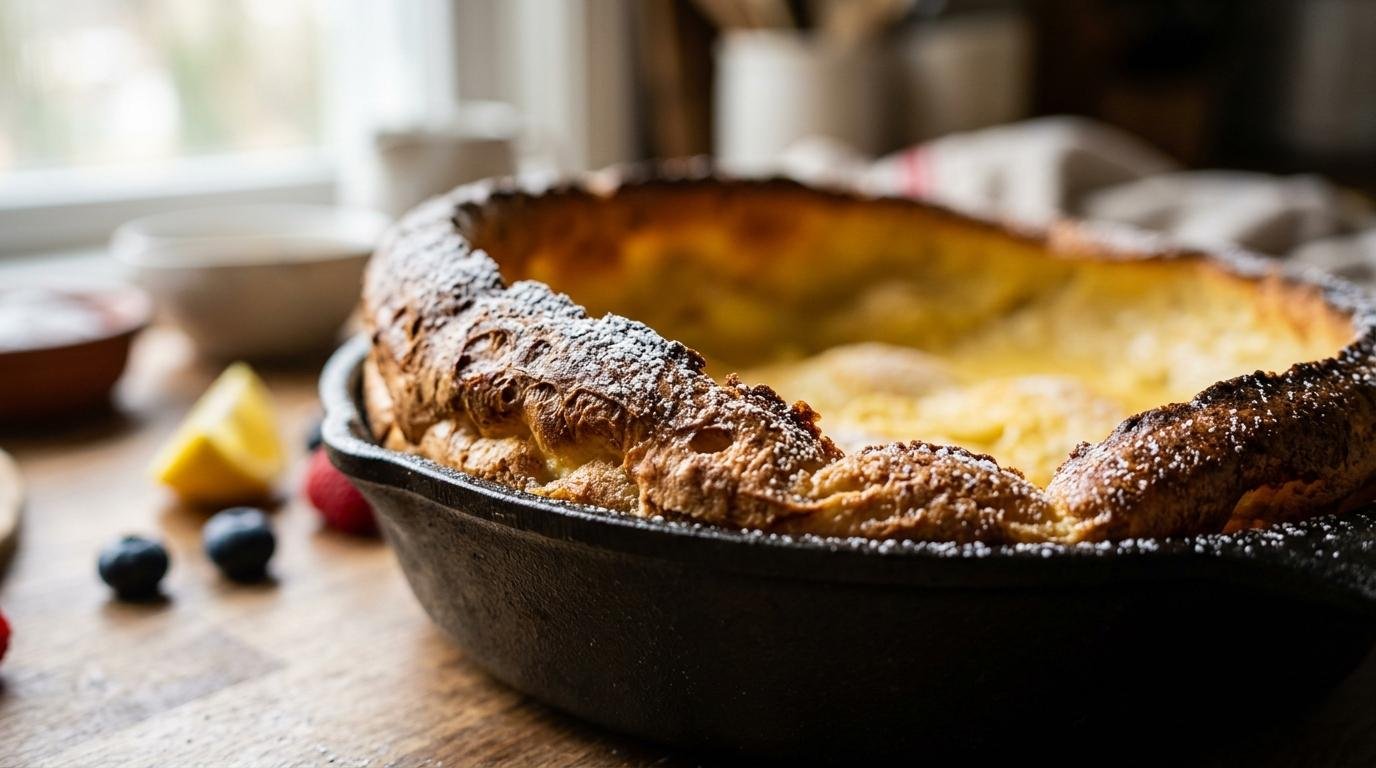
What if a breakfast made with six staple ingredients and about 30 minutes of total time could feel more impressive than a full stack of flapjacks that needs constant flipping? That is the charm of german pancakes: dramatic rise, crisp golden edges, and a soft, custardy center from one hot pan.
Introduction
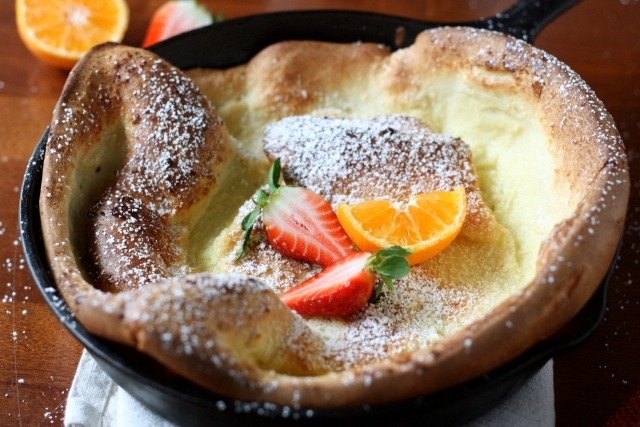
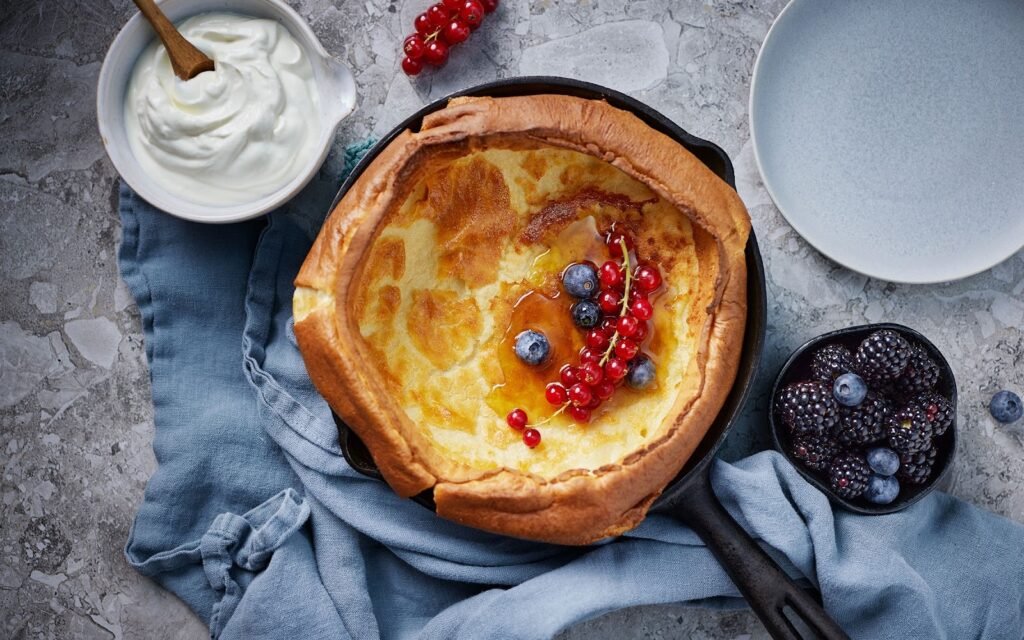
German pancakes, often called Dutch babies in the United States, are less like traditional griddle pancakes and more like a baked cross between a popover and a crepe. They puff high in the oven, then settle into rippled edges and a tender middle that is ready for lemon juice, powdered sugar, fresh berries, maple syrup, or even savory toppings.
Part of their appeal is contrast. The outer rim turns deeply golden and lightly crisp, while the center stays delicate and almost silky. That texture shift is why so many home cooks choose them when they want a breakfast that looks special without needing special technique.
They also fit real life beautifully. You blend, pour, bake, and let the oven do the work.
Ingredients List
A classic version uses familiar ingredients, and each one matters. Eggs create lift, milk gives the batter a gentle richness, flour builds structure, and butter helps the edges brown beautifully. A little vanilla and salt round everything out so the finished pancake tastes full and warm rather than flat.
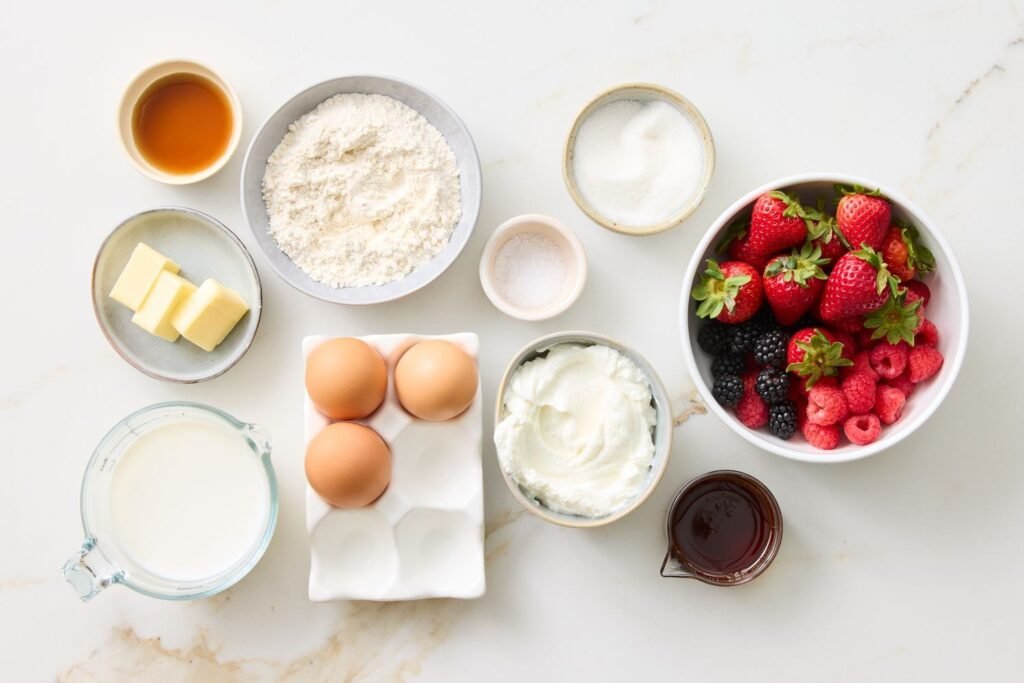
Here is a simple base recipe for a 10 to 12-inch skillet, serving 3 to 4 people.
| Ingredient | Amount | What it does | Easy swap |
|---|---|---|---|
| Large eggs | 6 | Creates the signature puff and custardy texture | Use 4 whole eggs + 2 egg whites for a lighter version |
| Whole milk | 1 cup | Adds richness and moisture | Unsweetened almond, oat, or soy milk |
| All-purpose flour | 1 cup | Gives the pancake structure | Cup-for-cup gluten-free flour blend |
| Salt | 1/4 teaspoon | Sharpens flavor | Fine sea salt |
| Vanilla extract | 1 teaspoon | Adds warmth and sweetness | Almond extract, use 1/4 teaspoon |
| Unsalted butter | 4 tablespoons | Helps the pancake brown and prevents sticking | Vegan butter or avocado oil |
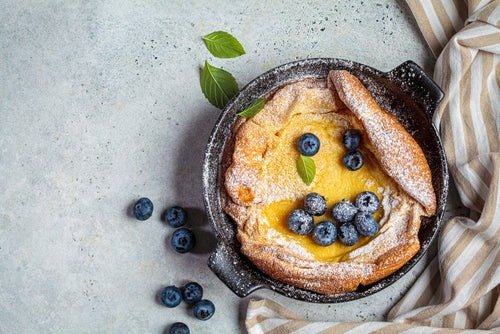
If you like a more traditional bright finish, have these ready for serving: powdered sugar, lemon wedges, and fresh berries. If your household prefers a cozier flavor profile, sliced bananas, cinnamon, or warm sautéed apples work just as well.
Timing
German pancakes feel grand, though the timing is refreshingly modest. A typical batch takes about 10 minutes to mix and 18 to 22 minutes to bake, which means breakfast can be on the table in around 30 minutes with very little active work.
That hands-off bake is a real advantage. Compared with stovetop pancakes, which often need 15 minutes or more of standing, flipping, and batching, this recipe asks for one pan and one pour.
| Stage | Time |
|---|---|
| Prep | 10 minutes |
| Bake | 18 to 22 minutes |
| Total | 28 to 32 minutes |
| Active hands-on time | About 10 minutes |
If you want the tallest puff, use room-temperature eggs and milk. That small detail can make the batter rise faster once it hits the hot pan.
Step-by-Step Instructions
The process is simple, though a few details separate a flat result from a spectacular one. Heat, timing, and restraint matter here.
Step 1: Heat the oven and pan
Place a 10 to 12-inch oven-safe skillet, preferably cast iron or heavy metal, in the oven and preheat to 425°F. Let the pan heat with the oven so it is fully hot when the batter goes in.
This step is the foundation of the recipe. A cold pan will give you a pale, flatter pancake with less dramatic edges.
Step 2: Blend the batter until smooth
In a blender, combine the eggs, milk, flour, salt, and vanilla. Blend for 20 to 30 seconds, just until smooth and lightly frothy.
A blender works especially well here because it removes lumps quickly. If whisking by hand, whisk with energy, then let the batter rest for 5 to 10 minutes so the flour hydrates.
Step 3: Melt the butter in the hot skillet
Carefully remove the hot pan from the oven and add the butter. Swirl until melted and coating the bottom and sides.
Work quickly but carefully. You want the butter sizzling, not browning too darkly before the batter is added.
Step 4: Pour and bake without opening the oven
Pour the batter into the buttered skillet and return it to the oven immediately. Bake for 18 to 22 minutes, until the edges are deeply puffed and the surface is golden.
Do not open the oven door during baking. The sudden temperature drop can cause the pancake to lose lift before the center sets.
Step 5: Serve right away
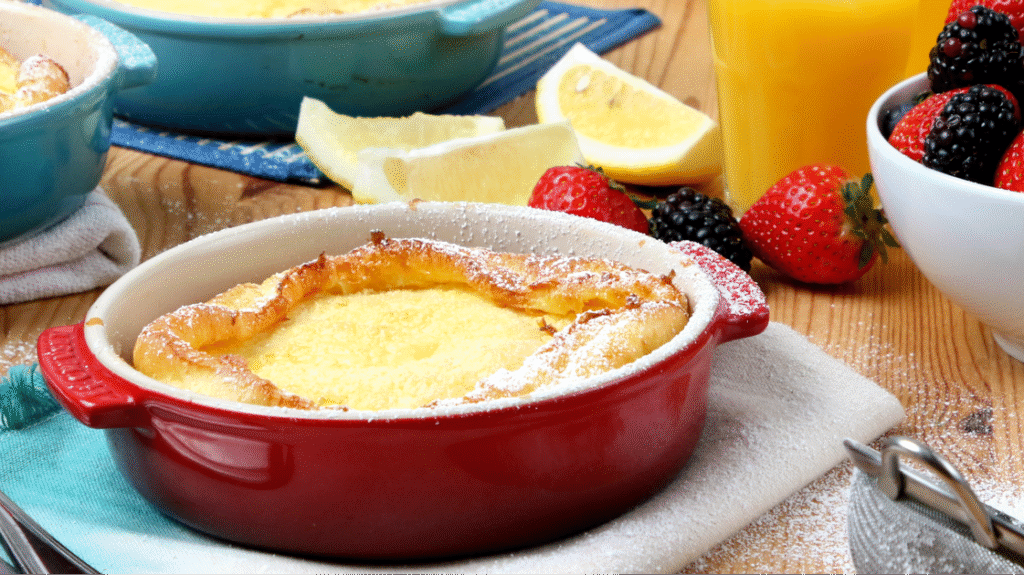
Remove the pancake once the edges are high and richly colored. It will deflate some within a minute or two, and that is completely normal.
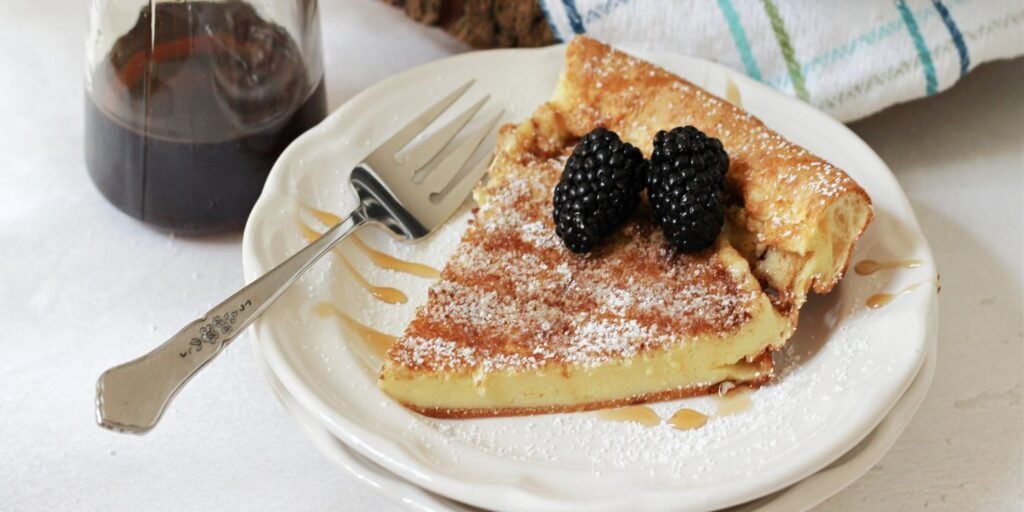
Dust with powdered sugar, squeeze over fresh lemon juice, then cut into wedges. Or take it in a sweeter direction with syrup and fruit.
Step 6: Add your own finish
This is where the recipe becomes yours. Keep it classic with lemon and sugar, go brunch-style with berries and whipped yogurt, or turn it cozy with cinnamon apples.
If you enjoy one-pan breakfasts, this recipe is a great starting point for seasonal variations.
Nutritional Information
Nutrition will shift based on toppings and substitutions, though a plain serving is fairly balanced for a rich breakfast dish. The estimate below assumes the pancake is divided into 4 servings before toppings.
| Nutrient per serving | Approximate amount |
|---|---|
| Calories | 290 to 320 |
| Protein | 9 to 11 g |
| Carbohydrates | 18 to 22 g |
| Fat | 17 to 19 g |
| Saturated fat | 8 to 10 g |
| Sugar | 2 to 4 g |
| Sodium | 180 to 260 mg |
Eggs and milk give german pancakes more protein than many sweet breakfast pastries, while the modest flour amount keeps the texture light instead of cakey. Most of the richness comes from butter, which is also what helps produce those irresistible browned edges.
Healthier Alternatives for the Recipe
You can make this breakfast lighter, higher in protein, or friendlier for specific diets without losing its essential character. The goal is to protect the puff and keep that tender center intact.
- Gluten-free: Use a cup-for-cup gluten-free flour blend; the pancake may be slightly more tender, but it still rises well.
- Dairy-free: Swap whole milk for unsweetened oat or almond milk and use vegan butter or avocado oil in the pan.
- Higher protein: Replace 2 whole eggs with 4 egg whites for more protein and a slightly leaner texture.
- Lower sugar: Skip sweet toppings and finish with berries, plain Greek yogurt, and a squeeze of lemon.
- Whole grain: Replace up to half the all-purpose flour with whole wheat flour for more fiber and a nuttier flavor.
If you want a sweeter bite without heavy syrup, roasted fruit is a smart move. Warm strawberries, peaches, or apples add moisture and flavor while keeping the pancake from feeling overloaded.
Serving Suggestions
German pancakes are flexible enough for a quiet weekday breakfast or a relaxed weekend brunch spread. The best toppings either play up the crisp edges or balance the custardy middle with brightness, freshness, or a little contrast.
- Lemon wedges and powdered sugar
- Warm maple syrup
- Fresh berries
- Sliced bananas with cinnamon
- Vanilla yogurt and toasted nuts
- Sautéed apples
For a savory version, skip the vanilla and top the baked pancake with crème fraîche, smoked salmon, chives, or sautéed mushrooms. It is a smart option when you want brunch to feel a little different.
Common Mistakes to Avoid
Most german pancake problems come down to temperature, mixing, or impatience. The recipe is forgiving, though it does reward a few disciplined habits.
| Mistake | What happens | Better approach |
|---|---|---|
| Using a cool pan | Weak rise, pale color | Preheat the skillet in the oven |
| Overmixing after adding flour | Tougher texture | Blend or whisk only until smooth |
| Opening the oven door early | Deflation, uneven baking | Keep the oven closed the whole time |
| Using cold eggs and milk | Less puff | Bring ingredients to room temperature first |
| Underbaking | Wet center | Wait for deep golden edges and a set middle |
| Oversized pan | Thin pancake, less lift | Use a 10 to 12-inch skillet |
One more tip: expect some collapse after baking. That dramatic rise is powered by steam, so a little settling is part of the recipe, not a failure.
Storing Tips for the Recipe
German pancakes are best right out of the oven, though leftovers can still be very good when stored properly. Food safety guidance generally recommends chilling cooked leftovers within 2 hours, and shallow containers help them cool more quickly.
- Refrigerator: Store slices in an airtight container for up to 3 to 4 days.
- Freezer: Layer pieces with parchment paper and freeze in a sealed bag for up to 2 months.
- Reheat in oven: Warm at 350°F for 8 to 10 minutes to bring back some edge crispness.
- Reheat in microwave: Heat in short bursts if speed matters, knowing the texture will be softer.
- Prep ahead: Blend the batter the night before, refrigerate it, then whisk briefly before baking.
If you know you will reheat leftovers, hold off on adding powdered sugar or syrup until serving time. That keeps the surface from turning sticky.
Ready to Make Breakfast More Interesting?
German pancakes turn pantry staples into a golden, puffed breakfast with crisp edges, a custardy center, and flexible toppings. Try this recipe, make it your own, then share your results in the review section or comments. If you want more easy breakfast ideas, subscribe for recipes and kitchen tips weekly.
FAQs
Are german pancakes actually German?
Not in the way most people assume. The oven-baked version popular in the United States is closely tied to American brunch culture, even though the name points to German roots. In Germany, pancakes are more often made on the stovetop.
Why didn’t my pancake puff up?
The most common causes are a pan that was not hot enough, cold ingredients, or opening the oven too soon. A hot skillet and a fully preheated oven give the batter the burst of heat it needs.
Can I make german pancakes without a cast-iron skillet?
Yes. Any sturdy oven-safe skillet or baking dish can work. Metal pans usually produce better browning and more lift than glass, though glass can still bake the pancake successfully.
Why does it collapse after I take it out?
That is normal. The rise comes from steam and heat. Once the pancake leaves the oven, it begins to settle. You still get the crisp edge, the airy ridges, and the soft center.
Can I make the batter ahead of time?
Yes. You can blend the batter and refrigerate it overnight. Give it a quick whisk before pouring it into the hot pan. The result may be slightly less lofty than a freshly blended batter, but it still works well.
What are the best toppings for beginners?
Start simple: powdered sugar and lemon juice. That classic combination lets you taste the pancake itself while adding brightness and just enough sweetness. After that, berries and maple syrup are easy crowd-pleasers.
