

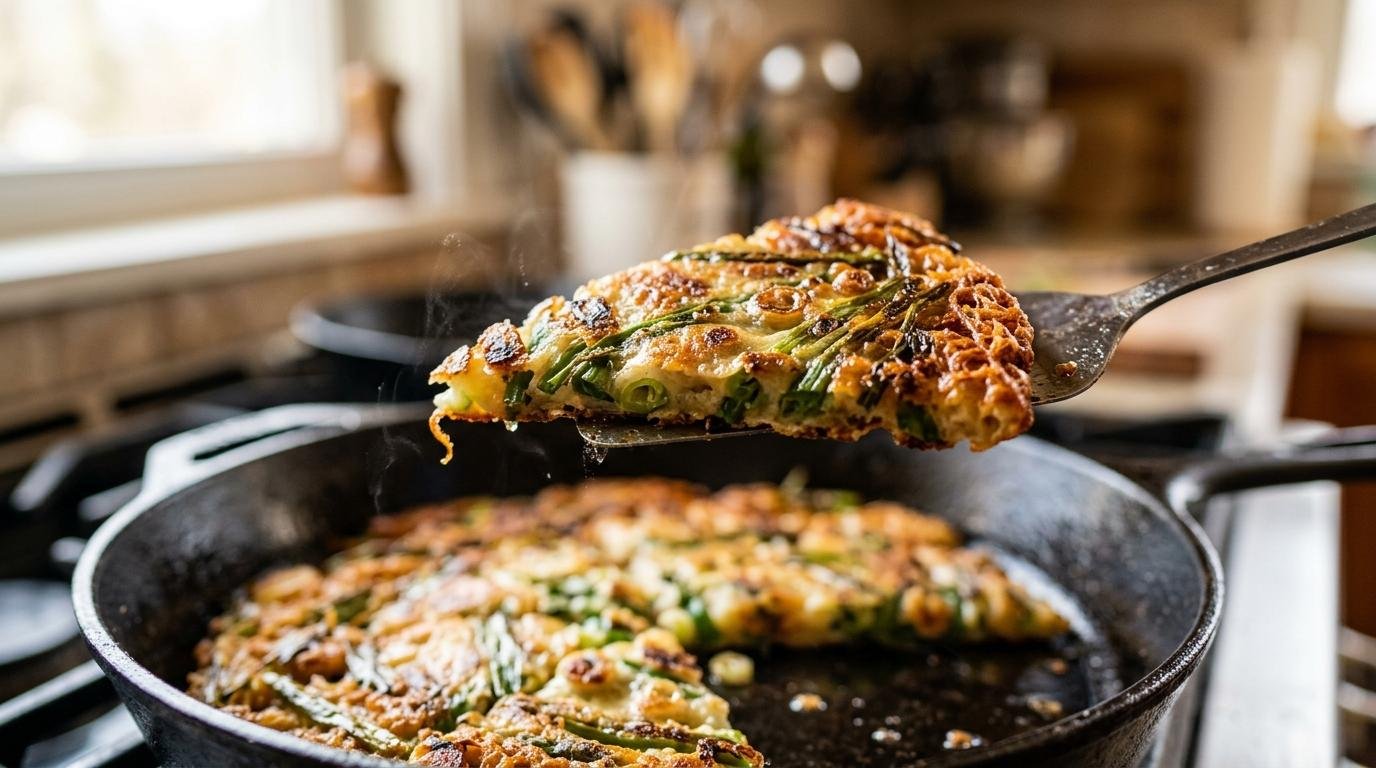
A truly good savory pancake announces itself before the first bite. You hear the sizzle, catch the aroma of scallions meeting hot oil, and know dinner is going to be better than expected.
Introduction
How can a Korean pancake cook in about 8 minutes, rely on a light batter, and still turn out crisp at the edges and tender in the center? That contrast is the reason pajeon and other styles of Korean pancake have stayed beloved for generations. The secret is not complicated. It comes from cold batter, fresh ingredients, enough oil, and the confidence to let the pan do its work.
In Korean cooking, these pancakes fall under the broader family of jeon or buchimgae. Some are built around scallions, some around kimchi, some around seafood, mung beans, potatoes, or zucchini. What unites them is balance. The batter should support the filling, not bury it. The surface should brown deeply. The dipping sauce should sharpen every bite.
This version centers on classic scallion Korean pancake, with an easy path to a seafood pancake if you want something closer to haemul pajeon. It is practical enough for a weeknight and special enough to share straight from the pan.
Ingredients List
The ingredient list is short, which means each one matters. Fresh scallions bring the signature aroma. Rice flour or cornstarch helps the crust stay light. Ice-cold water keeps the batter from turning heavy, and a simple soy dipping sauce gives the finished pancake that familiar salty, tangy lift.
- All-purpose flour: 1 cup, or use Korean pancake mix called buchimgaru for extra convenience
- Rice flour or cornstarch: 1/4 cup, for a crisper finish
- Ice-cold water: 3/4 to 1 cup, added gradually until the batter is loose but not watery
- Egg: 1 large, optional but helpful for color and gentle binding
- Fine salt: 1/2 teaspoon
- Scallions: 1 large bunch, trimmed and cut into 4-inch lengths
- Yellow onion: 1/2 small, thinly sliced
- Seafood: 3/4 cup chopped shrimp, squid, or a mixed seafood blend, optional
- Neutral oil: 3 to 4 tablespoons for frying
- Soy sauce: 2 tablespoons for dipping sauce
- Rice vinegar: 1 tablespoon for dipping sauce
- Toasted sesame oil: 1 teaspoon for dipping sauce
- Gochugaru or red pepper flakes: 1/2 teaspoon, optional
- Toasted sesame seeds: 1 teaspoon
If you are cooking from a pantry that is more flexible than traditional, the recipe still works beautifully. Swap part of the flour for potato starch, use chives when scallions are scarce, or make it vegetarian with thin mushrooms and shredded zucchini. What matters most is draining wet vegetables well so the batter stays lively in the pan.
Timing
This is one of the most rewarding parts of the recipe. A homemade Korean pancake can hit the table in about 25 minutes, which is faster than many skillet dinners and often quicker than waiting on takeout.
| Task | Time |
|---|---|
| Prep ingredients | 12 minutes |
| Mix batter and sauce | 5 minutes |
| Cook pancakes | 8 minutes |
| Total time | 25 minutes |
That short cooking window also explains why pan temperature matters so much. The batter has very little time to brown properly. A hot, well-oiled pan gives you the crisp finish that makes the whole dish feel authentic.
Step-by-Step Instructions
A Korean pancake is easy to make, though a few small choices can change the texture in a big way. Keep the batter cold, keep the fillings dry, and resist the urge to crowd the pan.
Step 1: Mix the dipping sauce first
Stir together soy sauce, rice vinegar, sesame oil, sesame seeds, and the gochugaru if using. Set it aside.
Making the sauce first has a quiet advantage. It gives the sesame and pepper a few minutes to settle into the soy mixture while you cook.
Step 2: Build a cold, light batter
In a medium bowl, whisk the all-purpose flour, rice flour or cornstarch, and salt. Add the egg if using, then pour in 3/4 cup ice-cold water. Whisk just until combined. If the batter looks too thick to coat a spoon lightly, add another tablespoon or two of water.
Do not overmix. A few small lumps are fine. Many experienced cooks prefer a batter that feels looser than expected because the fillings do part of the structural work.
Step 3: Prep the scallions and optional seafood
Cut the scallions into lengths that fit your skillet. Slice the onion thinly. If you are adding shrimp or squid, pat it very dry with paper towels and chop it into bite-size pieces.
This is the step that protects crispness. Excess moisture is one of the main reasons a pancake turns pale and soft.
Step 4: Heat the pan with confidence
Place a nonstick or well-seasoned skillet over medium-high heat and add 1 1/2 to 2 tablespoons of oil. The oil should shimmer, not smoke.
A hot pan gives you better browning in the first minute. If the pan is too cool, the batter absorbs oil and slumps. If it is too hot, the bottom darkens before the center sets.
Step 5: Arrange the filling and pour the batter
Lay most of the scallions in the pan in a loose layer. Scatter the onion and seafood over them. Pour about half the batter over the top, tilting the pan gently so everything is lightly coated.
This order creates a pancake with clear strands of scallion and a more dramatic surface, which is common in pajeon. If you prefer something simpler, fold the vegetables into the batter first and pour it all at once.
Step 6: Fry until deeply golden
Cook for 3 to 4 minutes, pressing lightly with a spatula now and then. When the underside is richly golden and the edges look set, flip carefully. Add a little more oil around the edges if needed and cook the second side for 3 to 4 minutes more.
Smaller pancakes are easier to flip and often taste better because they have more crisp edge per bite.
Step 7: Rest briefly, then slice
Transfer the pancake to a rack or plate for 1 minute, then cut into squares or wedges. Serve hot with the dipping sauce.
That quick rest keeps steam from softening the crust too fast. One minute is enough. Any longer and the best texture begins to fade.
Nutritional Information
The numbers below are estimates for one serving when the recipe makes four servings, using egg and no seafood. Add-ins will shift the totals slightly, especially sodium and protein.
| Nutrient | Approximate amount per serving |
|---|---|
| Calories | 190 |
| Carbohydrates | 24 g |
| Protein | 5 g |
| Fat | 8 g |
| Fiber | 1.5 g |
| Sodium | 430 mg |
A seafood Korean pancake usually raises protein without adding much extra carbohydrate. A version made with kimchi will usually bring more sodium but also more bold flavor, which means a little goes a long way at the table.
Healthier Alternatives for the Recipe
This dish is already fairly balanced, especially when it is served with vegetables and a light protein on the side. Still, a few adjustments can make it fit different goals without losing the character that makes it so satisfying.
- More fiber: Replace up to half the all-purpose flour with whole wheat pastry flour
- Lighter texture with less oil absorption: Use rice flour and keep the batter thin
- More protein: Add shrimp, squid, or extra egg whites
- Lower sodium: Use reduced-sodium soy sauce and skip extra salt in the batter
- Vegetarian option: Try mushrooms, zucchini, and shredded carrot
- Gluten-free path: Use a gluten-free flour blend plus rice flour, and check that your soy sauce is gluten-free
A kimchi pancake is another smart variation if you want more punch with very little extra work. Just chop the kimchi well, squeeze out excess liquid, and use some of its juice in place of part of the water.
Serving Suggestions
Korean pancake is flexible enough to move through the day. It can be a quick lunch, a snack with tea, or the centerpiece of an easy dinner with rice and a few simple sides.
Serve it with cucumber salad, steamed rice, or a bowl of light soup if you want a fuller meal. If you are cooking for a group, make two smaller pancakes instead of one large one. They stay crisp longer and look more generous on the platter.
For a more traditional feel, pair it with chilled sparkling water or, for those who enjoy it, a lightly fizzy rice drink. The contrast between hot pancake and cold, clean sips is part of the appeal. A side of kimchi, pickled radish, or leafy greens also brings welcome brightness.
Common Mistakes to Avoid
Most Korean pancake problems come from texture, not flavor. The ingredients are usually good. The pan method just needs a little adjustment.
- Batter that is too thick
- Wet seafood or vegetables
- A pan that was not fully preheated
- Too little oil for proper browning
- Flipping before the first side has set
- Letting the cooked pancake sit too long before serving
If your first pancake is not perfect, that is normal. Use it as feedback. If it looks pale, raise the heat slightly. If it burns before it firms up, lower the heat and thin the pancake a bit more. The second round is usually excellent.
Storing Tips for the Recipe
Korean pancake is best eaten right away, when the crust is still vivid and the center is just set. That said, leftovers can still be very good if they are cooled properly and reheated in a skillet or air fryer.
Store slices in an airtight container in the refrigerator for up to 2 days. Place parchment between layers if stacking. Reheat in a dry skillet over medium heat for 2 to 3 minutes per side, or air fry at 375°F for 3 to 4 minutes. Avoid the microwave if crispness matters to you.
You can also prep ahead by slicing scallions, mixing the dipping sauce, and measuring the dry ingredients earlier in the day. Wait to add the cold water until just before cooking so the batter keeps its best texture.
Crisp edges, tender centers, fresh scallions, and a sharp soy dip make this Korean pancake a smart recipe to keep on repeat. Try it this week, then share your results in the comments or review section, and subscribe for more easy recipe updates from RecipesP.
FAQs
What is the difference between pajeon and other Korean pancakes?
Pajeon is a scallion-based Korean pancake. The word pa means scallion. Other pancakes in the jeon family may use kimchi, seafood, mung beans, potatoes, zucchini, or stuffed vegetables.
Can I make Korean pancake without Korean pancake mix?
Yes. All-purpose flour plus rice flour or cornstarch gives an excellent result. Korean pancake mix is convenient, but it is not required for a crisp, flavorful pancake.
Why does cold water matter in the batter?
Cold water helps keep the batter lighter and slows gluten development. In practice, that means a pancake that feels less bready and more delicate when fried.
Can I make it ahead for a party?
You can cook it slightly ahead, then re-crisp it in a skillet or a hot oven. For the best texture, keep the pancakes smaller and serve them in batches rather than all at once.
What oil works best?
A neutral oil with a relatively high smoke point is ideal. Canola, avocado, grapeseed, or sunflower oil all work well. Save toasted sesame oil for the dipping sauce or a tiny finishing drizzle.
Is kimchi pancake made the same way?
The method is very similar. Kimchi pancake usually uses chopped aged kimchi, some kimchi juice, and sometimes a slightly thicker batter. It has a deeper, tangier flavor and a vivid red color.
