
A great kimchi pancake feels almost unfair in the best way: a handful of everyday ingredients, one hot pan, and suddenly dinner, snack time, or a late-night craving is handled.
Introduction
If many published kimchi pancake recipes come together in about 13 to 20 minutes, why do so many home versions still turn out soft, oily, or gummy instead of crisp and deeply savory?
The answer is usually simple. A truly good kimchi pancake, also called kimchijeon, depends on three things: ripe fermented kimchi, a loose cold batter, and enough hot oil to fry the surface quickly. Get those right, and this Korean savory pancake becomes one of the fastest high-reward dishes you can make at home. It delivers tang, heat, crunch, and a little chew in every bite.
What makes it especially appealing is its flexibility. It can be a quick lunch, a sharable appetizer, a side for soup, or a light dinner with rice and vegetables. It also works beautifully with pantry staples, which is one reason it has stayed so popular with home cooks.
Ingredients List
The ingredient list is short, but each item has a job. Older kimchi brings the strongest flavor, kimchi brine adds depth and color, and a blend of flour with starch helps create the crisp edge that many people want.
- 1 cup well-fermented kimchi, chopped into bite-size pieces
- 2 to 3 tablespoons kimchi brine
- 2 scallions, thinly sliced
- 1/2 cup all-purpose flour
- 1/4 cup potato starch or sweet rice flour
- 1/2 cup ice-cold water or cold sparkling water
- 1/2 teaspoon sugar
- Pinch of salt, only if needed
- 1/2 teaspoon gochugaru, optional, for more heat and color
- Neutral oil for frying, like canola, avocado, or vegetable oil
A few smart swaps work very well. If you do not have potato starch, cornstarch can help with crispness. If your kimchi is mild rather than sharp, a small splash of rice vinegar can wake it up. If you want a gluten-free kimchi pancake, use a mix of rice flour and potato starch in place of wheat flour. For a vegan version, simply use vegan kimchi, since some brands include fish sauce or shrimp.
Timing
This is one of the faster skillet recipes you can add to a weeknight routine.
Many kimchi pancake recipes finish in under 20 minutes total, which puts them in the same quick-cook category as scrambled eggs, quesadillas, or thin flatbreads. The real time saver is that the batter does not need a long rest, and the filling is already seasoned.
| Stage | Time | What happens here |
|---|---|---|
| Prep | 7 minutes | Chop kimchi, slice scallions, mix batter |
| Cook | 8 to 10 minutes | Fry first side, flip, crisp second side |
| Total | 15 to 17 minutes | From cutting board to plate |
If you make two smaller pancakes instead of one large one, flipping gets easier and the cook time stays about the same.
Step-by-Step Instructions
Step 1: Prep the kimchi carefully
Chop the kimchi into short pieces rather than leaving long cabbage strips. This makes the pancake easier to spread, cook, slice, and flip. It also keeps every bite balanced instead of giving you one giant string of cabbage in the middle.
Use well-fermented kimchi if possible. The sourer, funkier flavor stands up much better once it hits the heat. Fresh kimchi can still work, though it often tastes flatter in the finished pancake. If needed, add a small splash of vinegar to sharpen it.
Step 2: Mix the batter just until combined
In a bowl, stir together the flour, starch, sugar, and optional gochugaru. Add the cold water and kimchi brine, then stir until no dry pockets remain. Fold in the kimchi and scallions last.
Stop mixing as soon as the batter looks even. That matters more than it may seem. Overmixing develops more gluten, which leads to a tougher, denser pancake. The batter should be loose and pourable, closer to heavy cream than biscuit dough. If it looks thick, add another tablespoon of cold water.
Step 3: Heat the pan properly
Set a skillet over medium-high heat and let it warm up fully before adding oil. A hot pan helps the batter start frying right away instead of soaking up oil.
Add enough oil to coat the bottom generously. This is not the moment to be timid. Kimchi pancake gets its signature texture from shallow frying, not dry pan cooking. When the oil shimmers, the pan is ready.
Step 4: Spread the batter thin
Pour the batter into the skillet and spread it into a thin round with the back of a spoon or spatula. Thin is your friend here. A thick pancake can taste nice, but it is harder to crisp and more likely to stay wet in the center.
Once the batter is in the pan, leave it alone for the first few minutes. Let the bottom set and brown. If you push it around too soon, it may tear and lose structure.
Step 5: Flip with confidence
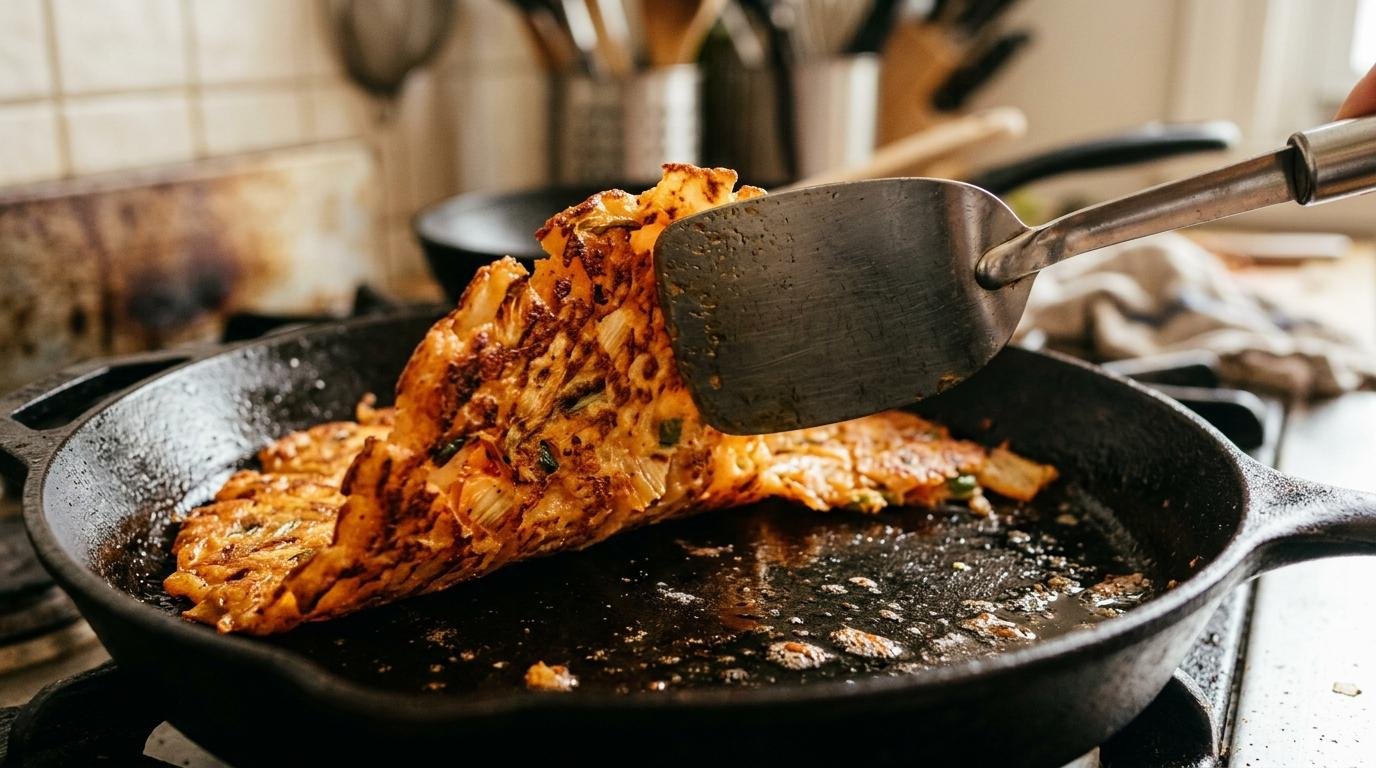
When the edges look firm and the bottom is deeply golden, slide a spatula underneath and flip. Add a little more oil around the edges right after turning so the second side fries just as well as the first.
Cook until the second side is crisp and browned. If you want even more crunch, lift the pancake slightly and tilt the pan so a little oil runs underneath. That simple move helps prevent a soggy center.
Step 6: Rest briefly, then slice
Transfer the kimchi pancake to a rack or paper towel for a minute, then cut it into wedges or strips. A short rest helps the exterior stay crisp.
Serve it hot with a dipping sauce made from soy sauce, rice vinegar, and a touch of sesame oil, or keep it plain and let the kimchi flavor lead.
Nutritional Information
Nutrition varies quite a bit with oil use, pancake size, and whether you serve it as a snack, side, or main dish. Published estimates for kimchi pancake often swing upward fast when more oil is used, which means the cooking method matters as much as the ingredient list.
For one large pancake cut into 4 wedges, a standard home-cooked version usually lands in this range per wedge:
| Nutrient | Approximate amount per wedge |
|---|---|
| Calories | 180 to 210 |
| Carbohydrates | 18 to 22 g |
| Protein | 3 to 4 g |
| Fat | 10 to 12 g |
| Fiber | 1 to 2 g |
| Sodium | 350 to 550 mg |
Kimchi also contributes cabbage-based fiber, fermentation byproducts, and small amounts of vitamins, though sodium can rise quickly. If you add a salty dipping sauce, the total climbs again.
Healthier Alternatives for the Recipe
If you want a lighter kimchi pancake, the easiest adjustment is reducing absorbed oil without giving up all the crispness. A good nonstick skillet helps, and an air fryer or hot oven can cut calories noticeably. The tradeoff is texture: pan-frying still gives the richest crust.
You can also shift the flour blend. Replacing part of the all-purpose flour with buckwheat flour adds a nuttier taste and more fiber. Keeping some starch in the mix is still wise, since it helps the pancake stay lighter and crisper. A gluten-free version can work very well with rice flour plus potato starch.
For extra protein, fold in small cubes of firm tofu, chopped shrimp, or edamame. If you want more vegetables, grated zucchini or carrots are excellent, but squeeze out excess moisture first so the batter does not get watery.
Serving Suggestions
Kimchi pancake is bold enough to stand on its own, yet it pairs easily with lighter foods that balance its richness.
- Classic dipping sauce: soy sauce, rice vinegar, sesame seeds, and sliced scallion
- Light lunch plate: cucumber salad, steamed rice, and a soft-boiled egg
- Party snack: cut into small squares with toothpicks and a spicy soy dip
- Cozy dinner: serve beside miso soup, broth-based noodles, or grilled tofu
It also fits beautifully into a casual family meal because it can be sliced like pizza and passed around at the table.
Common Mistakes to Avoid
Most kimchi pancake problems come back to batter texture, pan heat, or oil management.
- Thick batter: a dense batter makes the center heavy and pasty; thin it with cold water one tablespoon at a time
- Too little oil: low oil often creates a soft, greasy pancake instead of a crisp one
- Cold pan: batter poured into a barely warm skillet absorbs oil before it can brown
- Overmixing: too much stirring builds gluten and creates chew where you want lightness
- Flipping too early: wait until the edges are set and the underside is golden before turning
- Large kimchi pieces: long strips catch, tear, and make slicing awkward
If your first pancake is not perfect, treat it as a test batch. Small changes in thickness, heat, and oil usually fix the next one immediately.
Storing Tips for the Recipe
Leftover kimchi pancake keeps well, though it is always best on day one. Let it cool completely, then store it in an airtight container in the refrigerator for up to 3 to 4 days. If stacking pieces, place parchment between them so they do not stick together.
For longer storage, freeze individual portions with parchment between layers. Reheat from chilled or thawed in a skillet, toaster oven, or oven at 350°F until hot and re-crisped. Skip the microwave if you can, since it softens the crust quickly.
Ready to Cook?
Ripe kimchi, cold loose batter, a hot pan, and enough oil turn a simple mix of pantry ingredients into a crisp, savory kimchi pancake with real depth. Try it this week, share your result in the review section or comments, and subscribe for more easy recipe updates from the kitchen.
FAQs
Can I make kimchi pancake without Korean pancake mix?
Yes. A mix of all-purpose flour and potato starch works very well. Korean pancake mix is convenient, though it is not required for a crisp result.
Why is my kimchi pancake not crispy?
The usual causes are batter that is too thick, a pan that is not hot enough, or not enough oil in the skillet. Spreading the batter thin also makes a big difference.
What kind of kimchi is best?
Well-fermented napa cabbage kimchi is the top choice. Older kimchi has a stronger sour, savory flavor that comes through clearly after frying.
Can I make it vegan?
Absolutely, as long as your kimchi is vegan. Many recipes are naturally egg-free, so the only thing to check is whether the kimchi contains fish sauce, anchovy, or shrimp.
Can I make the batter ahead of time?
You can prep the chopped kimchi and dry ingredients ahead, but the full batter is best mixed shortly before cooking. That keeps the texture lighter and helps the pancake fry cleanly.
What should I serve with kimchi pancake?
A simple dipping sauce, steamed rice, pickled vegetables, soup, or a crisp salad all work well. If you want a more filling meal, add grilled tofu, eggs, or a bowl of noodles.
