


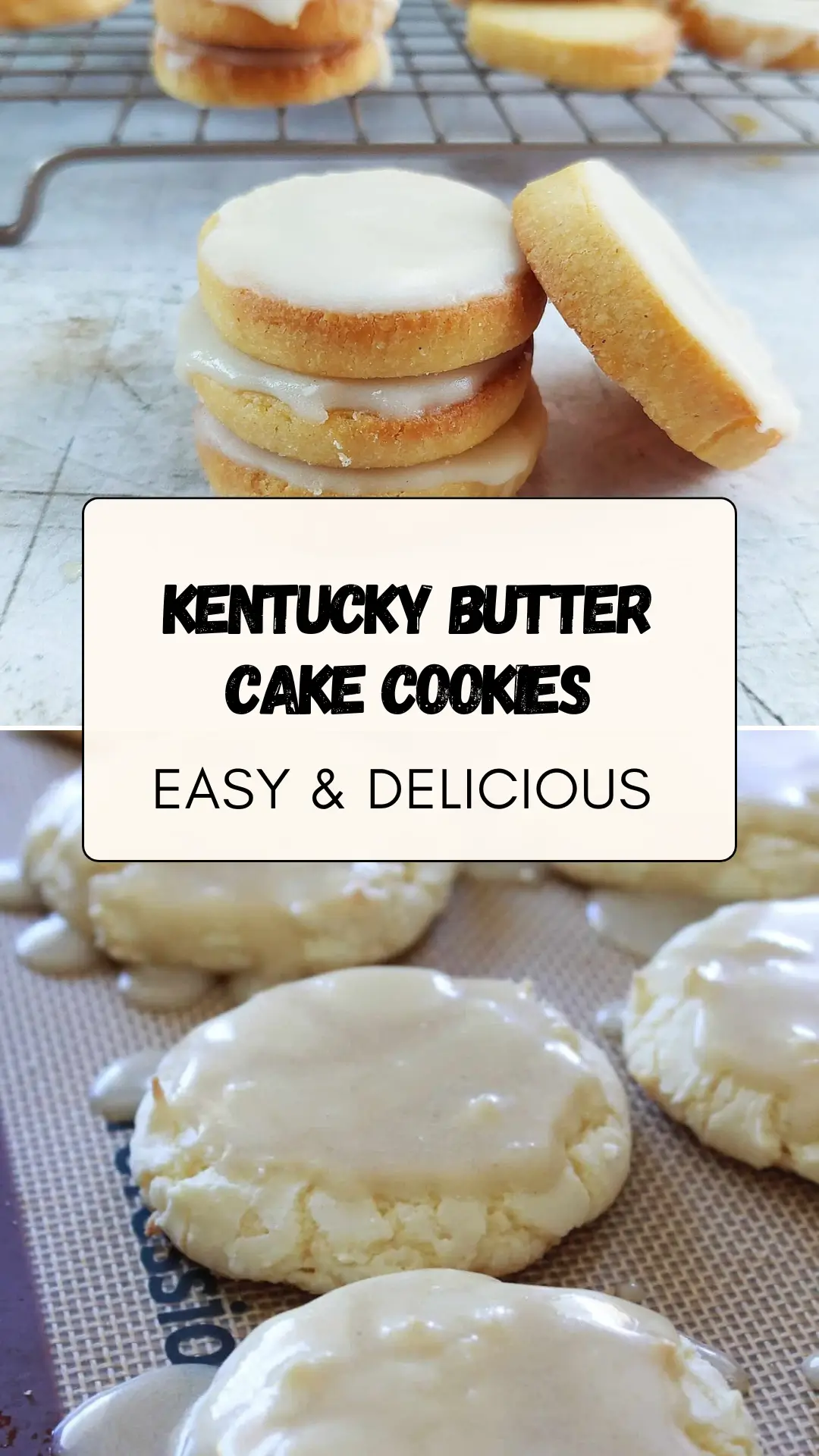
Kentucky butter cake has a reputation for being simple, rich, and a little bit magical: a tender crumb, deep vanilla notes, and that buttery finish that tastes like it seeped into every pore of the cake. Turning those flavors into cookies gives you the same comfort in a smaller package, with crisp edges and a soft center that stays plush for days.
These cookies are not meant to be dainty. They are the kind you stack on a plate for neighbors, wrap for bake sales, or keep in a tin “just in case” someone needs a sweet bite after dinner.
What makes these cookies taste like Kentucky butter cake?
The signature flavor comes from a few familiar building blocks working together. You are aiming for a cookie that tastes like warm vanilla butter cake, not a plain sugar cookie.
A few details matter:
- A good amount of butter for richness and spread control
- Vanilla (and often a little almond) for that bakery style aroma
- A buttery glaze brushed on while the cookies are warm, which soaks in and sets with a faint sheen
That last step, the glaze, is where the “butter cake” part really lands.
Ingredients and why they matter
You can make these with standard pantry staples. The key is using them on purpose: room temperature butter, the right amount of flour, and a glaze that is thin enough to soak in.
Here is a practical snapshot of what each ingredient does.
| Ingredient | What it contributes | Notes |
|---|---|---|
| Unsalted butter | Flavor, tenderness, spread | Room temp for the dough; melted in the glaze |
| Granulated sugar | Sweetness, crisp edges | Helps create that light crackle on top |
| Eggs | Structure and moisture | Room temp mixes in more evenly |
| Vanilla extract | Classic butter cake flavor | Use pure extract if you can |
| Almond extract (optional) | “Bakery” aroma | A tiny amount goes a long way |
| All-purpose flour | Body and chew | Spoon and level for accuracy |
| Baking powder | Lift and softness | Helps the centers stay tender |
| Salt | Balances sweetness | Do not skip, even in sweet cookies |
| Milk (for glaze) | Thins glaze so it absorbs | Whole milk tastes richest |
Equipment you will want nearby
Having the basics set out keeps the dough from warming too much while you hunt for tools.
- Mixing bowls
- Hand mixer or stand mixer
- Cookie scoop (about 1.5 tablespoons)
- Parchment paper or silicone mats
- Small saucepan for the glaze
- Pastry brush
The recipe: Kentucky butter cake cookies
This version is built for a soft, buttery cookie with lightly crisp edges and a soak-in butter glaze.
Ingredients (cookies)
- 1 cup (226 g) unsalted butter, room temperature
- 1 1/4 cups (250 g) granulated sugar
- 2 large eggs, room temperature
- 2 teaspoons vanilla extract
- 1/4 teaspoon almond extract (optional)
- 3 cups (360 g) all-purpose flour
- 2 teaspoons baking powder
- 3/4 teaspoon fine salt
Ingredients (butter glaze)
- 4 tablespoons (57 g) unsalted butter
- 3 tablespoons milk
- 1 1/2 cups (180 g) powdered sugar
- 1 teaspoon vanilla extract
- Pinch of salt
Steps
- Prep. Heat oven to 350°F. Line two baking sheets with parchment.
- Mix dry ingredients. Whisk flour, baking powder, and salt in a bowl.
- Cream butter and sugar. Beat butter and sugar for 2 to 3 minutes until fluffy and paler. Scrape the bowl.
- Add eggs and extracts. Beat in eggs one at a time. Mix in vanilla (and almond if using).
- Add dry ingredients. Mix in the flour mixture on low speed just until no dry streaks remain. The dough will be soft but scoopable.
- Scoop. Portion into 1.5 tablespoon mounds, spaced about 2 inches apart.
- Bake. Bake 9 to 11 minutes, until the edges look set and the tops look matte. The centers should still be soft.
- Make glaze. While the cookies bake, melt butter in a small saucepan over low heat. Stir in milk, then whisk in powdered sugar, vanilla, and a pinch of salt until smooth. Keep it warm and brushable.
- Glaze warm cookies. Let cookies cool on the sheet for 3 minutes, then brush a thin layer of glaze over each cookie. After 10 minutes, brush a second light layer if you want a stronger butter cake finish.
- Cool and set. Move cookies to a rack until the glaze sets.
Timing, doneness, and why these cookies can go wrong
Butter-forward cookies walk a narrow line. One extra minute can turn soft centers into dry cake crumbs, and too little time can leave them gummy.
Here is a quick guide you can use without overthinking it.
| What you see | What it means | What to do next time |
|---|---|---|
| Shiny top and wet-looking center | Underbaked | Add 1 to 2 minutes |
| Matte top, edges set, center puffy | Just right | Keep the same bake time |
| Deep golden edges, flat centers | Overbaked | Pull 1 to 2 minutes earlier |
| Cookies spread a lot | Dough too warm or butter too soft | Chill dough 20 minutes |
A single small trick that helps a lot
Let the cookies sit on the hot baking sheet for a few minutes before moving them. That carryover heat finishes the centers gently.
Getting the glaze exactly right
The glaze should be thin enough to soak into the warm cookie, not sit on top like frosting. If it looks thick and pasty, add milk by the teaspoon. If it looks watery and runs off completely, whisk in powdered sugar by the tablespoon.
A good target is a glaze that coats the back of a spoon but drips off in a steady ribbon.
If you like a stronger “Kentucky butter” vibe, use two light coats instead of one heavy one. A thick coat can set crunchy and distract from the tender cookie underneath.
Flavor options that still taste like butter cake
Once you have the base recipe down, small changes can keep it interesting without losing the signature profile. Keep the butter and vanilla at center stage, then pick one supporting note.
Here are a few reliable ideas:
- Browned butter twist: Brown the butter for the dough, then chill until solid and bring back to cool room temperature before creaming.
- Citrus finish: Add 1 teaspoon lemon or orange zest to the sugar before creaming, and swap the glaze vanilla for citrus juice plus a little zest.
- Warm spice hint: Add 1/4 teaspoon nutmeg to the flour mixture for a cozy bakery smell.
- Toasted pecans: Stir in 3/4 cup chopped toasted pecans for a butter-pecan feel.
Common problems and quick fixes
Even a straightforward cookie can act up depending on flour, butter temperature, and oven quirks. If you want to troubleshoot fast, focus on texture first, then flavor.
- Dry and crumbly: Bake time was too long, or flour was over-measured. Spoon and level flour, and pull cookies when the centers still look slightly soft.
- Puffy and bready: Too much flour or baking powder, or overmixing after adding flour. Mix only until combined.
- Too sweet: Skip the second glaze coat, or add a bigger pinch of salt to the glaze.
- Glaze grainy: Powdered sugar was not fully whisked in, or the glaze cooled too much. Warm gently and whisk again.
Storage and make-ahead notes
These cookies hold well because the glaze locks in moisture. Once the glaze is set, store them in an airtight container at room temperature.
A few practical tips:
- Room temperature: 3 to 4 days, with parchment between layers
- Freezer: Freeze fully cooled, glazed cookies in a tight container up to 2 months
- Dough ahead: Scoop dough balls and freeze on a tray, then store in a bag; bake from frozen with 1 to 2 extra minutes
If you plan to freeze, glaze after baking for the best texture. Glaze can get slightly tacky after thawing, though it still tastes great.
Serving ideas that match the vibe
These cookies are rich, so pairing them with something simple works best. Milk is classic. Coffee is even better, especially with the vanilla-butter aroma.
They also fit right in on a dessert board with fruit, salted nuts, and something dark like bittersweet chocolate. The contrast keeps each bite from feeling heavy.
A few small upgrades that feel “bakery style”
If you want that tidy, professional look without turning this into a fussy project, focus on shape and sheen.
After you pull the cookies from the oven, you can swirl a large round cutter around each cookie while it is still hot on the pan. It nudges the edges into a cleaner circle. Then brush on the first glaze coat while the surface is warm enough to absorb it.
The result is still homey. It just looks a little more intentional, like it came from a good local bakery that knows how to keep things simple.
