
Can a 10-minute rest and a small dose of starch really turn a flat gluten free pancake recipe into a breakfast stack with real height? In many test kitchens, the answer is yes. Gluten-free batters behave differently from wheat batters, and a few smart adjustments, especially batter consistency, resting time, and pan temperature, make the difference between gummy discs and fluffy pancakes worth waking up for.
Introduction
A good gluten-free breakfast should feel generous, not like a compromise. That is exactly why this gluten free pancake recipe focuses on texture first. The batter is thick and creamy, the flour blend includes extra starch for lift, and the cooking method protects the air bubbles that create a tender crumb.
Research and recipe testing point to the same pattern. Gluten-free pancakes tend to improve when the batter rests for 10 to 15 minutes, when the flour blend includes both structure and starch, and when the pan stays at a steady medium heat. Fresh baking powder matters too. Even a strong recipe can fall flat if the leavener is old or the batter is overmixed.
This version is designed for home cooks who want pancakes that look classic, taste familiar, and work on a busy morning.
Ingredients List
The ingredient list is simple, but each item has a job. If you are cooking for someone with celiac disease, make sure the flour blend, baking powder, vanilla, and any toppings are certified gluten-free, and use a clean skillet or griddle.
- 1 cup gluten-free all-purpose flour blend
- 2 tablespoons tapioca starch
- 2 tablespoons granulated sugar
- 1 1/2 teaspoons baking powder
- 1/4 teaspoon baking soda
- 1/4 teaspoon fine salt
- 1/4 teaspoon xanthan gum, only if your flour blend does not already include it
- 1 cup milk or buttermilk
- 1 teaspoon apple cider vinegar, if using regular milk
- 1 large egg
- 2 tablespoons melted butter or neutral oil
- 1 teaspoon vanilla extract
If you like mixing your own flour blend, a reliable target is about 60% whole-grain gluten-free flour and 40% starch. Rice flour plus tapioca starch works well. Oat flour adds a softer, sweeter note, while sorghum can create a more cake-like crumb.
Timing
This recipe is fast enough for a weekday and polished enough for a weekend brunch. You need about 10 minutes to mix, 10 minutes to rest the batter, and 12 minutes to cook. Total time is roughly 32 minutes.
That is meaningfully quicker than yeasted pancake methods, which often need close to an hour once proofing time is included. Here, the resting period does the heavy lifting by hydrating the flour and giving the leaveners time to start working.
Step-by-Step Instructions
Step 1: Combine the dry ingredients
In a medium bowl, whisk together the gluten-free flour blend, tapioca starch, sugar, baking powder, baking soda, salt, and xanthan gum if needed. Whisking first helps distribute the leaveners evenly, which supports a more even rise in every pancake.
This is also the moment to check your flour. If it looks compacted, break up any lumps with the whisk so the batter stays smooth without aggressive mixing later.
Step 2: Mix the wet ingredients
In a second bowl, whisk the milk, vinegar if using, egg, melted butter, and vanilla until smooth. If you are using buttermilk, skip the vinegar. The acid helps the baking soda react, which gives the pancakes extra puff and better browning.
Let the wet mixture sit for a minute if you used milk and vinegar. It will lightly thicken and act a bit more like buttermilk.
Step 3: Make the batter and let it rest
Pour the wet ingredients into the dry ingredients and stir gently until no dry streaks remain. A few small lumps are fine. Stop as soon as the batter looks thick and creamy.
Let the batter rest for 10 minutes. This short pause is one of the most useful moves in a gluten free pancake recipe. It gives the starches time to absorb liquid, improves cohesion, and usually leads to a fluffier interior. If the batter becomes too thick after resting, loosen it with 1 to 2 tablespoons of milk.
Step 4: Preheat the pan correctly
Heat a nonstick skillet or well-seasoned griddle over medium heat. Add a light film of butter or oil. A surface around 375°F is ideal, though most home cooks can simply watch for a gentle sizzle when a drop of batter hits the pan.
Do not rush this part. A pan that is too cool makes pale, dense pancakes. A pan that is too hot browns the outside before the center sets.
Step 5: Cook the first side
Scoop about 1/4 cup of batter per pancake onto the skillet. Leave space between them and do not spread the batter with the back of the spoon. The thicker shape helps the pancakes rise upward instead of outward.
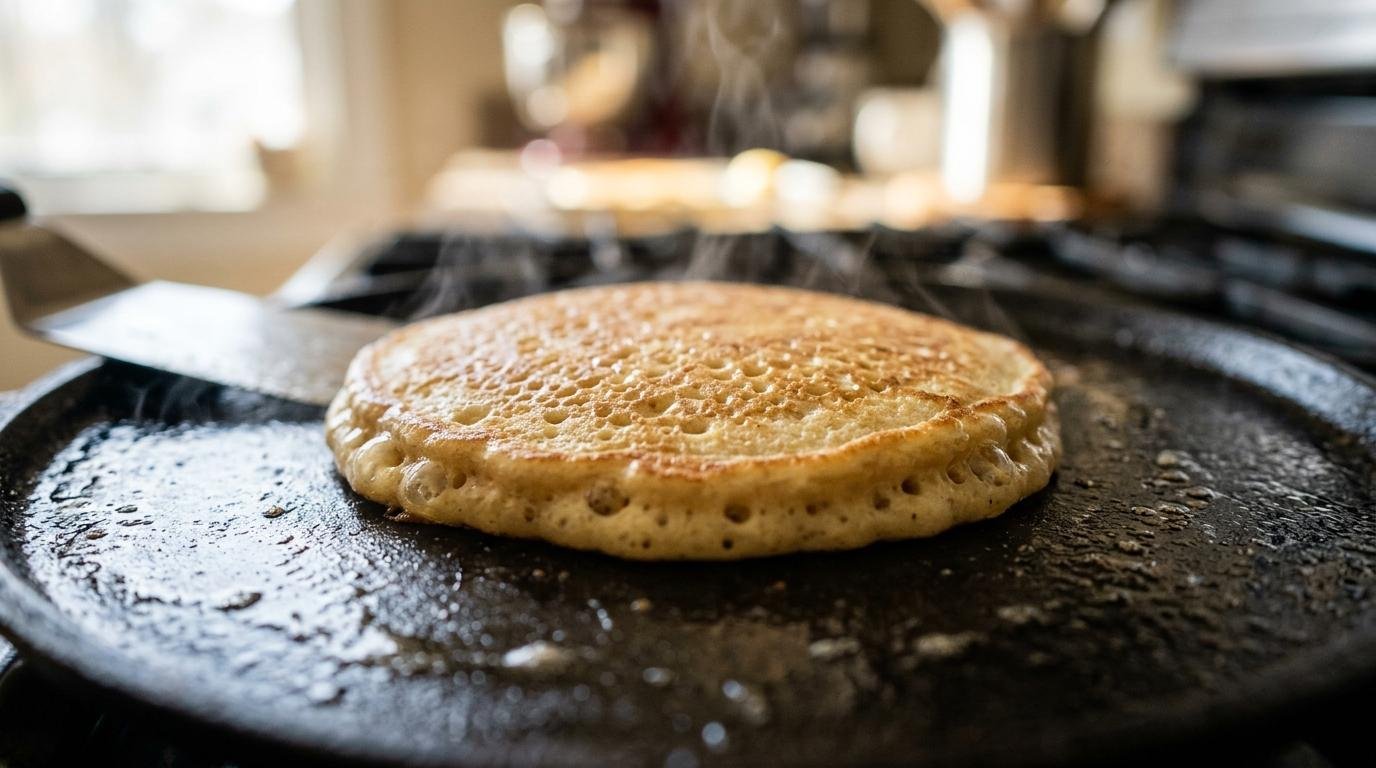
Cook for 2 to 3 minutes, until bubbles appear on the surface and the edges begin to look set. Those visual cues matter more than the clock.
Step 6: Flip once and finish gently
Flip each pancake carefully and cook for another 1 to 2 minutes, until the second side is golden and the center feels springy. Avoid pressing down with the spatula. That squeezes out the air pockets you just built.
Transfer cooked pancakes to a warm oven, about 200°F, if you are making a full batch. Serve them while the edges are still tender and the centers are soft.
Nutritional Information
The exact numbers depend on the flour blend and milk you choose, but this gives a realistic estimate for a serving of 2 medium pancakes before toppings.
| Nutrient | Approximate amount |
|---|---|
| Calories | 215 |
| Carbohydrates | 31 g |
| Protein | 5 g |
| Fat | 8 g |
| Fiber | 2 g |
| Sugar | 8 g |
| Sodium | 330 mg |
If you top these with fruit and Greek yogurt, the meal becomes more filling and protein-rich. If you use maple syrup and butter, expect the calorie count to climb, but the texture payoff can be excellent.
Healthier Alternatives for the Recipe
This recipe is flexible, which is one reason it works well for family cooking. You can shift it toward higher protein, dairy-free, or egg-free without losing the soft interior that makes pancakes feel comforting.
- For more fiber: Replace 1/4 cup of the flour blend with certified gluten-free oat flour.
- For dairy-free pancakes: Use almond milk, soy milk, or oat milk, plus oil instead of butter.
- For egg-free pancakes: Swap the egg for 3 tablespoons aquafaba or a flax egg.
- For less sugar: Reduce the sugar to 1 tablespoon and rely on fruit toppings for sweetness.
If you want a richer nutritional profile, add a tablespoon of ground flax or chia. The texture will be slightly heartier, though still tender if the batter stays thick and creamy.
Serving Suggestions
These pancakes shine with classic toppings, but they also welcome small upgrades. Warm maple syrup, salted butter, and fresh berries are hard to beat. A quick berry compote, made by simmering frozen berries with a spoonful of sugar, adds brightness and color without much effort.
You can also serve this gluten free pancake recipe with Greek yogurt, sliced bananas, toasted nuts, or cinnamon apples. For a more balanced breakfast plate, add scrambled eggs, turkey sausage, or a smoothie. If you like sweet-and-savory breakfasts, a little crispy bacon beside the stack works beautifully.
Quick Recap
These pancakes stay fluffy because the batter is thick and creamy, lightly mixed, rested for 10 minutes, and cooked on medium heat. Try the recipe this week, then share a review, leave a comment on the blog, and subscribe for more easy breakfasts, weeknight dinners, and smart cooking tips soon.
Common Mistakes to Avoid
Most pancake failures come from a few repeat issues, and they are easy to fix once you know what to watch for.
- Overmixing the batter
- Skipping the 10-minute rest
- Using expired baking powder
- Pressing the pancakes after flipping
- Cooking on heat that is too high or too low
One more problem deserves attention: using a flour that is too heavy on its own. Almond flour alone, while flavorful, usually makes a denser pancake. A blend with starch gives better lift and a more classic pancake bite.
Storing Tips for the Recipe
These pancakes store surprisingly well. Let them cool completely, then refrigerate in an airtight container for up to 3 days. Place parchment between layers if you want to keep them from sticking together.
For longer storage, freeze them in a single layer first, then transfer to a freezer bag. Reheat in a toaster, skillet, or low oven until warmed through. If you want to prep ahead, mix the dry ingredients the night before and combine with the wet ingredients in the morning. That keeps the leaveners at their strongest.
FAQs
Can I use almond flour only?
You can, but the result will be much denser and more cake-like. For a fluffier stack, use a gluten-free all-purpose blend and add a little tapioca or potato starch.
Why did my pancakes turn out gummy?
The usual reasons are overmixing, too much xanthan gum, or a pan that was not hot enough. A gummy center can also happen when the batter is too thick and the outside finishes before the middle sets.
Can I make the batter ahead of time?
Yes, though same-day batter gives the best rise. If you refrigerate it overnight, stir gently before cooking and add a splash of milk if it thickens too much.
What is the best milk for fluffy gluten-free pancakes?
Buttermilk gives excellent lift and flavor because its acidity reacts with baking soda. If you need a dairy-free option, soy milk or almond milk with a teaspoon of vinegar works well.
How do I keep pancakes warm for a crowd?
Place cooked pancakes on a baking sheet in a 200°F oven. Keep them in a single layer at first so steam does not make them soggy.
Can I add blueberries or chocolate chips?
Absolutely. Sprinkle them onto the pancakes after the batter hits the skillet rather than stirring them into the bowl. That helps keep the batter light and prevents excess streaking or sinking.
