
Few breakfasts feel as instantly comforting as buttermilk pancakes. They look simple, yet a truly fluffy stack depends on a few quiet details: the right balance of acid and leavening, a gentle hand with the batter, and just enough heat to brown the outside while the center stays tender.
Introduction
Why do side-by-side kitchen tests so often show that a briefly rested pancake batter cooks up thicker and softer than one rushed straight to the pan?
That question gets to the heart of a great breakfast. Buttermilk is not there just for tang. Its acidity reacts with baking soda, helping create tiny gas bubbles that lift the batter. At the same time, buttermilk adds richness without making the pancakes heavy. When the batter is mixed lightly and given a short rest, those bubbles hold better, and the flour hydrates more evenly.
The result is a stack with crisp golden edges, a delicate crumb, and that unmistakable breakfast aroma that fills the kitchen before the coffee is even poured. This version keeps the ingredient list familiar and the method practical, so it fits both slow weekends and busy mornings.
Ingredients List
A good pancake recipe should feel approachable. These ingredients are pantry-friendly, and each one earns its place, from the flour that gives structure to the melted butter that rounds out the flavor.
- All-purpose flour: 2 cups, for a tender but stable crumb. You can swap in half whole wheat flour for a heartier texture.
- Granulated sugar: 2 tablespoons, just enough to support browning and a gentle sweetness. Honey or maple syrup can work, though the batter may need a touch more flour.
- Baking powder: 2 teaspoons, for extra lift and softness.
- Baking soda: 1 teaspoon, to react with the buttermilk and help the pancakes rise.
- Kosher salt: 1/2 teaspoon, to sharpen the flavor.
- Buttermilk: 2 cups, cold or room temperature. If needed, use milk mixed with 2 tablespoons lemon juice or vinegar and let it stand 5 minutes.
- Large eggs: 2, for structure and richness.
- Unsalted butter: 4 tablespoons, melted and slightly cooled. Neutral oil works if that is what you have.
- Vanilla extract: 1 teaspoon, optional but lovely for warmth.
- Butter or oil for the skillet: as needed, for cooking.
- Optional add-ins: blueberries, chocolate chips, sliced banana, or a pinch of cinnamon.
If you want especially even mixing, let the eggs and buttermilk sit out for 10 to 15 minutes first. Cold ingredients still work well, though room temperature batter tends to spread a little more evenly on the pan.
Timing
This recipe is quick enough for a weekday breakfast and satisfying enough for a weekend spread.
Prep time is about 10 minutes, cooking takes 12 to 15 minutes, and the total time lands around 25 minutes. That is faster than many brunch recipes that push past 35 or 40 minutes once oven time or multiple prep stages are involved. If you rest the batter for 5 to 10 minutes, count that as part of the prep, not extra work.
Step-by-Step Instructions
A calm pace makes better pancakes. Read through the steps once, heat the pan while the batter rests, and you will move through the batch with ease.
Step 1: Mix the dry ingredients
In a large bowl, whisk together the flour, sugar, baking powder, baking soda, and salt. This small step matters more than it seems, because it spreads the leavening evenly through the flour and prevents bitter pockets of baking soda in the finished pancakes.
Step 2: Whisk the wet ingredients
In a second bowl or large measuring cup, whisk the buttermilk, eggs, melted butter, and vanilla until smooth. Make sure the butter is warm, not hot, so it blends in rather than scrambling the eggs.
Step 3: Combine gently
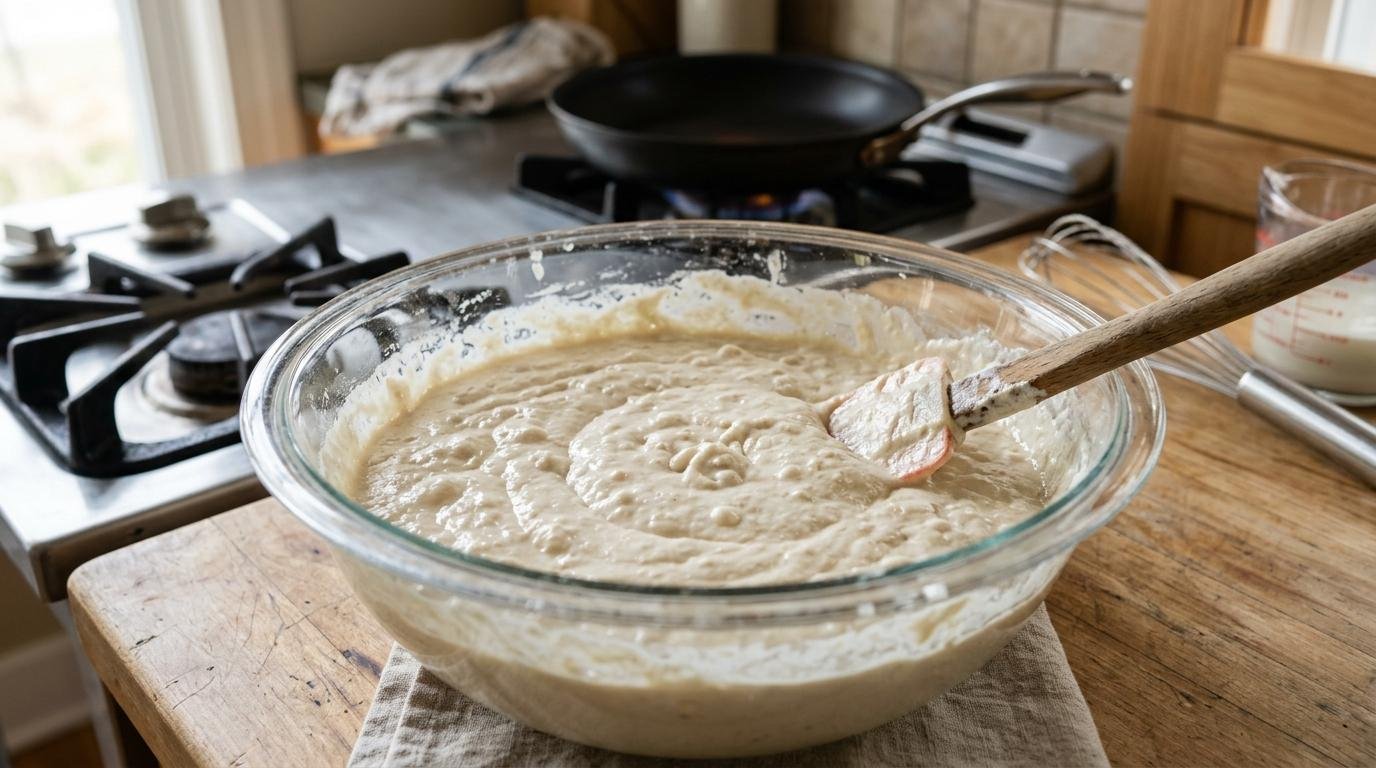
Pour the wet mixture into the dry ingredients and stir just until no dry streaks remain. The batter should look thick and slightly lumpy. That lumpy look is a good sign. Overmixing builds gluten, and gluten makes pancakes chewy instead of tender.
Step 4: Let the batter rest
Set the bowl aside for 5 to 10 minutes. This gives the flour time to hydrate and lets the leavening start working. In many home kitchens, this short rest is the difference between a decent pancake and a truly fluffy one.
Step 5: Cook on a moderately heated skillet
Heat a nonstick skillet or griddle over medium or medium-low heat. Lightly grease the surface with butter or oil. Scoop about 1/4 cup batter for each pancake onto the skillet, leaving space between them. Cook until bubbles appear on the surface and the edges look set, about 2 to 3 minutes.
Flip once and cook another 1 to 2 minutes, until golden brown and cooked through. If the outsides darken before the centers finish, lower the heat slightly. Pancakes prefer steady heat, not aggressive heat.
Step 6: Keep warm and serve
Transfer cooked pancakes to a warm plate or baking sheet in a low oven, around 200°F, while you finish the batch. Serve as soon as possible with your favorite toppings. Freshly cooked pancakes have the best contrast between crisp edges and soft centers.
Nutritional Information
Nutrition can vary with pancake size and toppings, so the numbers below are best used as a practical estimate. These values are for 2 medium pancakes, without syrup or butter on top.
| Nutrient | Approximate Amount |
|---|---|
| Calories | 250 |
| Protein | 8 g |
| Carbohydrates | 31 g |
| Sugars | 6 g |
| Fat | 10 g |
| Saturated Fat | 5 g |
| Fiber | 1 g |
| Sodium | 480 mg |
| Calcium | 180 mg |
If you serve these with fruit instead of a heavy pour of syrup, the meal stays balanced while still feeling indulgent. Pairing the pancakes with eggs or Greek yogurt also raises the protein count and helps the breakfast feel more filling.
Healthier Alternatives for the Recipe
A classic stack can still leave room for smart adjustments. Swapping half the all-purpose flour for whole wheat flour adds fiber and a nuttier flavor, though the pancakes will be slightly denser. If you want to keep them very fluffy, try white whole wheat flour, which is milder and softer than traditional whole wheat.
You can also trim some saturated fat by replacing the melted butter with a neutral oil, or by using 2 tablespoons butter and 2 tablespoons plain Greek yogurt in the batter. The yogurt adds moisture and a gentle tang that works beautifully with buttermilk.
For lower sugar, reduce the sugar to 1 tablespoon and let toppings do more of the flavor work. Fresh berries, warm apples, mashed banana, or a spoonful of unsweetened applesauce all bring sweetness without making the breakfast feel flat.
Gluten-free blends can work well too, especially cup-for-cup versions that include xanthan gum. If you need dairy-free pancakes, use a plant-based milk mixed with lemon juice plus a dairy-free butter alternative. The flavor changes slightly, yet the pancakes can still be tender and satisfying.
Serving Suggestions
The best toppings add contrast. Rich pancakes love something bright, fresh, or lightly salty on the side.
- Warm maple syrup
- Fresh strawberries and blueberries
- Sliced bananas with cinnamon
- Greek yogurt and toasted nuts
- Honey with a little flaky salt
- Crispy bacon or breakfast sausage
- Lemon zest and powdered sugar
If you are serving a crowd, set out toppings buffet-style and let everyone build their own plate. It turns a simple breakfast into something that feels generous without adding much work for the cook.
Common Mistakes to Avoid
Most pancake problems come down to heat, mixing, or patience. A few small adjustments can change the whole batch.
- Overmixing the batter: Stir only until combined. Small lumps are better than a smooth, overworked batter.
- Skipping the rest: Even 5 minutes can improve texture and thickness.
- Using high heat: Pancakes brown fast on the outside and stay raw in the center when the skillet is too hot.
- Flipping too early: Wait for surface bubbles and edges that look slightly dry.
- Pressing after the flip: This forces out air and makes the pancakes flatter.
If your first pancake is not perfect, that is normal. Think of it as the pan test. Adjust the heat, then keep going.
Storing Tips for the Recipe
Cooked pancakes store very well, which makes this recipe useful for meal prep. Let them cool fully, then refrigerate in an airtight container for up to 4 days. Place parchment or wax paper between layers if you want them to separate easily.
For longer storage, freeze the pancakes in a single layer first, then transfer them to a freezer bag or container. They keep well for up to 2 months. Reheat in a toaster, skillet, or low oven until warm. The toaster is especially good for bringing back the edges.
The batter is best cooked soon after mixing because the baking soda starts reacting right away. If you want to get ahead, combine the dry ingredients the night before and refrigerate the wet ingredients separately. Mix them in the morning for the freshest result.
Your Next Batch Starts Here
These pancakes are quick, tender, and reliably fluffy, with simple ingredients, smart mixing, and a short batter rest doing most of the work. Try them this week, then share your results in the review section or comments, and subscribe for more easy breakfast recipes, helpful tips, and fresh meal ideas.
FAQs
Can I make the batter the night before?
It is better to mix the dry and wet ingredients separately, then combine them right before cooking. Once the baking soda meets the buttermilk, the batter starts losing some of its lifting power over time.
What if I do not have buttermilk?
Use regular milk with lemon juice or white vinegar. Add 2 tablespoons acid to 2 cups milk and let it sit for 5 minutes. It will not be identical to cultured buttermilk, but it works very well in pancakes.
Why are my pancakes flat instead of fluffy?
The usual causes are overmixed batter, old baking powder, or a pan that is too cool. Flat pancakes can also come from a batter that is too thin, so check your measuring and avoid adding extra liquid unless needed.
Can I add fruit or chocolate chips to the batter?
Yes. Scatter them onto each pancake after the batter hits the skillet instead of stirring a large amount directly into the bowl. That keeps the batter lighter and helps the pancakes cook more evenly.
How do I know when to flip?
Look for bubbles across the surface and edges that appear set rather than shiny. Slide a thin spatula under the pancake and lift gently. If the bottom is golden brown, flip once and let the second side finish.
Can I make these into mini pancakes?
Absolutely. Use about 1 to 2 tablespoons batter per pancake and reduce the cook time slightly. Mini pancakes are great for kids, brunch platters, and freezer-friendly breakfast prep.
