


Learning to bake bread at home can feel bigger than it really is. Many beginners assume bread requires special equipment, years of practice, or a perfect kitchen routine. In truth, the best first loaves are built on simple methods, pantry staples, and a few reliable habits.
A smart place to begin is with bread recipes that teach one skill at a time. Some show how chemical leavening works. Others introduce yeast without asking you to master shaping, scoring, or complicated timing on day one. That steady progression builds confidence fast, and it makes each loaf feel like progress instead of guesswork.
Beginner bread recipes work best when the method stays simple
The most rewarding beginner breads have a clear pattern: mix, bake, and enjoy, or mix, rise, shape, and bake. They do not ask you to juggle too many variables at once. That matters because bread is not only about ingredients. It is also about timing, temperature, texture, and learning what dough should feel like in your hands.
At Recipesp, approachable bread recipes fit the same philosophy as practical home cooking. The method should be clear, the ingredient list should feel familiar, and the result should be worth repeating on an ordinary weeknight or quiet weekend morning.
A beginner-friendly bread recipe usually includes a few key advantages:
- Simple ingredients: flour, liquid, salt, and a basic leavener
- Forgiving method: enough flexibility for a slightly cool kitchen or an extra minute of mixing
- Manageable timing: either very fast, or mostly hands-off
- Useful payoff: a loaf you will actually want to make again
- One bowl mixing
- Minimal shaping
- Common baking pans
Best beginner bread recipes at a glance
A quick comparison makes it easier to choose your starting point. Some breads give you fast success, while others teach the foundations of yeast baking.
| Recipe | Bread Type | What You Learn | Time and Effort |
|---|---|---|---|
| Banana bread | Quick bread | Mixing wet and dry ingredients, loaf pan baking, doneness cues | Low effort, about 1.5 hours total |
| Irish soda bread | Quick bread | Rustic shaping, handling a soft dough, fast baking | Very low effort, under 1 hour |
| White sandwich bread | Yeast bread | Kneading, first rise, shaping, second rise | Moderate effort, 2 to 3 hours |
| No-knead artisan bread | Yeast bread | Fermentation, high-hydration dough, crust development | Low hands-on effort, long resting time |
Banana bread is the easiest first loaf for most beginners
If one bread deserves a place at the top of the beginner list, it is banana bread. It asks almost nothing intimidating from the baker. There is no yeast to activate, no dough to knead, and no concern about whether the loaf doubled in size. You mix the batter, pour it into a pan, and let the oven do the work.
It is also one of the most forgiving bakes in the home kitchen. Overripe bananas bring moisture, sweetness, and flavor, which helps the loaf stay tender even if your measurements are not perfect to the gram. A slightly overmixed batter may still taste wonderful. A few added chocolate chips, walnuts, or a pinch of cinnamon can make it feel personal without changing the method in any major way.
Banana bread is a strong teacher because it builds comfort with baking basics. You learn how to measure flour, combine wet and dry ingredients, and test doneness with a toothpick or skewer. You also learn patience, which matters more in bread baking than many beginners expect.
A good first banana bread should be moist, gently sweet, and easy to slice once cooled. If the center looks wet, it usually needs more oven time. If the crust darkens too quickly, a loose tent of foil during the last stretch of baking can help.
Irish soda bread is the fastest path to homemade bread
Irish soda bread has a different kind of appeal. It is not sweet and cake-like in the way banana bread can be. Instead, it gives you a true bread experience without yeast, kneading, or a long wait. Baking soda does the leavening, and buttermilk brings the acidity that helps the loaf rise.
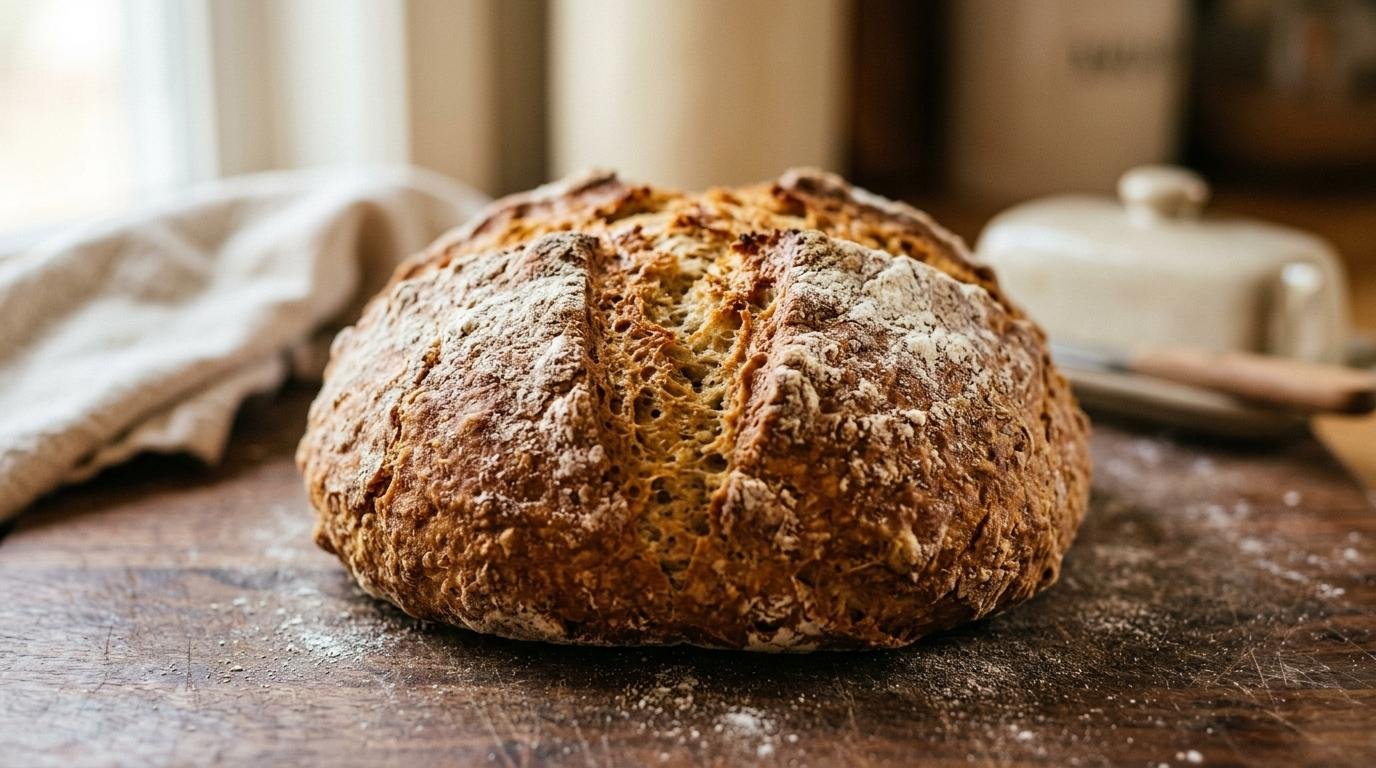
This recipe is ideal for beginners who want a rustic result with very little hands-on time. The dough comes together quickly, often in one bowl, and shaping is simple. A round loaf with a scored top looks impressive even when your technique is brand new.
Soda bread also teaches restraint. You do not want to mix it too aggressively, or the crumb can turn tough. That lesson carries nicely into future bread recipes. Gentle handling often creates a better loaf than overworking the dough.
Serve it warm with butter, soup, stew, or jam, and it immediately feels like a bread you will keep in regular rotation.
Classic white sandwich bread teaches the core yeast skills
Once you are ready for yeast, white sandwich bread is the right next step. It introduces the rhythm of yeast baking in a format that still feels familiar: a loaf pan, a soft crumb, and slices that work for toast or sandwiches. This is the bread that helps beginners see how flour, water, yeast, salt, and a little fat come together into something structured and dependable.
The process matters as much as the result. You mix the dough, knead until it is smooth and elastic, let it rise, shape it into a loaf, and wait for a second rise before baking. Each stage teaches something useful. Kneading shows you how gluten develops. Rising shows you what active yeast can do. Shaping teaches control and tension.
This is often the moment when home bakers realize bread is not mysterious. It is repeatable. The dough begins sticky or shaggy, then turns smooth. It starts small, then becomes airy and puffy. The loaf enters the oven pale and soft, then comes out golden and fragrant. That transformation builds real confidence.
If you are nervous about kneading, keep it simple. You can knead by hand on a lightly floured surface for several minutes, or use a stand mixer with a dough hook. Either approach works. The goal is a dough that feels supple and cohesive, not dry, cracked, or flour-heavy.
No-knead artisan bread proves that time can do the work
No-knead bread is one of the best recipes for beginners who want a crusty loaf without a lot of active effort. The dough is usually made from flour, water, salt, and a small amount of yeast. Instead of kneading, you rely on a long rest to build structure and flavor.
That long fermentation is the secret. Over many hours, the dough develops gluten on its own. The texture changes dramatically with almost no work from you. This style of bread can feel like magic the first time you make it, especially when it bakes into a loaf with a crisp crust and an open crumb.
A Dutch oven is often used because it traps steam, which helps create that bakery-style exterior. If you do not have one, you can still make a good loaf on a baking sheet or in another oven-safe covered pot. The method stays beginner-friendly because the hands-on portion is short.
No-knead bread is especially useful for busy schedules. Mix the dough in the evening, let it rest overnight, and bake the next day. It asks for patience, not constant attention.
Bread baking tools that help beginners stay calm
You do not need a specialty setup to make good bread at home. A few reliable basics are enough, and most kitchens already have several of them.
The smartest early investment is a digital kitchen scale. Measuring by weight improves consistency, especially with flour. Bread can change quite a bit when a measuring cup is packed too tightly, and a scale removes that variable right away.
A few starter tools can make your first breads easier:
- Digital scale
- Mixing bowls
- Loaf pan
- Dough scraper
- Measuring spoons
- Clean kitchen towel
- Oven-safe pot with lid
Bread baking tips for better beginner results
Technique matters, but small habits matter too. One of the biggest differences between frustrating bread and reliable bread is attention to temperature. Yeast works best in a warm, comfortable environment. Liquids that are too hot can damage it, while a very cold room can slow rising more than many beginners expect.
It also helps to watch the dough instead of obeying the clock too rigidly. A recipe may say one hour for the first rise, but your kitchen may need a little less or a little more. Dough is ready when it looks expanded, airy, and responsive to a gentle poke.
A few habits make nearly every bread recipe more dependable:
- Measure accurately: weight is best, especially for flour
- Check yeast freshness: expired yeast leads to weak rise
- Cover the dough: exposed dough dries out quickly
- Preheat fully: bread needs a properly heated oven
- Cool before slicing: the crumb finishes setting after baking
Common beginner bread problems and easy fixes
Even good recipes can produce a few surprises the first time through. That is normal. Bread rewards repetition, and each loaf gives useful feedback.
When a loaf does not turn out as expected, the issue is often easy to identify with a quick review of ingredients, dough texture, and oven conditions.
- Dense loaf: dough was too dry, not kneaded enough, or did not rise long enough
- Weak rise: yeast was old, liquid was too hot, or the room was too cold
- Tough crust: oven ran hot, or the loaf baked too long
- Gummy center: bread needed more baking time or more cooling time
- Spreading dough: dough was too wet, under-shaped, or over-proofed
One more encouraging note: a loaf that is not perfect is often still very good to eat. Toast can rescue a slightly dense sandwich bread. Soup and butter can rescue a firm soda bread. Croutons and breadcrumbs can rescue nearly anything.
Choosing your first bread recipe based on your goal
The best first bread depends on what kind of win you want. If you want the easiest success, bake banana bread. If you want a rustic loaf on the table tonight, choose Irish soda bread. If you want to learn classic yeast technique, make white sandwich bread. If you want a hands-off schedule and a crisp crust, go with no-knead artisan bread.
That choice matters because motivation matters. A beginner is more likely to keep baking when the first recipe matches the moment. A busy weeknight calls for simplicity. A slow Saturday invites yeast and a longer rise. Both kinds of baking count, and both can lead to real skill.
The strongest bread bakers usually do not start with the hardest loaf. They start with one they can finish well, then build from there. That is how confidence grows in the kitchen, loaf by loaf, with flour on the counter and a better sense of what is possible each time the oven door opens.
