
If you’ve ever opened the pantry, seen “random bits,” and still felt like there’s nothing to eat, you’re not alone. A budget pantry fixes that by focusing on a small set of foods that cooperate with each other: grains that stretch, proteins that keep, and flavor builders that make the whole thing feel like real meals.
A $50 pantry won’t cover every craving. It will, however, give you a sturdy base that can turn a few low-cost add-ons (an onion, a head of lettuce, a carton of eggs, whatever is on sale) into breakfasts, lunches, and dinners you can repeat without getting bored.
What makes a pantry staple worth buying?
A staple earns its spot when it’s cheap per serving, lasts a long time, and works in more than one type of meal. Think “rice can be a bowl, a side, a soup base, or fried rice” instead of “this ingredient only works in one recipe.”
After you get the basics in place, your weekly grocery spending gets calmer. You stop needing to buy a full recipe’s worth of ingredients from scratch, because the pantry is already doing part of the job.
Here are the qualities to look for when you’re choosing between two similar items:
- Long shelf life: weeks to months (or longer) without stress
- Flexible flavor: works with savory and sweet meals
- Quick or batch-friendly: fast on busy nights, easy to cook in big pots
- Affordable protein: beans, lentils, peanut butter, canned fish
The $50 pantry shopping list (with realistic budget wiggle room)
Prices vary by store, region, and package size, so treat this as a template. If rice is cheaper this week and pasta costs more, swap quantities and keep the overall balance.
The goal is a mix of:
- Grains: filling, versatile, easy to season
- Legumes: budget protein and fiber
- Canned and frozen produce: back-up vegetables and fruit that won’t spoil in two days
- A few essentials: oil, salt, pepper, a couple spices
Pantry staples table
| Category | Item | Typical size | Est. cost | What it does for you |
|---|---|---|---|---|
| Grains | Rice (white or brown) | 5 lb | $5 | Base for bowls, soups, stir-fries |
| Grains | Pasta | 2 lb | $2 | Quick dinners, pasta salads |
| Grains | Rolled oats | 2 lb | $4 | Breakfast, baking, thickener |
| Legumes | Dried beans (pinto, black, etc.) | 3 lb | $3 | Big-batch protein, burrito-style bowls |
| Legumes | Dried lentils | 2 lb | $3 | Fast soups, “meaty” sauces |
| Legumes | Canned beans or chickpeas | 2 cans | $2 | Convenience meals on busy nights |
| Canned | Canned tomatoes (diced, crushed, or sauce) | 2 cans | $3 | Sauce base, soup base |
| Canned | Canned vegetables (corn, peas, green beans) | 2 cans | $3 | Easy sides, stir-ins |
| Canned | Tuna or canned chicken | 2 cans | $3 | Quick lunches, protein boost |
| Pantry | Peanut butter | 16 oz | $3 | Breakfast, snacks, sauces |
| Pantry | Vegetable or canola oil | 48 oz | $4 | Cooking, roasting, sautéing |
| Pantry | Salt | 1 container | $1 | Makes everything taste like food |
| Pantry | Black pepper | 1 small jar | $2 | Everyday seasoning |
| Pantry | Extra spices (garlic powder, chili powder, cumin) | 2 to 3 jars | $2 | “Different meal” switch |
| Baking | All-purpose flour | 2 lb | $2 | Pancakes, thickening, quick breads |
| Baking | Sugar | 2 lb | $2 | Baking, oatmeal, simple treats |
| Frozen | Mixed vegetables | 1 to 2 lb | $3 | Stir-fry, soup, pasta add-ins |
| Frozen | Frozen fruit (berries or mix) | 1 to 2 lb | $3 | Oatmeal, smoothies, snacks |
| Estimated total | $50 |
Shopping moves that keep you near $50
Even a “perfect” list can drift over budget if you’re not watching unit prices. The good news is that pantry shopping is forgiving. If lentils jump in price, more beans can fill the gap. If frozen fruit is pricey, grab bananas instead.
A simple way to keep the math working is to pick one “anchor” in each category (one grain, one legume, one veg option) and treat everything else as optional.
This quick checklist helps when you’re standing in the aisle doing mental arithmetic:
- Compare unit prices: the lowest sticker price is not always the best deal
- Choose store brands: rice, oats, pasta, canned tomatoes are usually solid
- Buy fewer spices, but use them hard: garlic powder and chili powder cover a lot of meals
- Skip pre-cut anything: you’re paying for someone else’s knife work
Cook once, then remix: the batch-prep rhythm
The real trick to budget cooking is not heroic weeknight effort. It’s cooking a couple big basics when you have a little time, then building fast meals from them.
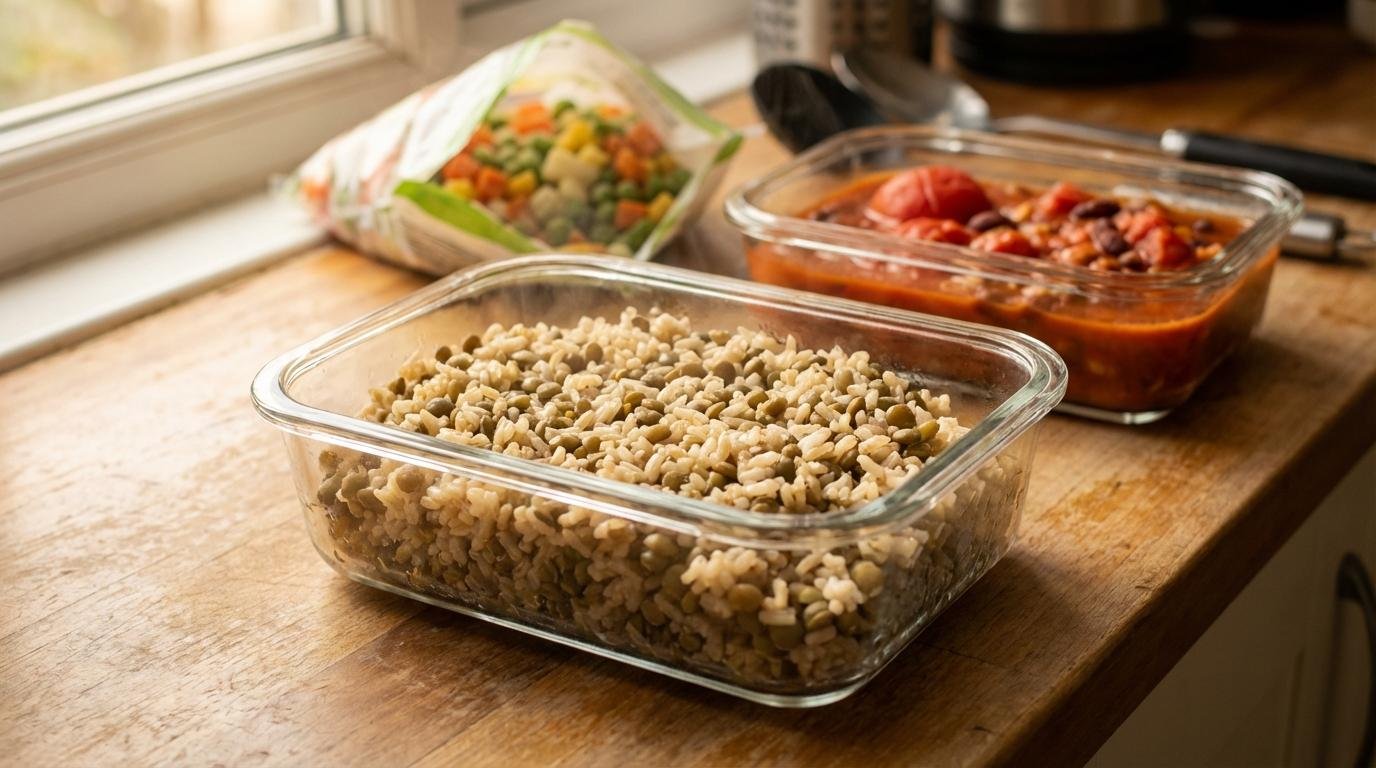
If you do only one prep session, make it this: cook a pot of rice and a pot of beans or lentils. Cool them quickly, then store in the fridge so they’re ready to become lunch bowls, soups, and skillet meals.
A practical Sunday (or “any day”) prep looks like this:
- Cook 4 to 6 cups cooked rice (enough for several meals)
- Cook a full bag of lentils (they cook faster than most beans)
- Stir together a quick tomato-bean “starter” (canned tomatoes, garlic powder, chili powder, salt)
- Portion frozen veggies into grab-and-cook bags (optional, but helpful)
One sentence that saves many dinners: keep one starch, one protein, and one vegetable ready to go.
One-week meal ideas using your pantry staples
This is a sample plan meant to show the reuse pattern. Repeat meals on purpose. That is the point.
If you can add a few fresh items with whatever money is left (or what you already have), onions, carrots, greens, eggs, yogurt, and a block of cheese are some of the highest impact upgrades.
7-day meal plan table
| Day | Breakfast | Lunch | Dinner |
|---|---|---|---|
| Mon | Oatmeal + peanut butter + frozen fruit | Lentil tomato soup | Rice + beans + mixed veggies bowl |
| Tue | Oatmeal (sugar, cinnamon if you have it) | Tuna rice salad (rice + tuna + thawed veg + oil + pepper) | Pasta with tomato sauce + beans |
| Wed | Savory oats (salt, pepper) | Leftover soup | Skillet “fried rice” with veggies (egg optional) |
| Thu | Peanut butter oats or toast (if you have bread) | Chickpea or bean bowl with tomatoes and spices | Chili-style beans over rice |
| Fri | Smoothie: frozen fruit + oats + water or milk | Leftover rice bowl | One-pot pasta: pasta + tomatoes + canned veg |
| Sat | Flour pancakes (or oat pancakes) | Pasta salad with beans and veggies | Lentil “sloppy” sauce over rice or pasta |
| Sun | Oatmeal with fruit | Leftovers | Clean-out-the-pantry soup (lentils, tomatoes, veggies) |
A few “mix-and-match” meal formulas
When you do not feel like following a plan, lean on formulas. They keep dinner simple and stop food waste.
These are the ones that show up in budget kitchens again and again:
- Rice bowl: rice + beans/lentils + veggies + a punchy spice blend
- Tomato pot: canned tomatoes + lentils/beans + water/broth + frozen vegetables
- Pantry pasta: pasta + tomatoes + oil + garlic powder + whatever protein you have
Three fast recipes you can repeat without getting bored
You can cook these with almost entirely shelf-stable and freezer ingredients. Add onion, hot sauce, shredded cheese, or a handful of greens when you have them, but they work without.
1) Lentil tomato soup that doubles as sauce
Simmer lentils with canned tomatoes, salt, pepper, garlic powder, and chili powder. Add frozen mixed vegetables near the end so they stay bright.
If you want it thicker, mash a cup of the soup and stir it back in. If you want it saucier, reduce a little longer and serve over rice or pasta.
2) Chili-style beans (no slow cooker required)
Cook dried beans (or use canned), then warm them with canned tomatoes, cumin, chili powder, salt, and a splash of oil. Smash some beans with a spoon to thicken.
Serve over rice. Day two becomes nacho-style bowls if you add anything crunchy you have around (corn chips, toasted tortilla, even toasted bread).
3) Tuna rice salad that feels like lunch, not survival food
Mix cooled rice with tuna, a handful of thawed frozen vegetables, oil, pepper, and salt. If you have vinegar, lemon, pickles, or a little mayo, add a spoonful.
Eat it cold, pack it, or warm it up and top with pepper.
Smart add-ons when you have an extra $5 to $15
Once your pantry is stocked, small add-ons create big variety. You do not need all of these at once. Pick one or two each week based on sales.
Here are high-impact choices:
- Eggs: quick protein for fried rice, scrambles, breakfast-for-dinner
- Onions and garlic: cheap flavor base for almost every savory meal
- A bag of carrots: snacks, soups, stir-ins, they last a while
- A block of cheese: makes bean bowls and pasta feel rich
- Soy sauce or hot sauce: one bottle changes the whole vibe
Storage tips that protect your budget
Food waste is sneaky. A pantry plan only works if the food actually gets eaten.
Keep dry goods in airtight containers if you can (even clean jars help). Label bags of beans and lentils with a marker so you remember what they are and when you bought them.
For cooked grains and beans, store in shallow containers so they cool quickly, then refrigerate. If you will not eat them within a few days, freeze in meal-sized portions so you can grab exactly what you need.
Easy swaps for dietary needs (or picky eaters)
You can keep the same structure and change the ingredients:
- Gluten-free: swap pasta and flour for corn tortillas, masa harina, or extra rice and oats labeled gluten-free
- Vegetarian: skip canned tuna or chicken and add another bag of lentils or a few more cans of beans
- Lower sodium: choose no-salt-added canned goods when possible, then season at home
If someone in the house is skeptical about beans, start with lentils in tomato sauce over pasta. The texture is gentle, and the flavor reads like a classic comfort dinner.
Make the pantry feel bigger with “theme nights”
The same pot of beans can go a few directions just by changing seasonings. One night can taste “chili,” the next can taste “garlic and pepper,” and the next can taste “cumin and tomato.”
Keep it playful, keep it simple, and let the pantry do the heavy lifting.
