

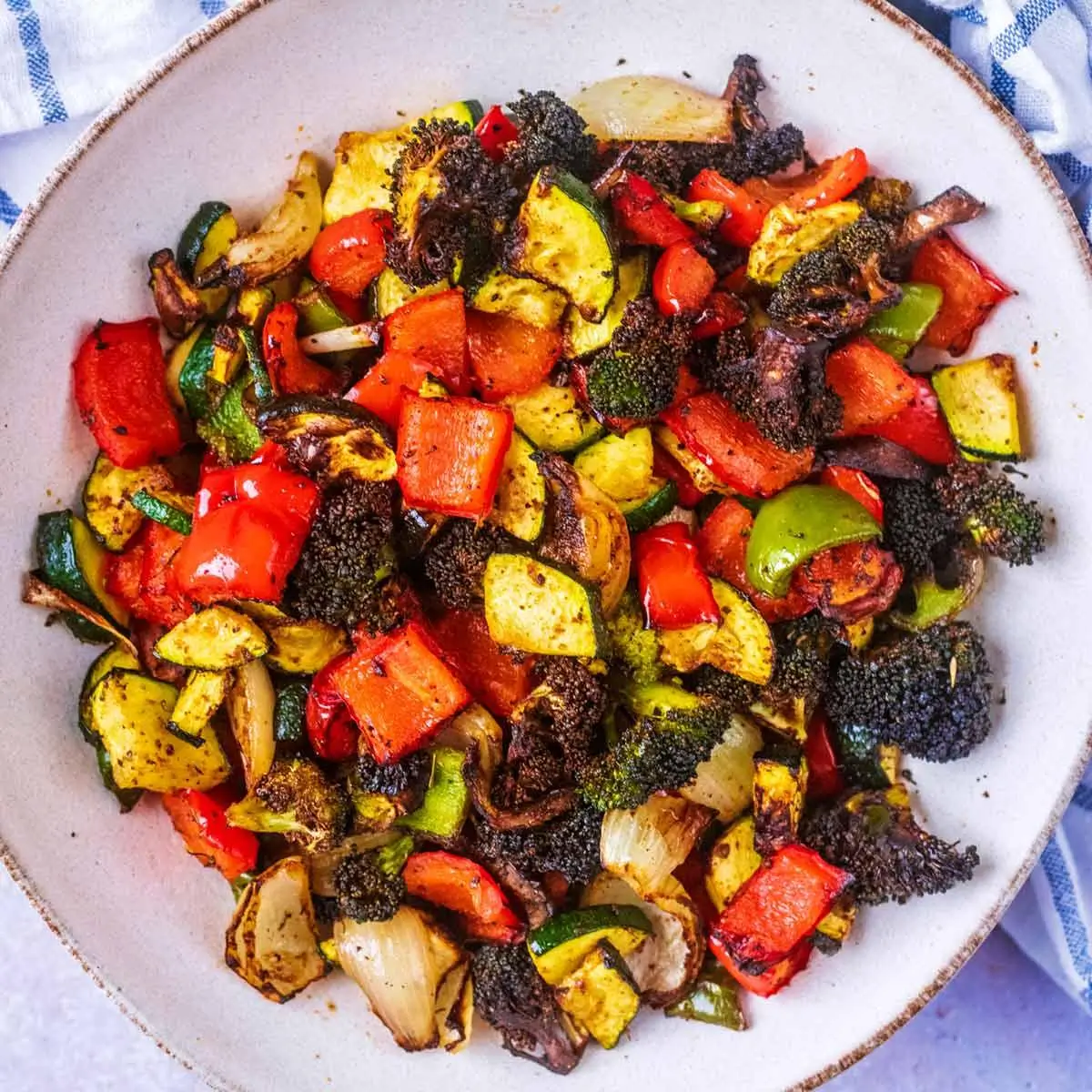
Air fryer vegetables can go from “why is this still raw?” to “oops, charcoal” in what feels like one phone notification. The good news is that once you have reliable time and temperature ranges, weeknight veggies become almost automatic.
This guide is built to be practical first: a chart you can screenshot, copy, or print, plus a few habits that make the numbers work in real kitchens.
Why veggie cook times vary so much
Two carrots can cook differently if one is cut into coins and the other into chunky sticks. That is the main reason charts sometimes feel “wrong.”
A few factors drive air fryer timing:
- Density: potatoes and carrots take longer than zucchini and peppers.
- Water content: high-water veggies soften fast and can turn mushy if you push the time.
- Cut size: smaller pieces brown faster and cook through sooner.
- Basket crowding: a packed basket traps steam, which slows browning and makes soft spots.
Even air fryer models run a little hot or cool, so think of any chart as a starting range, then lock in your own “house settings.”
How to use a veggie time chart without overthinking it
Preheat if your air fryer supports it. A hot basket gives you better browning right away and helps the timing make sense.
Once you start cooking, treat the low end of the time range as your first checkpoint. If it needs more, keep going in short bursts (2 to 4 minutes) so you do not overshoot.
A few simple rules keep things consistent:
- Cut size: aim for uniform pieces so everything finishes together
- Oil amount: a light coat helps browning and reduces sticking
- Basket space: cook in a single layer when you can, or plan on extra time
- Mid-cook shake: toss or stir once halfway through for even color
One sentence that saves a lot of veggies: check early, then add time.
Printable air fryer vegetable time and temperature chart
Copy and paste this table into a doc (Google Docs, Word, Notes) and print it. It also works well as a screenshot saved to your phone for quick weeknight reference.
Ranges assume a preheated air fryer and vegetables in a fairly even layer. If your basket is crowded, expect to add a few minutes and shake more than once.
| Vegetable | Prep (cut/style) | Temp | Time (min) | Notes |
|---|---|---|---|---|
| Potato (russet) | Whole “baked” | 400°F / 200°C | 35 to 45 | Flip halfway; skin gets crisp, center turns fluffy. |
| Potato | 1-inch cubes | 400°F / 200°C | 12 to 20 | Shake 1 to 2 times; smaller cubes brown faster. |
| Potato | Fries or wedges (1/2-inch thick) | 380 to 400°F / 193 to 200°C | 15 to 22 | Soak and dry for extra crisp; do not overcrowd. |
| Sweet potato | 1-inch cubes | 400°F / 200°C | 14 to 22 | Slightly longer than white potato in many fryers. |
| Carrots | 1/2-inch sticks or chunks | 375 to 380°F / 190 to 193°C | 14 to 20 | Great caramelization; add time for big pieces. |
| Broccoli | Bite-size florets | 375 to 400°F / 190 to 200°C | 6 to 12 | Stop when edges brown; overcooking turns it dull and soft. |
| Cauliflower | Florets | 375 to 400°F / 190 to 200°C | 8 to 14 | Goes from pale to golden fast near the end. |
| Brussels sprouts | Halved (or quartered if large) | 375 to 400°F / 190 to 200°C | 12 to 18 | Cut-side gets deeply browned; shake once. |
| Green beans | Trimmed | 380 to 400°F / 193 to 200°C | 7 to 11 | Best in a light layer; wrinkles and blisters are your cue. |
| Asparagus | Spears (medium) | 375 to 400°F / 190 to 200°C | 5 to 10 | Thin spears cook fast; thick spears need the full range. |
| Zucchini | 1/2-inch sticks or thick half-moons | 375 to 400°F / 190 to 200°C | 8 to 13 | High water; aim for browned edges, not “crispy-crunchy.” |
| Bell peppers | Strips or 1-inch chunks | 375°F / 190°C | 9 to 13 | Softer with lightly charred edges; too long gets limp. |
| Mushrooms | Halved or thick-sliced | 380 to 400°F / 193 to 200°C | 8 to 12 | They release water first, then brown. Do not salt early. |
| Onion | Thick slices or wedges | 375 to 390°F / 190 to 199°C | 10 to 16 | Sweetens as it browns; keep pieces chunky. |
| Corn | Cob pieces or large kernels | 400°F / 200°C | 10 to 15 | Brush with oil; rotate halfway for even color. |
| Eggplant | 3/4-inch cubes | 375 to 400°F / 190 to 200°C | 12 to 18 | Needs oil for best texture; check at 12 min. |
If you want a truly “tape it on the cabinet” version, copy only the rows you cook most often (usually 6 to 10 veggies) and enlarge the font before printing.
The small prep steps that make veggies actually crisp
Air fryers are powerful, but they cannot fight surface moisture and crowding.
Patting vegetables dry sounds fussy, yet it is often the difference between browned edges and steamed softness, especially with mushrooms, zucchini, and peppers.
A quick workflow that works for most vegetables:
- Cut into uniform pieces.
- Dry well (paper towels are fine).
- Toss with 1 to 2 teaspoons oil per heaping sheet-pan amount (or a light spray), then cook.
- Salt after cooking if you want maximum browning.
That last point surprises people. Salt draws moisture to the surface, which can slow browning early on. If you love deeply browned broccoli or Brussels sprouts, try salting at the end and see what you think.
Timing tweaks based on what you want on the plate
The chart gets you close. These adjustments help you hit your preferred texture.
If you like veggies tender-crisp with light browning, stay near the lower end of the range and pick 375°F more often.
If you like deeper roasting flavor and darker edges, push toward 400°F and use the upper end of the time range, but keep an eye on the last few minutes.
Here are the most common “symptoms” and what to change next time:
- Too pale: bump temp up 15 to 25°F, or cook 2 to 4 minutes longer
- Soft and watery: dry better, reduce crowding, and shorten the time
- Burnt tips, hard centers: lower temp 15 to 25°F and cut pieces smaller
- Dry and shriveled: lower temp and pull earlier, or use slightly larger cuts
- Uneven browning: shake more often, and keep pieces in a single layer
If you are cooking a mixed basket (say, carrots and broccoli), start the carrots first, then add broccoli partway through. Staggering is the secret to a one-basket veggie side that still tastes intentional.
Seasoning ideas that match air fryer veggies
Once your timing is steady, the easiest way to keep vegetables exciting is to rotate flavors. At Meal Magic, we like seasonings that do not require special ingredients and still feel craveable on a Tuesday.
Try these simple pairings after cooking (or toss with oil first if you are okay with slightly less browning):
- Lemon pepper: broccoli, asparagus, green beans
- Smoked paprika + garlic powder: potatoes, cauliflower, peppers
- Cumin + chili powder: sweet potatoes, corn, carrots
- Italian seasoning: zucchini, mushrooms, onions
- Parmesan + black pepper: Brussels sprouts, potatoes, cauliflower
A quick squeeze of lemon or a splash of vinegar at the end wakes up roasted flavors, especially for richer vegetables like potatoes and Brussels sprouts.
Batch cooking and “printable” meal prep shortcuts
Air fryers cook best with space, which can feel like the opposite of meal prep. The workaround is to cook in two quick rounds, then combine.
If you are prepping veggies for the week, cook them until just barely done, then finish later with a 2 to 5 minute blast at 400°F to bring back the crisp edges. This works well for broccoli, cauliflower, Brussels sprouts, and green beans.
Want the chart to be even more usable? Make two versions:
- A “fast weeknight” chart with your top 8 vegetables.
- A “Sunday prep” chart with longer-cooking items (potatoes, carrots, Brussels sprouts) and notes about batch size.
Once you do this a couple of times, you stop guessing, your vegetables start tasting consistent, and the air fryer becomes the easiest way to get a solid side dish on the table with almost no effort.
